
















Copyright: ©Author(s) 2026.
World J Gastrointest Oncol. Apr 15, 2026; 18(4): 116504
Published online Apr 15, 2026. doi: 10.4251/wjgo.v18.i4.116504
Published online Apr 15, 2026. doi: 10.4251/wjgo.v18.i4.116504
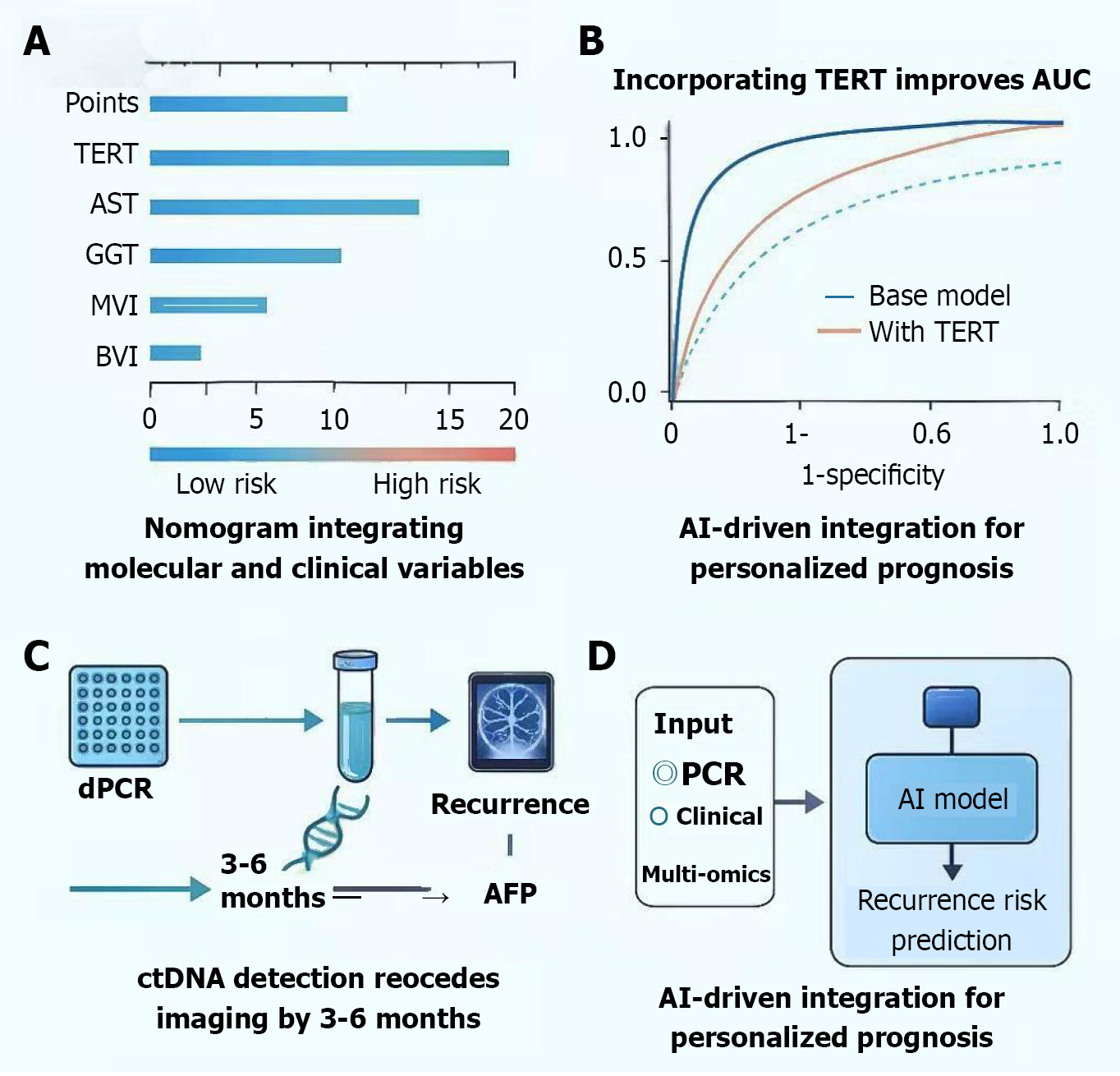
Figure 3 Clinical translation of telomerase reverse transcriptase mutation detection integrating molecular diagnostics, prognostic modeling, and artificial intelligence prediction.
A: Nomogram model combining telomerase reverse transcriptase (TERT) mutation status with clinical variables (aspartate aminotransferase, γ-glutamyl transpeptidase, microvascular invasion, blood vessel invasion) predicts 1-year, 2-year, and 5-year overall survival/disease-free survival, distinguishing high-risk (red) and low-risk (blue) groups; B: Model performance comparison: Incorporation of TERT mutation improves predictive accuracy (area under the curve 0.83 vs 0.75) and decision curve benefit; C: Dynamic monitoring: Digital polymerase chain reaction-based ctDNA detection identifies TERT mutations 3-6 months before radiologic recurrence and alpha-fetoprotein elevation, enabling early relapse prediction; D: Artificial intelligence -integrated framework: Machine learning model (random forest/extreme gradient boosting) fuses molecular, clinical, and multi-omics data for individualized recurrence risk assessment. TERT: Telomerase reverse transcriptase; AST: Aspartate aminotransferase; GGT: γ-glutamyl transpeptidase; MVI: Microvascular invasion; BVI: Blood vessel invasion; dPCR: Digital polymerase chain reaction; AFP: Alpha-fetoprotein; AUC: Area under the curve; AI: Artificial intelligence; PCR: Polymerase chain reaction.
- Citation: Shao S, Xiong Y, Kong MW, Yu Y, Zhang CX. Digital polymerase chain reaction detection of telomerase reverse transcriptase promoter mutations in hepatitis B virus related hepatocellular carcinoma. World J Gastrointest Oncol 2026; 18(4): 116504
- URL: https://www.wjgnet.com/1948-5204/full/v18/i4/116504.htm
- DOI: https://dx.doi.org/10.4251/wjgo.v18.i4.116504