
















Copyright: ©Author(s) 2026.
World J Gastrointest Oncol. Apr 15, 2026; 18(4): 115511
Published online Apr 15, 2026. doi: 10.4251/wjgo.v18.i4.115511
Published online Apr 15, 2026. doi: 10.4251/wjgo.v18.i4.115511
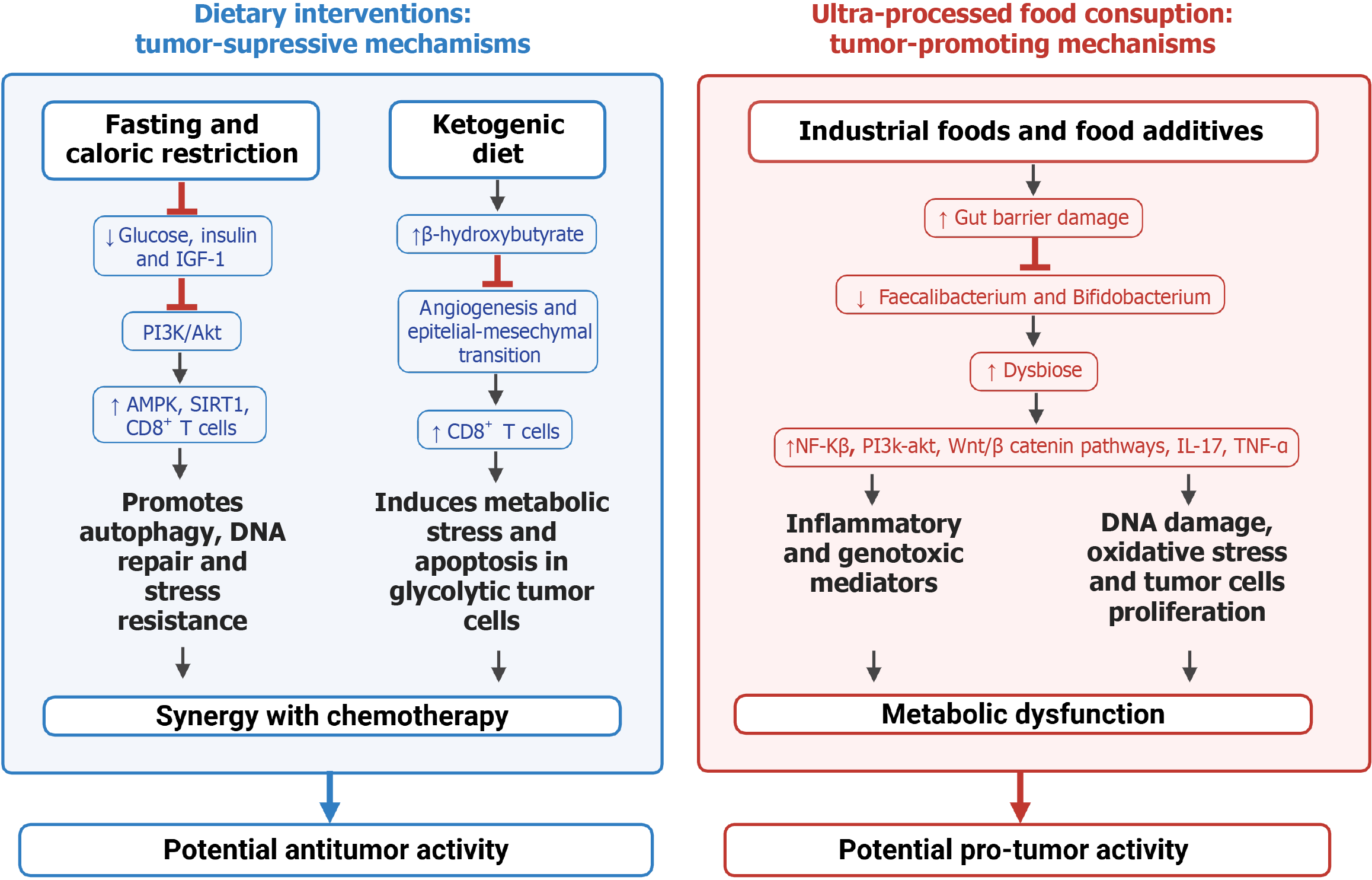
Figure 4 Contrasting mechanisms between dietary interventions and ultra-processed food consumption in tumor modulation.
Dietary interventions such as caloric restriction, fasting, and ketogenic diets exert tumor-suppressive effects by modulating metabolism and immune function. These strategies reduce glucose, insulin, and IGF-1 levels; inhibit the PI3K-Akt-mTOR pathway; promote autophagy, DNA repair, and stress resistance; and enhance antitumor immunity (↑ CD8+ T cells and NK cells, ↓ Tregs and myeloid-derived suppressor cells). Ketogenic diets further increase βHB production, induce apoptosis in glycolytic tumor cells, reduce angiogenesis and epithelial-mesenchymal transition, and act synergistically with chemotherapy. In contrast, ultra-processed food consumption promotes tumor development through multiple mechanisms. Industrial foods and additives (e.g., emulsifiers, colorants, sweeteners) contribute to gut dysbiosis, reducing beneficial bacteria (e.g., Faecalibacterium, Bifidobacterium) and increasing pro-tumor species (Fusobacterium nucleatum, Bacteroides fragilis). This results in gut barrier impairment, inflammation, and activation of oncogenic pathways (NF-κB, PI3K-Akt, Wnt/β-catenin), leading to oxidative stress, DNA damage, and tumor proliferation. Highlighted processes: Metabolic reprogramming, immune activation, tumor suppression, inflammation, oxidative stress, DNA damage, and tumor growth. Created in BioRender (Supplementary material). IL-17: Interleukin-17.
- Citation: Lima RSP, Sousa JDS, Neres MSO, de Sousa DJM, Martins JA, Pereira IC, da Silva ACA, Severo JS, Torres-Leal FL, da Silva MTB. Colorectal cancer therapy and nutrition: From ultra-processed consumption to metabolic reprogramming. World J Gastrointest Oncol 2026; 18(4): 115511
- URL: https://www.wjgnet.com/1948-5204/full/v18/i4/115511.htm
- DOI: https://dx.doi.org/10.4251/wjgo.v18.i4.115511