











BPG is committed to discovery and dissemination of knowledge
Review
Copyright: ©Author(s) 2026.
World J Gastrointest Oncol. Mar 15, 2026; 18(3): 115722
Published online Mar 15, 2026. doi: 10.4251/wjgo.v18.i3.115722
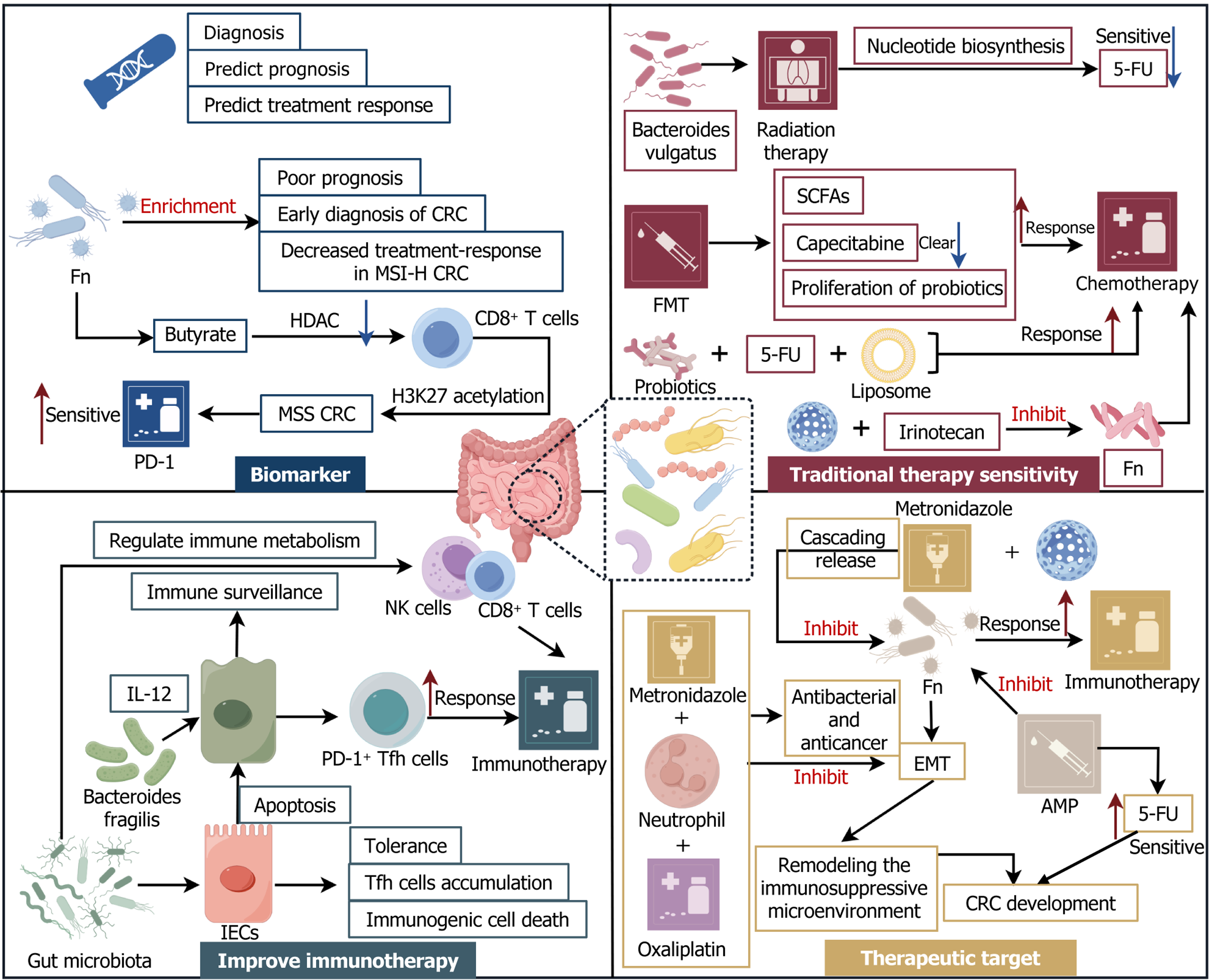
Figure 6
Figure 6 Clinical applications of gut microbiota in colorectal cancer. In terms of biomarkers, the enrichment level of gut microbiota such as Fusobacterium nucleatum can serve as a multi-dimensional marker for diagnosis, prediction of treatment response, and prediction of prognosis. In improving the sensitivity of traditional treatments, gut microbiota can directly or indirectly affect the blood clearance rate or response efficiency of chemotherapy drugs through their metabolites or by combining with technologies such as nanoparticles, thereby enhancing the therapeutic effect. In improving immunotherapy, gut microbiota can enhance the response efficiency of immunotherapy by regulating the activity of immune cells or controlling the apoptosis of intestinal epithelial cells. Finally, gut microbiota can directly be used as therapeutic targets. A representative example is the antibacterial effect of metronidazole on Fusobacterium nucleatum, which assists in enhancing the therapeutic effect of chemotherapy drugs. Meanwhile, emerging drugs such as antimicrobial peptides can also assist in anti-cancer treatment through their antibacterial properties. This Figure was drawn by Figdraw (Supplementary material). CRC: Colorectal cancer; HDAC: Histone deacetylase; MSI-H: High microsatellite instability; MSS: Microsatellite stable; PD-1: Programmed death 1; IL: Interleukin; NK: Natural killer; IEC: Intestinal epithelial cell; SCFA: Short-chain fatty acid; FMT: Fecal microbiota transplantation; Fn: Fusobacterium nucleatum; EMT: Epithelial-mesenchymal transition.


Write to the Help Desk