
















Copyright: ©Author(s) 2026.
World J Gastrointest Oncol. Mar 15, 2026; 18(3): 115722
Published online Mar 15, 2026. doi: 10.4251/wjgo.v18.i3.115722
Published online Mar 15, 2026. doi: 10.4251/wjgo.v18.i3.115722
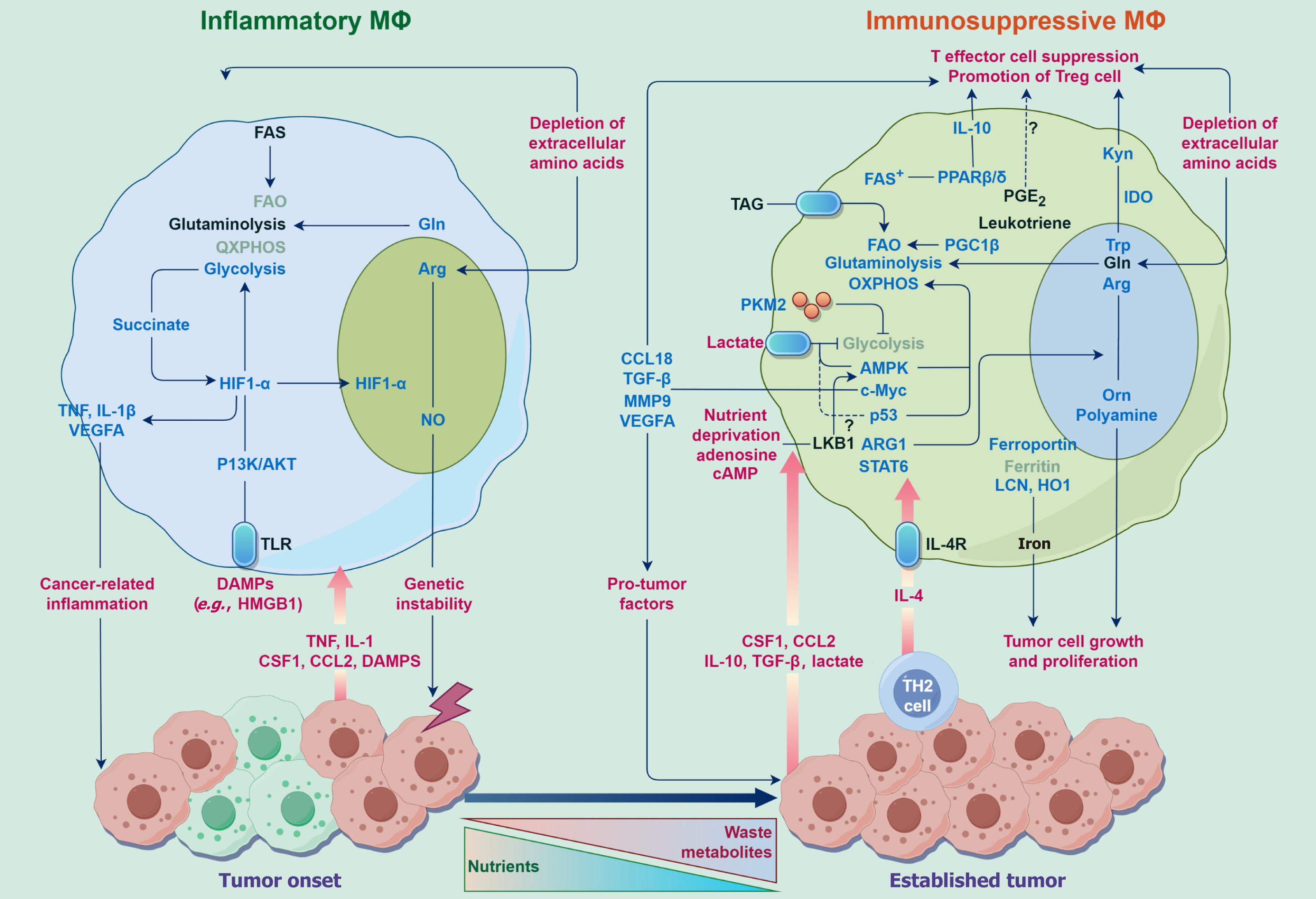
Figure 4 The roles of inflammatory macrophages and immunosuppressive macrophages in cancer.
Role of inflammatory macrophages in tumors: Inflammatory macrophages typically participate in early anti-tumor immune responses. Inflammatory macrophages can recognize and phagocytose tumor cells, eliminating potential tumor cell threats. They release inflammatory cytokines such as tumor necrosis factor alpha, interleukin (IL)-1β, and IL-12 to stimulate an inflammatory response, recruit other immune cells like T cells and natural killer cells, and assist in clearing tumor cells. Inflammatory macrophages also influence tumor development through various molecules and signaling pathways, such as NF-κB signaling pathway, iNOS, IL-12 and IL-23, which promote T cell activation and enhance the immune response. Immunosuppressive macrophages, also known as M2-type macrophages, typically play an immunosuppressive role in the tumor microenvironment, helping to maintain immune balance and reduce inflammation. Immunosuppressive macrophages release anti-inflammatory cytokines like IL-10 and transforming growth factor beta (TGF-β) to suppress the activity of immune cells, especially T cells and influence the growth and survival of tumor cells in the tumor microenvironment through various molecules and signaling pathways, such as STAT3 signaling pathway which is activated in immunosuppressive macrophages, promoting the production of anti-inflammatory factors like TGF-β. Besides, the activity of ARG1 is increased in immunosuppressive macrophages, leading to the degradation of L-arginine and the suppression of T cell activity. This Figure was drawn by Figdraw (Supplementary material). FAS: Fatty acid synthase; FAO: Fatty acid oxidation; DAMP: Damage-associated molecular pattern; IDO: Indoleamine-2,3-dioxygenase; TNF: Tumor necrosis factor; IL: Interleukin; TGF-β: Transforming growth factor-beta.
- Citation: Luan WY, Zhang SP, Xu KZ, Shang YH, Hu WJ, Sun H, Miao YD. Microbiota-driven immunometabolic regulation in colorectal cancer: Mechanisms and therapeutic opportunities. World J Gastrointest Oncol 2026; 18(3): 115722
- URL: https://www.wjgnet.com/1948-5204/full/v18/i3/115722.htm
- DOI: https://dx.doi.org/10.4251/wjgo.v18.i3.115722