
















Copyright: ©Author(s) 2026.
World J Gastrointest Oncol. Mar 15, 2026; 18(3): 115722
Published online Mar 15, 2026. doi: 10.4251/wjgo.v18.i3.115722
Published online Mar 15, 2026. doi: 10.4251/wjgo.v18.i3.115722
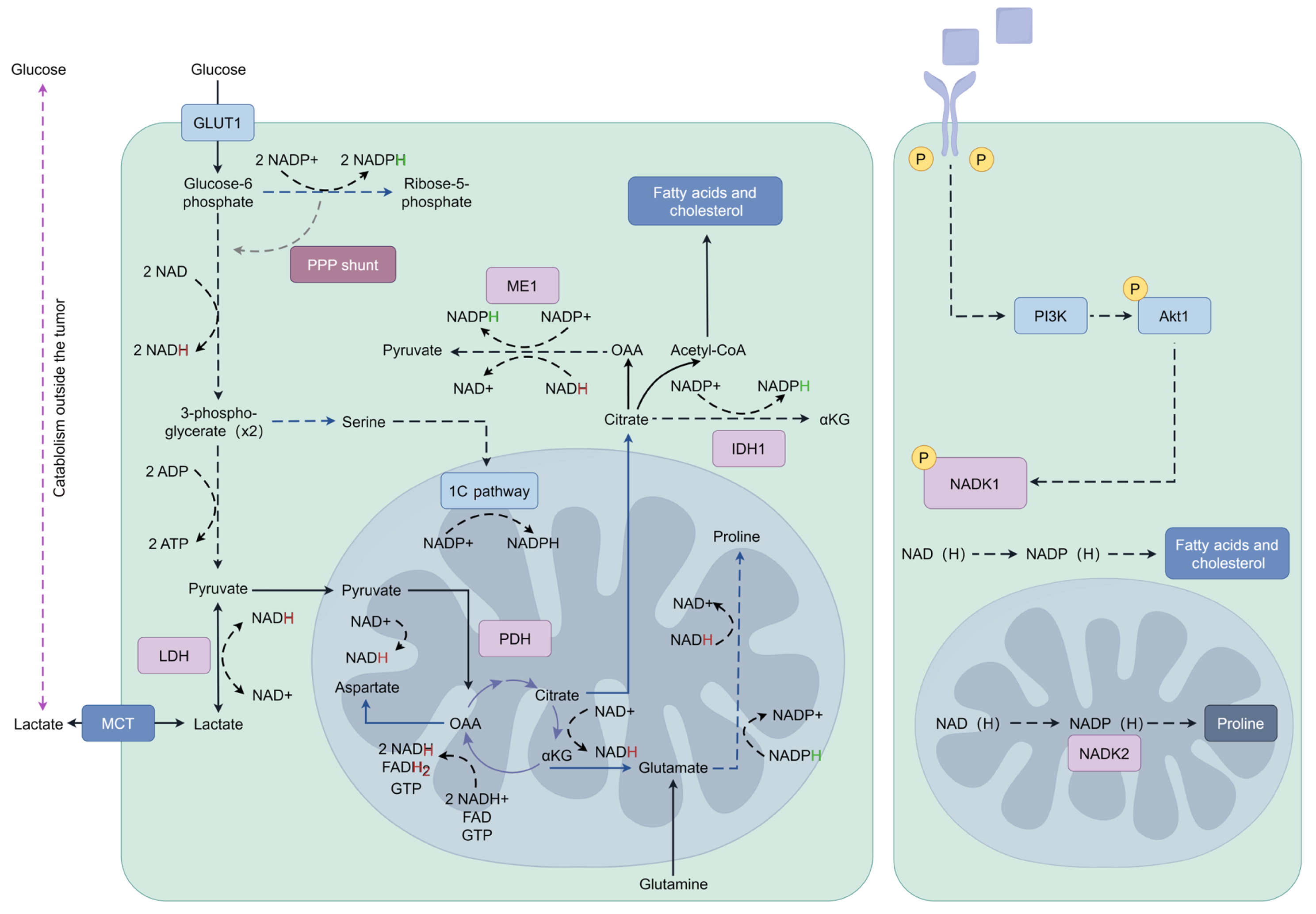
Figure 3 Mechanisms of glucose metabolism and fatty acid metabolism in tumor cell.
Glucose metabolism and fatty acid metabolism are two essential metabolic pathways in cells that provide the necessary energy and building blocks for various cellular processes. Here is a detailed description of these two metabolic processes, including the roles of key molecules: Glucose metabolism: Glycolysis is the process by which glucose is broken down into pyruvate and lactate, typically occurring in the cytoplasm. This pathway involves a series of reactions where glucose is converted into two three-carbon molecules, generating a small amount of ATP and NADH. PFK is the rate-limiting enzyme of glycolysis, and its activity increases in response to energy demands, driving glycolysis. PK promotes the conversion of pyruvate into lactate in the final step of glycolysis. Citric acid cycle (Krebs cycle) takes place in the mitochondria and involves the oxidation of pyruvate into carbon dioxide and ATP. NAD+ and FAD accept electrons during the citric acid cycle and ultimately drive ATP synthesis in the electron transport chain. The electron transport chain is located on the inner mitochondrial membrane and transfers electrons from NADH and FADH2 to oxygen, resulting in the production of a significant amount of ATP. Cytochrome c responsible for electron transfer, ultimately driving ATP synthesis. Fatty acid metabolism: Fatty acid synthesis occurs in the cytoplasm, where acetyl-CoA is used to synthesize long-chain fatty acids through a series of enzymatic reactions. Acetyl-CoA is the initial substrate for fatty acid synthesis, often derived from glucose metabolism. Fatty acid synthase is a key enzyme responsible for synthesizing fatty acids. Fatty acid oxidation occurs in the mitochondria, where long-chain fatty acids are oxidized to generate acetyl-CoA, which is used to produce ATP. This Figure was drawn by Figdraw (Supplementary material). MCT: Monocarboxylate transporter; LDH: Lactate dehydrogenase; PDH: Pyruvate dehydrogenase complex; OAA: Oxaloacetate.
- Citation: Luan WY, Zhang SP, Xu KZ, Shang YH, Hu WJ, Sun H, Miao YD. Microbiota-driven immunometabolic regulation in colorectal cancer: Mechanisms and therapeutic opportunities. World J Gastrointest Oncol 2026; 18(3): 115722
- URL: https://www.wjgnet.com/1948-5204/full/v18/i3/115722.htm
- DOI: https://dx.doi.org/10.4251/wjgo.v18.i3.115722