
















Copyright: ©Author(s) 2026.
World J Gastrointest Oncol. Mar 15, 2026; 18(3): 115028
Published online Mar 15, 2026. doi: 10.4251/wjgo.v18.i3.115028
Published online Mar 15, 2026. doi: 10.4251/wjgo.v18.i3.115028
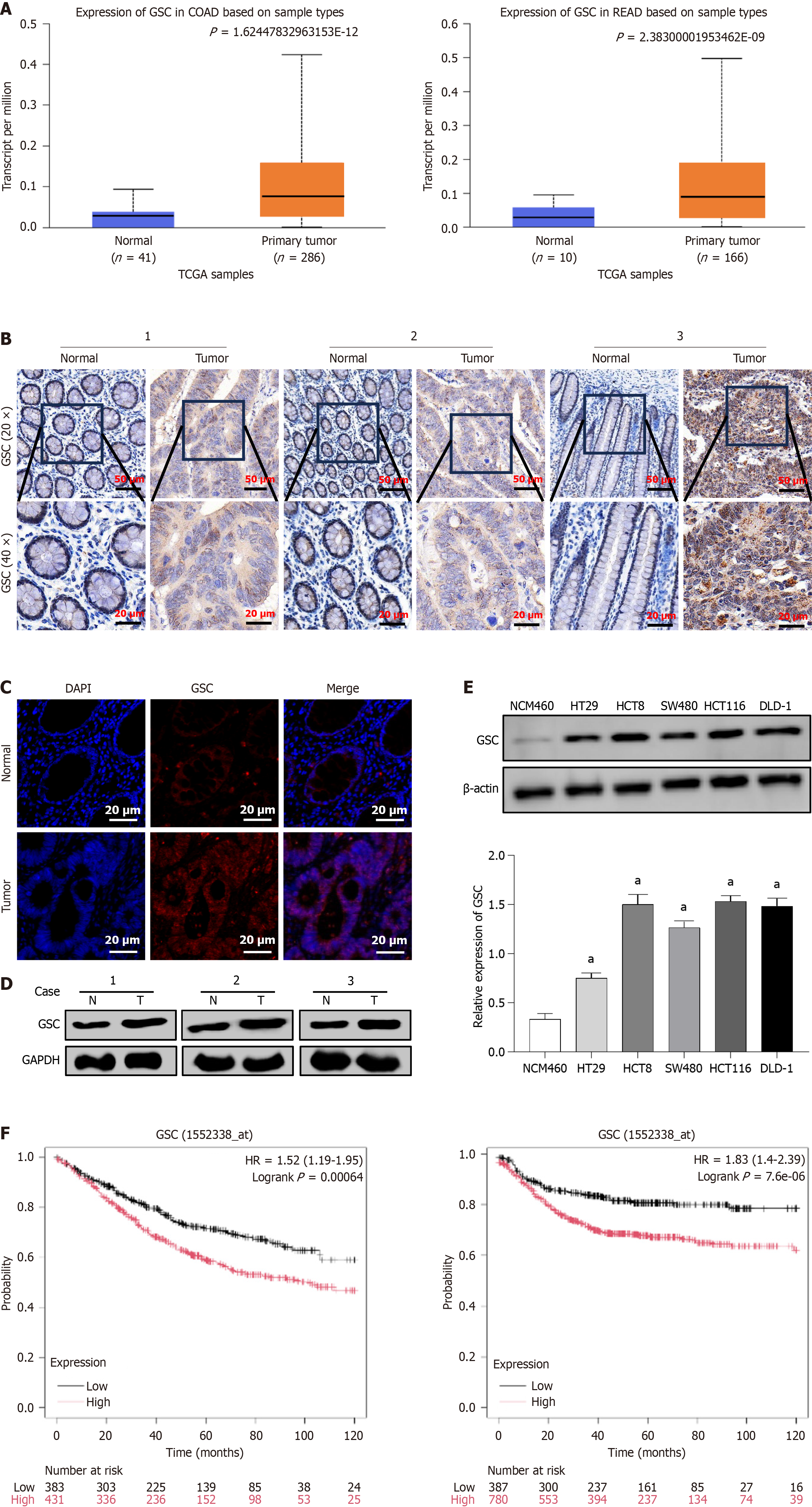
Figure 1 Prognostic significance and differential expression of goosecoid in colorectal cancer.
A: UALCAN database analysis showed that goosecoid (GSC) protein was significantly upregulated in colorectal cancer (CRC); B: Immunohistochemical staining revealing GSC expression in CRC specimens compared to matched non-cancerous tissues. Scale bar: 50 μm (20 ×); scale bar: 20 μm (40 ×); C: Immunofluorescence revealing GSC expression patterns and subcellular distribution in CRC tissues. Scale bar: 20 μm (40 ×); D: Immunoblot analysis of GSC protein levels in three paired CRC/normal tissue samples; E: GSC expression profiles across CRC cell lines (HCT29, HCT8, SW480, HCT116, and DLD-1) and normal colonic NCM460 cells; F: Kaplan-Meier curves demonstrating correlation between elevated GSC expression and reduced 10-year overall and recurrence-free survival. All data are the mean ± SD from three independent experiments. aP < 0.05. COAD: Colon adenocarcinoma; CRC: Colorectal cancer; GSC: Goosecoid; READ: Rectal adenocarcinoma; TCGA: The Cancer Genome Atlas.
- Citation: Li BC, Wang BZ, Han L, Zhang ZW, Wang Y, Zhang YJ, Zhang JN. Goosecoid drives colorectal cancer progression by inducing epithelial-mesenchymal transition. World J Gastrointest Oncol 2026; 18(3): 115028
- URL: https://www.wjgnet.com/1948-5204/full/v18/i3/115028.htm
- DOI: https://dx.doi.org/10.4251/wjgo.v18.i3.115028