
















Copyright: ©Author(s) 2026.
World J Gastrointest Oncol. Mar 15, 2026; 18(3): 113757
Published online Mar 15, 2026. doi: 10.4251/wjgo.v18.i3.113757
Published online Mar 15, 2026. doi: 10.4251/wjgo.v18.i3.113757
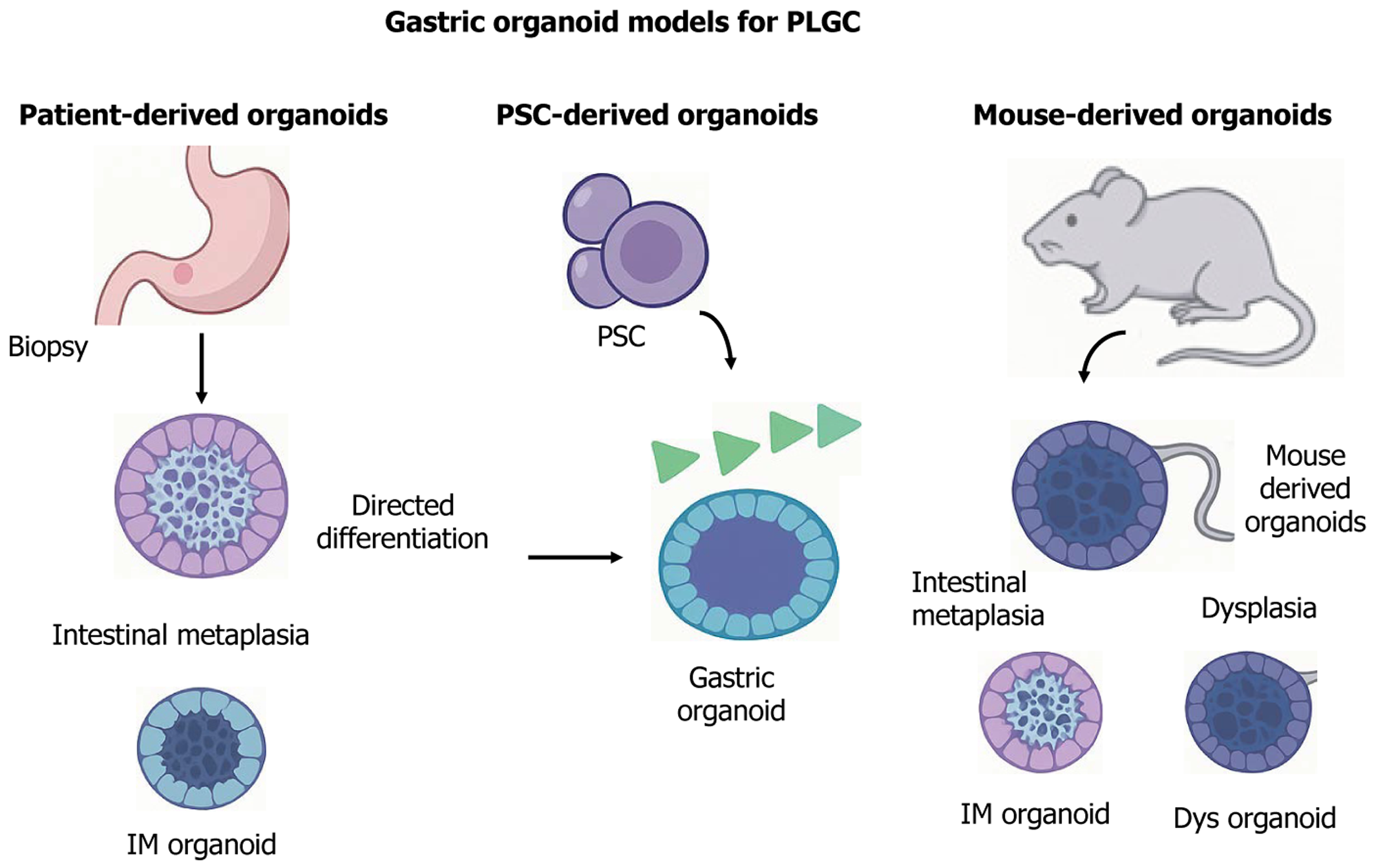
Figure 5 Construction and application of organoid models in precancerous lesions of gastric cancer research.
Organoids can be derived from patient tissues, pluripotent stem cells, or gastric tissues of genetically engineered mice: (1) Patient-derived organoids preserve key histological and molecular features of intestinal metaplasia (IM), dysplasia, and early gastric cancer, enabling personalized modeling of disease progression; (2) Pluripotent stem cell-derived organoids recapitulate gastric development and can be genetically modified to simulate metaplastic transitions (e.g., caudal-related homeobox transcription factor 2-driven IM); and (3) Mouse-derived organoids, including those from models like Mist1-Kras and leucine-rich repeat-containing G protein-coupled receptor 5-p53-/-, facilitate studies of genetic alterations in spasmolytic polypeptide-expressing metaplasia, IM, and dysplasia. Co-culture systems with immune cells or Helicobacter pylori further allow mechanistic investigations into inflammation, epithelial remodeling, and host-pathogen dynamics. These platforms provide versatile tools for in vitro modeling of the Correa cascade. PLGC: Precancerous lesions of gastric cancer; IM: Intestinal metaplasia; PSC: Pluripotent stem cell; Dys: Dysplasia.
- Citation: Zhou LJ, Hao XY, Wang C, Ren NN, Wang YG. Comprehensive modeling of the Correa cascade in precancerous lesions of gastric cancer: Leveraging animal, cellular, and organoid systems for translational insights. World J Gastrointest Oncol 2026; 18(3): 113757
- URL: https://www.wjgnet.com/1948-5204/full/v18/i3/113757.htm
- DOI: https://dx.doi.org/10.4251/wjgo.v18.i3.113757