











Copyright: ©Author(s) 2026.
World J Gastrointest Oncol. Mar 15, 2026; 18(3): 113757
Published online Mar 15, 2026. doi: 10.4251/wjgo.v18.i3.113757
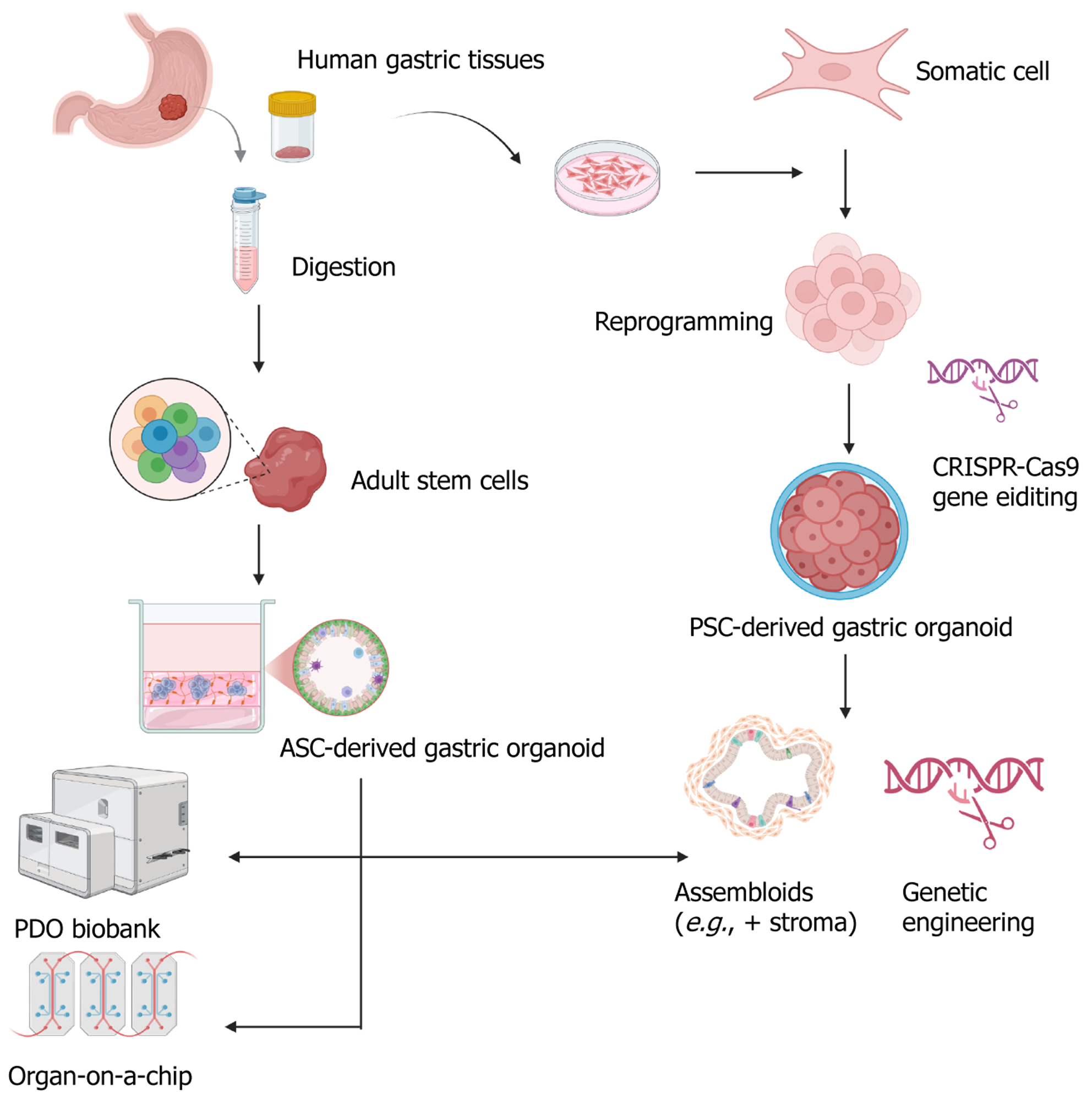
Figure 4 Human gastric organoids can be established either from adult stem cells isolated from gastric tissue biopsies or from plu ripotent stem cells such as reprogrammed fibroblasts.
In the adult stem cell-derived pathway (left), gastric tissue is enzymatically digested to release adult stem cells, which are embedded in Matrigel and cultured to form gastric organoids. In the pluripotent stem cell-derived pathway (right), somatic cells are reprogrammed into induced pluripotent stem cells, differentiated through embryoid body formation and directed endodermal specification to generate gastric organoids. Both organoid systems can be applied to downstream platforms, including patient-derived organoid biobanking, genetic engineering (e.g., CRISPR/Cas9), organ-on-a-chip systems, and advanced assembloid models incorporating stromal or immune components. ASC: Adult stem cell; PDO: Precancerous organoids; PSC: Pluripotent stem cell.
- Citation: Zhou LJ, Hao XY, Wang C, Ren NN, Wang YG. Comprehensive modeling of the Correa cascade in precancerous lesions of gastric cancer: Leveraging animal, cellular, and organoid systems for translational insights. World J Gastrointest Oncol 2026; 18(3): 113757
- URL: https://www.wjgnet.com/1948-5204/full/v18/i3/113757.htm
- DOI: https://dx.doi.org/10.4251/wjgo.v18.i3.113757