











Copyright: ©Author(s) 2026.
World J Gastrointest Oncol. Mar 15, 2026; 18(3): 113757
Published online Mar 15, 2026. doi: 10.4251/wjgo.v18.i3.113757
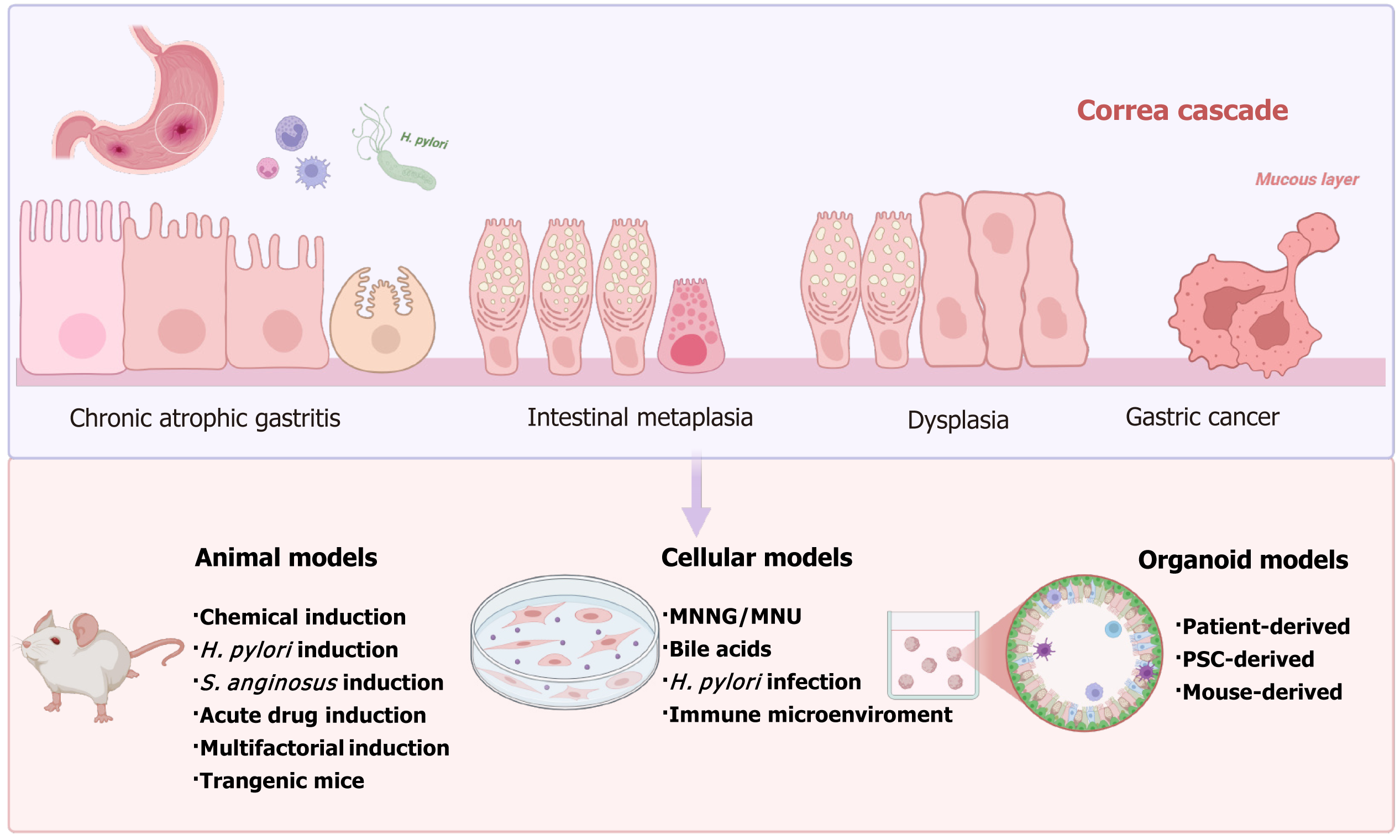
Figure 2 Representative experimental models for each stage of the Correa cascade, from chronic and atrophic gastritis to intestinal me taplasia, dysplasia, and early gastric cancer.
It includes: (1) Animal models: N-methyl-N’-nitro-N-nitrosoguanidine-induced lesions in rats, Helicobacter pylori-infected mice, and spasmolytic polypeptide-expressing metaplasia models induced by tamoxifen or genetic modification; (2) Cellular models: Human gastric epithelial cell lines (e.g., gastric epithelial cell-1) exposed to chemical, inflammatory, or infectious stimuli to simulate precancerous changes; and (3) Organoid models: Patient-derived organoids from intestinal metaplasia or dysplastic tissue, pluripotent stem cell-derived gastric organoids via directed differentiation, and organoids from genetically engineered mice. Together, these models offer complementary platforms for investigating the stage-specific pathogenesis, immune responses, and therapeutic targets of precancerous gastric lesions. H. pylori: Helicobacter pylori; S. anginosus: Streptococcus anginosus; MNNG: N-methyl-N’-nitro-N-nitro soguanidine; MNU: N-Nitroso-N-methylurea; PSC: Pluripotent stem cell.
- Citation: Zhou LJ, Hao XY, Wang C, Ren NN, Wang YG. Comprehensive modeling of the Correa cascade in precancerous lesions of gastric cancer: Leveraging animal, cellular, and organoid systems for translational insights. World J Gastrointest Oncol 2026; 18(3): 113757
- URL: https://www.wjgnet.com/1948-5204/full/v18/i3/113757.htm
- DOI: https://dx.doi.org/10.4251/wjgo.v18.i3.113757