
















©The Author(s) 2026.
World J Gastrointest Oncol. Feb 15, 2026; 18(2): 115974
Published online Feb 15, 2026. doi: 10.4251/wjgo.v18.i2.115974
Published online Feb 15, 2026. doi: 10.4251/wjgo.v18.i2.115974
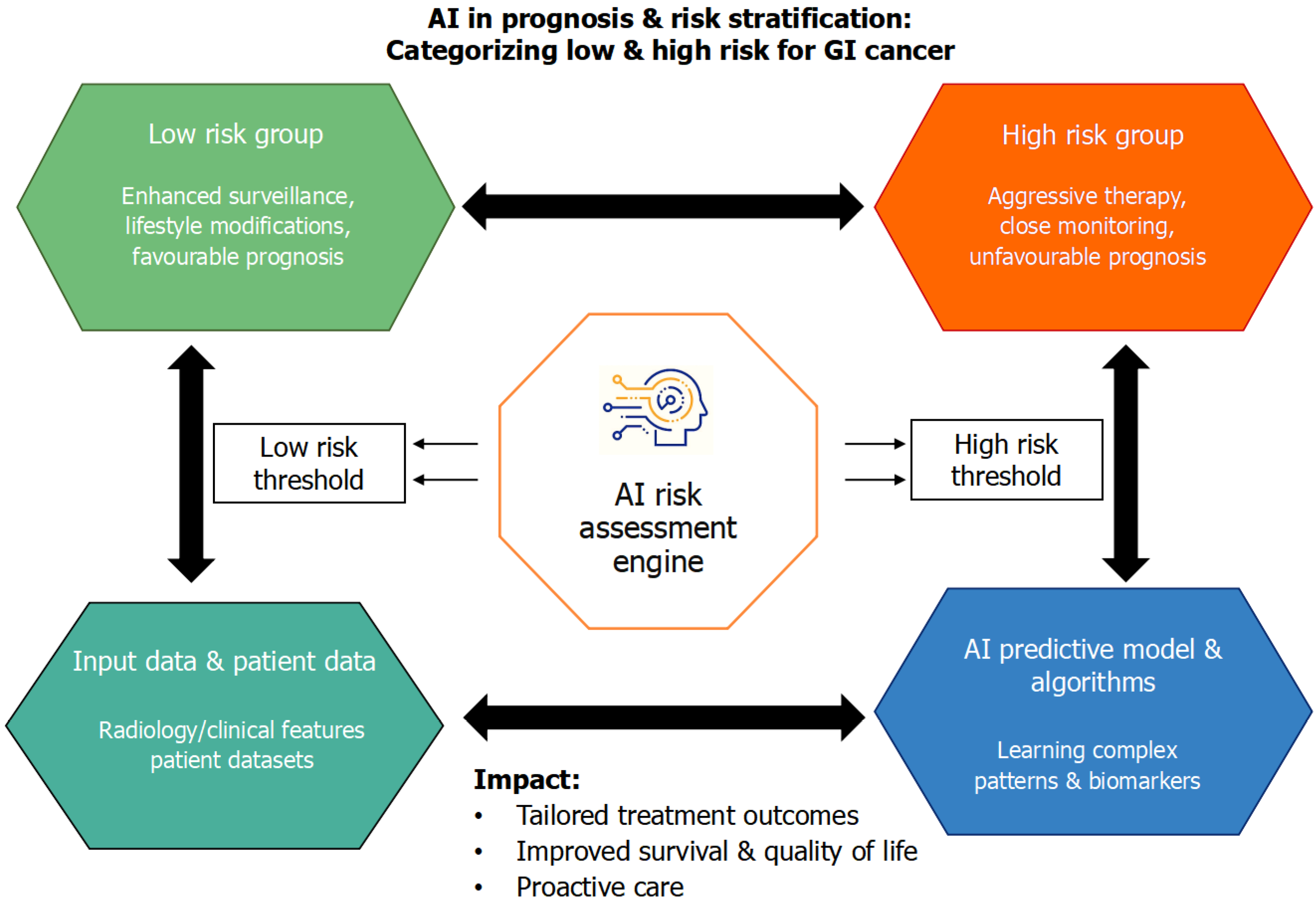
Figure 3 Artificial intelligence-driven risk stratification for gastrointestinal cancer management.
This schematic outlines the process of the artificial intelligence (AI) Risk Assessment Engine integrating multiple data streams to classify patients into distinct risk groups for gastrointestinal cancer. The engine processes clinical and patient data (including electronic health records, demographics, and medical history) through AI predictive models and algorithms (such as machine learning classifiers). The output is a clear risk stratification, separating individuals into a high-risk group and a low-risk group based on predefined high-risk thresholds and low-risk thresholds. This precise stratification informs patient management and leads to improved clinical outcomes, including improved survival, quality of life, and targeted, proactive care (e.g., personalized screening or surveillance protocols). GI: Gastrointestinal; AI: Artificial intelligence.
- Citation: Sehgal T, Joshi T, Chowdhary R, Goyal O, Kalra S, Goyal R, Taranikanti V, Vuthaluru AR, Goyal MK. Deep learning in lower gastrointestinal cancer detection: Advances in endoscopic, radiologic, and histopathologic diagnostics. World J Gastrointest Oncol 2026; 18(2): 115974
- URL: https://www.wjgnet.com/1948-5204/full/v18/i2/115974.htm
- DOI: https://dx.doi.org/10.4251/wjgo.v18.i2.115974