
















©The Author(s) 2026.
World J Gastrointest Oncol. Feb 15, 2026; 18(2): 114782
Published online Feb 15, 2026. doi: 10.4251/wjgo.v18.i2.114782
Published online Feb 15, 2026. doi: 10.4251/wjgo.v18.i2.114782
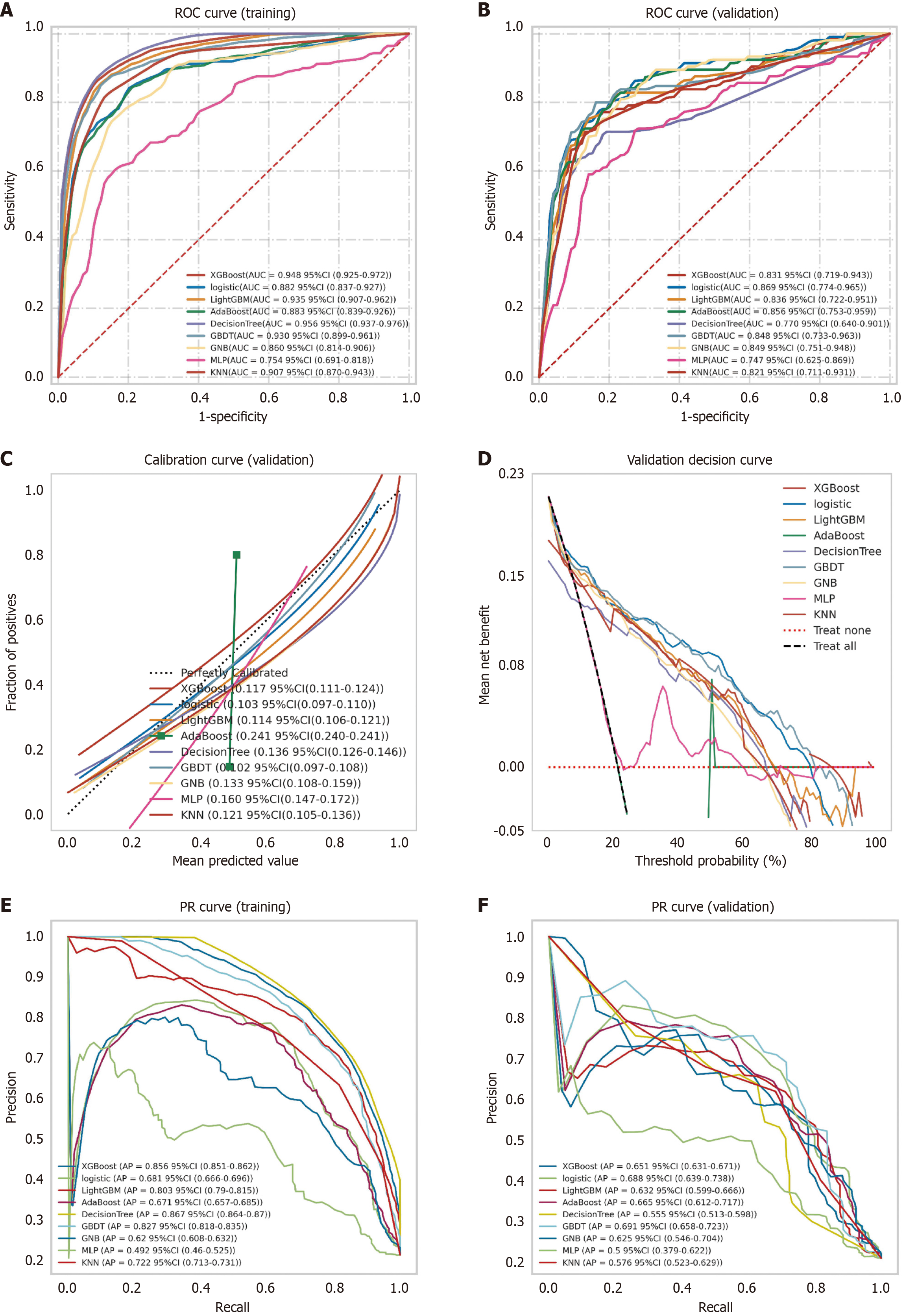
Figure 3 Comprehensive performance evaluation of machine learning models.
A: Receiver operating characteristic curve and area under the curve values for the training set; B: Receiver operating characteristic curve and area under the curve values for the validation set using five 7:3 random splits; C: Calibration curve shows predicted vs observed probabilities. Dashed diagonal indicates ideal reference. Solid lines show model performance. Better calibration is indicated by closer fit to diagonal and lower Brier scores (in parentheses); D: Decision curve analysis compares models. Black dashed line: All patients undergo non-curative resection; red dashed line: No intervention; E: Precision-recall curve and average precision (AP) for training set; F: Precision-recall curve and AP for validation set (Y-axis: Precision; X-axis: Recall). The logistic regression model showed consistently superior performance. Superiority is determined either by complete curve encapsulation or higher AP values for intersecting curves. Models are color-coded with mean and 95% confidence intervals. ROC: Receiver operating characteristic; AUC: Area under the curve; CI: Confidence interval; PR: Precision-recall.
- Citation: Luo ZC, Guo HY, Tang X, Chen XR, Zhang CY, Cui YT, Zuo J, Li HR, Hou XM, Chen H, Song SB, Wang XF. Predicting the magnitude of risk for non-curative endoscopic submucosal dissection in superficial esophageal cancer using explainable artificial intelligence. World J Gastrointest Oncol 2026; 18(2): 114782
- URL: https://www.wjgnet.com/1948-5204/full/v18/i2/114782.htm
- DOI: https://dx.doi.org/10.4251/wjgo.v18.i2.114782