
















Copyright: ©Author(s) 2026.
World J Gastrointest Oncol. Dec 15, 2026; 18(12): 126440
Published online Dec 15, 2026. doi: 10.4251/wjgo.126440
Published online Dec 15, 2026. doi: 10.4251/wjgo.126440
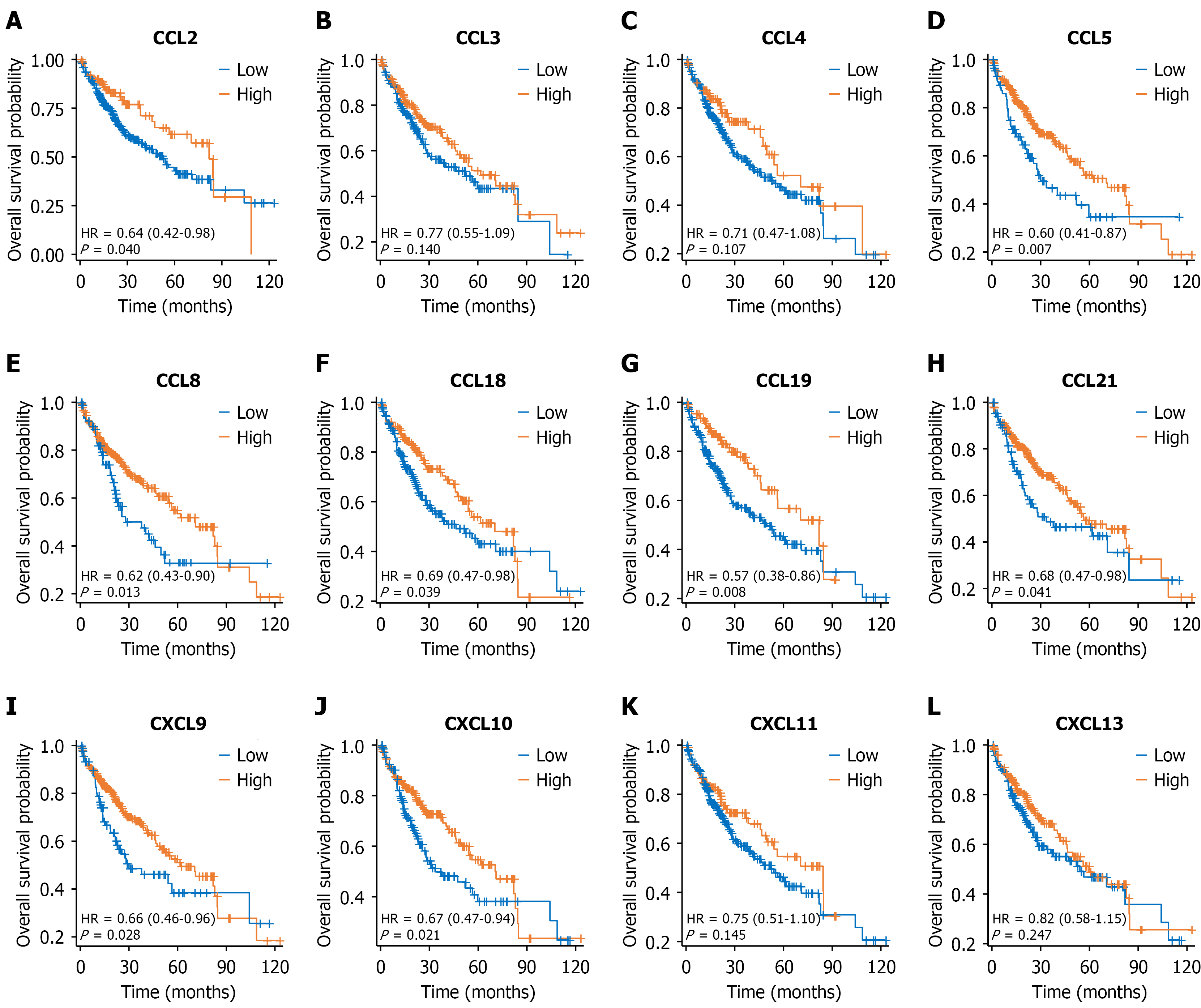
Figure 2 Tertiary lymphoid structure-associated chemokine expression is associated with improved overall survival in hepatocellular carcinoma.
A-L: Kaplan–Meier curves of overall survival for patients with hepatocellular carcinoma stratified by the expression levels of tertiary lymphoid structure-associated chemokines, including CCL2 (A), CCL3 (B), CCL4 (C), CCL5 (D), CCL8 (E), CCL18 (F), CCL19 (G), CCL21 (H), CXCL9 (I), CXCL10 (J), CXCL11 (K), and CXCL13 (L). Patients were divided into high- and low-expression groups. Hazard ratios with 95%CIs and log-rank P values are shown in each panel. Orange indicates high expression, and blue indicates low expression. HR: Hazard ratio.
- Citation: Chen K, Wang YQ, Guo MC, Gu XY, Chen XM, Luo SS, Liu S. Tertiary lymphoid structure-associated chemokine programs define an immune-organized tumor microenvironment with prognostic relevance in hepatocellular carcinoma. World J Gastrointest Oncol 2026; 18(12): 126440
- URL: https://www.wjgnet.com/1948-5204/full/v18/i12/126440.htm
- DOI: https://dx.doi.org/10.4251/wjgo.126440