
















Copyright: ©Author(s) 2026.
World J Gastrointest Oncol. Dec 15, 2026; 18(12): 125816
Published online Dec 15, 2026. doi: 10.4251/wjgo.125816
Published online Dec 15, 2026. doi: 10.4251/wjgo.125816
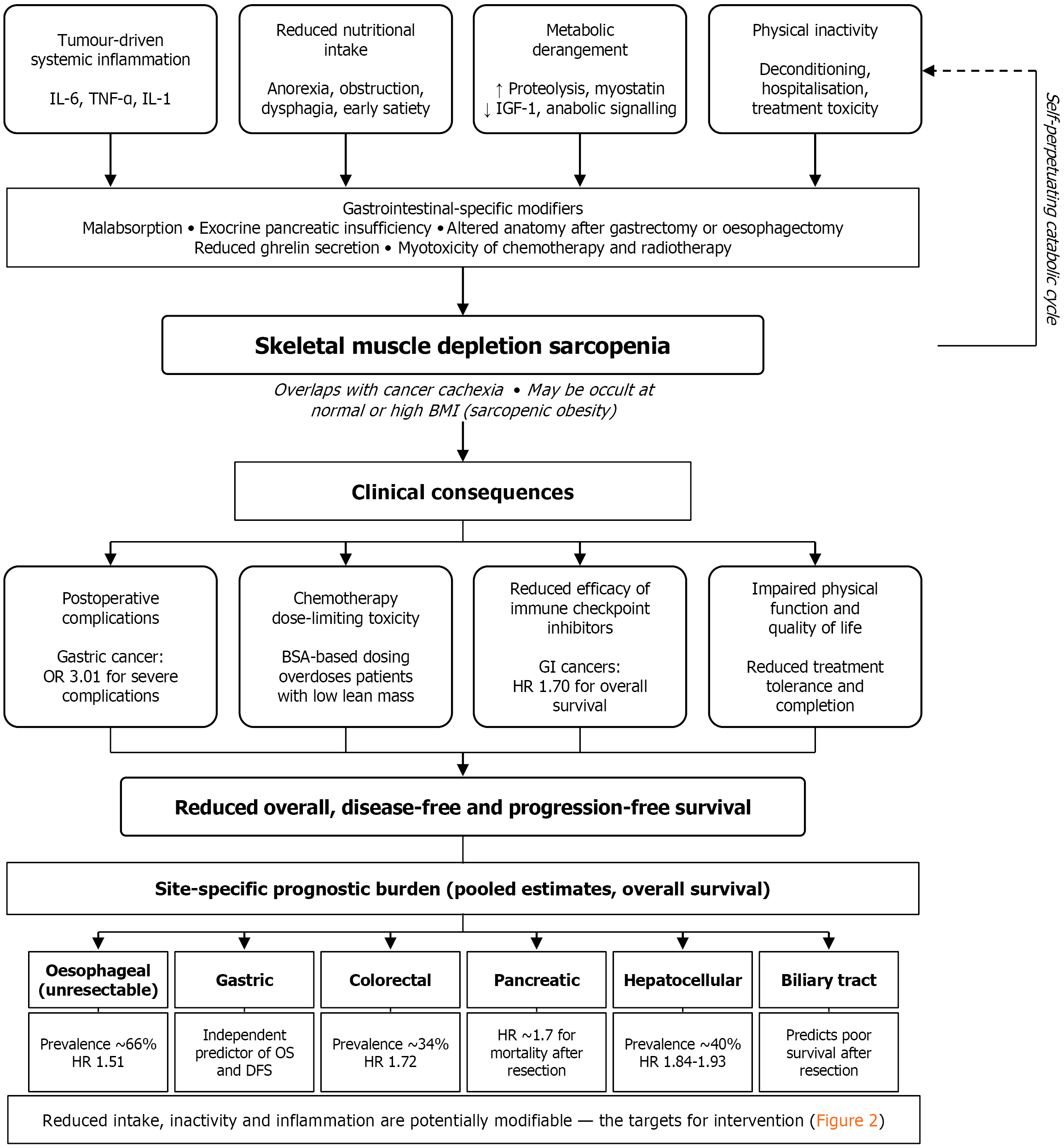
Figure 1 Conceptual framework of sarcopenia in gastrointestinal malignancies.
Tumor- and host-derived mechanisms converge on a negative protein and energy balance and net skeletal muscle catabolism. Tumor-derived and host-derived pro-inflammatory cytokines (interleukin-6, tumor necrosis factor-alpha, interleukin-1) activate the ubiquitin-proteasome and autophagy-lysosome pathways, while myostatin/activin signaling is increased and insulin-like growth factor-1 signaling is impaired. These systemic mechanisms are compounded in gastrointestinal malignancy by tumor- and treatment-specific barriers to intake and absorption (mechanical obstruction, dysphagia, early satiety, malabsorption, exocrine pancreatic insufficiency, altered anatomy and reduced ghrelin secretion after upper gastrointestinal resection) and by reduced physical activity, hospitalization and the myotoxic effects of chemotherapy and radiotherapy. Modifiable targets for multimodal intervention are highlighted. IGF-1: Insulin-like growth factor-1; IL-1: Interleukin-1; IL-6: Interleukin-6; TNF-α: Tumor necrosis factor-alpha; BMI: Body mass index; OR: Odds ratio; BSA: Bovine serum albumin; HR: Hazard ratio; GI: Gastrointestinal; OS: Overall survival; DFS: Disease-free survival.
- Citation: Venugopalan A, Sirohiya P. Sarcopenia in gastrointestinal malignancies: Assessment, prognostic significance, and multidisciplinary management. World J Gastrointest Oncol 2026; 18(12): 125816
- URL: https://www.wjgnet.com/1948-5204/full/v18/i12/125816.htm
- DOI: https://dx.doi.org/10.4251/wjgo.125816