
















Copyright: ©Author(s) 2026.
World J Gastrointest Oncol. Dec 15, 2026; 18(12): 124869
Published online Dec 15, 2026. doi: 10.4251/wjgo.124869
Published online Dec 15, 2026. doi: 10.4251/wjgo.124869
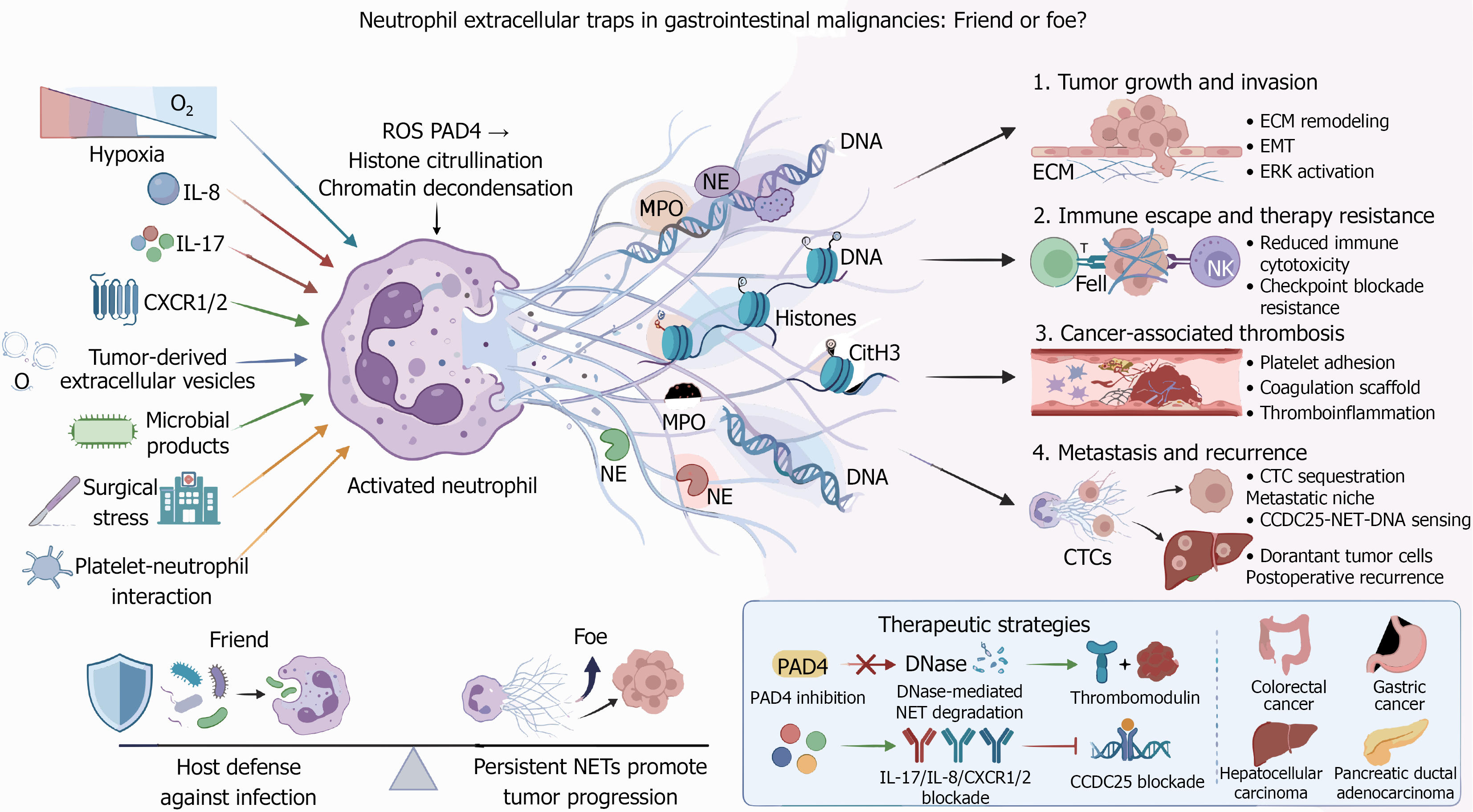
Figure 1 Context-dependent roles of neutrophil extracellular traps in gastrointestinal malignancies.
Tumor-associated stimuli such as hypoxia, interleukin-8, interleukin-17, CXCR1/2 signaling, microbial products, surgical stress, tumor-derived extracellular vesicles, and platelet-neutrophil interactions can induce neutrophil extracellular trap (NET) formation via reactive oxygen species production, peptidyl arginine deiminase 4 activation, histone citrullination, and chromatin decondensation. NETs consist of extracellular DNA decorated with citrullinated histone H3, myeloperoxidase, neutrophil elastase, histones, and other granular proteins. In gastrointestinal malignancies, persistent NET accumulation may promote tumor growth, epithelial-mesenchymal transition, immune escape, cancer-associated thrombosis, circulating tumor cell trapping, metastatic niche formation, dormant tumor cell awakening, and postoperative recurrence. However, NETs may also support host defense against infection. Therapeutic strategies include inhibiting NET formation, degrading NET scaffolds, blocking NET-inducing cytokine or chemokine pathways, modulating thromboinflammation, and inhibiting tumor cell NET-DNA sensing. IL: Interleukin; ROS: Reactive oxygen species; PAD4: Peptidyl arginine deiminase 4; MPO: Myeloperoxidase; NE: Neutrophil elastase; CitH3: Citrullinated histone H3; NK: Natural killer cell; ECM: Extracellular matrix; EMT: Epithelial-mesenchymal transition; CTC: Circulating tumor cell.
- Citation: Lang G, Mu DG, Yan S, Jiao Y, Wang HL. Neutrophil extracellular traps in gastrointestinal malignancies: Friend or foe? World J Gastrointest Oncol 2026; 18(12): 124869
- URL: https://www.wjgnet.com/1948-5204/full/v18/i12/124869.htm
- DOI: https://dx.doi.org/10.4251/wjgo.124869