
















Copyright: ©Author(s) 2026.
World J Gastrointest Oncol. Nov 15, 2026; 18(11): 121010
Published online Nov 15, 2026. doi: 10.4251/wjgo.121010
Published online Nov 15, 2026. doi: 10.4251/wjgo.121010
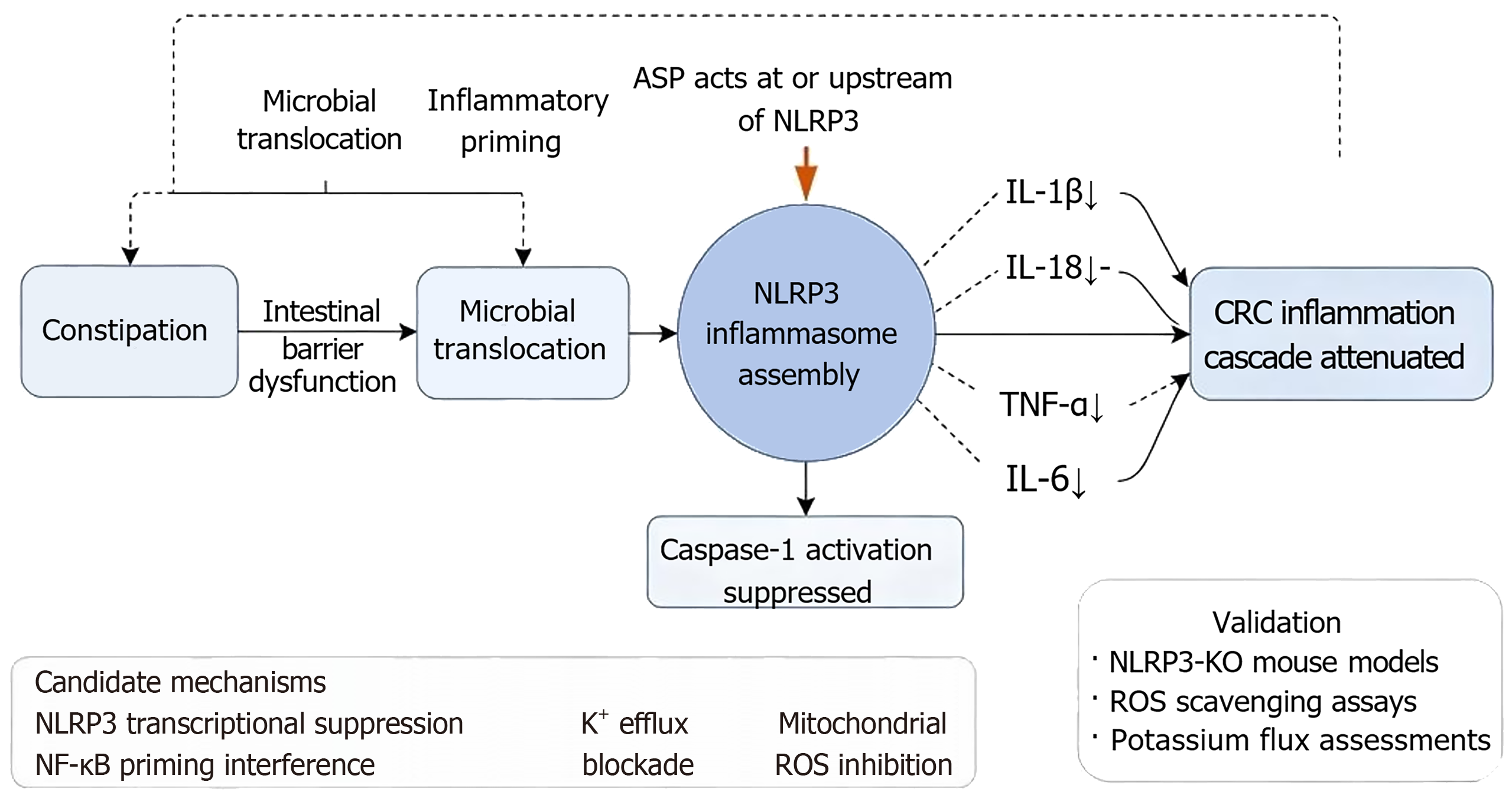
Figure 8 Potential mechanistic model of Angelica sinensis polysaccharide inhibiting the constipation-to-colorectal cancer inflammation cascade.
Angelica sinensis polysaccharide is proposed to act at or upstream of NOD-like receptor protein 3 (NLRP3) inflammasome assembly, suppressing caspase-1 activation and downstream inflammatory mediators [interleukin (IL)-1β, IL-18, tumor necrosis factor-alpha, and IL-6]. The precise molecular target remains unclear, with candidate mechanisms including transcriptional suppression of NLRP3, interference with nuclear factor kappa-B priming, or blockade of potassium efflux/mitochondrial reactive oxygen species. Validation will require NLRP3-knockout mouse models, reactive oxygen species scavenging assays, and potassium flux assessments. Dashed arrows denote putative regulatory relationships pending experimental confirmation. ASP: Angelica sinensis polysaccharide; CRC: Colorectal cancer; NLRP3: NOD-like receptor protein 3; IL-1β: Interleukin-1 beta; IL-18: Interleukin-18; TNF-α: Tumor necrosis factor-alpha; IL-6: Interleukin-6; NF-κB: Nuclear factor kappa-B; ROS: Reactive oxygen species; KO: Knockout.
- Citation: Huang X, Liu WCN, Li DX. Angelica sinensis polysaccharide attenuates constipation-associated colorectal carcinogenesis by inhibiting the NLRP3/Caspase-1/IL-1β inflammasome axis. World J Gastrointest Oncol 2026; 18(11): 121010
- URL: https://www.wjgnet.com/1948-5204/full/v18/i11/121010.htm
- DOI: https://dx.doi.org/10.4251/wjgo.121010