
















Copyright: ©Author(s) 2026.
World J Gastrointest Oncol. Oct 15, 2026; 18(10): 123494
Published online Oct 15, 2026. doi: 10.4251/wjgo.123494
Published online Oct 15, 2026. doi: 10.4251/wjgo.123494
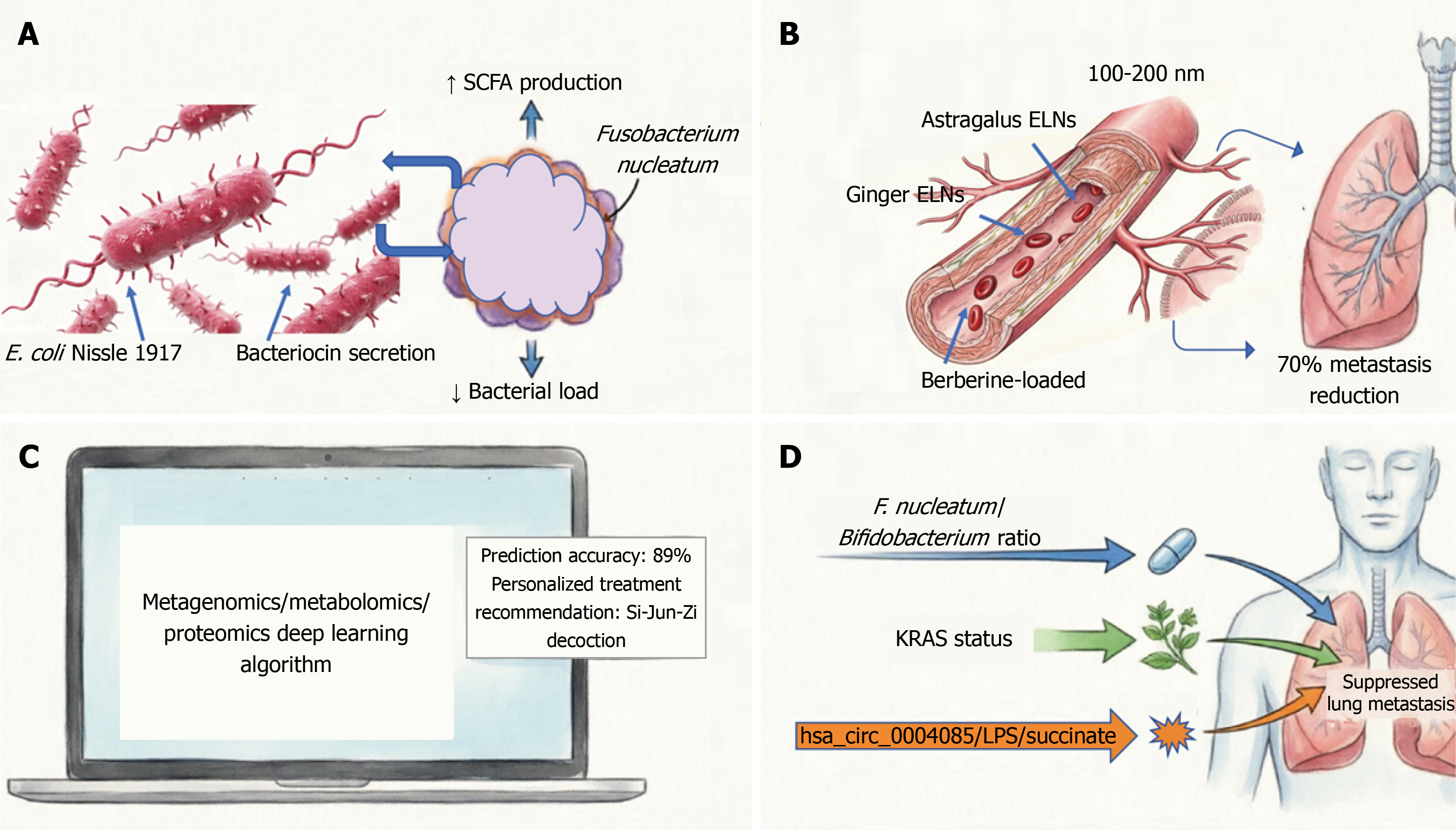
Figure 6 Future outlook of gut-lung axis directional treatment in colorectal cancer lung metastasis.
A: Designing probiotics: Gene changed E. coli Nissle 1917 secretion of bacteriocin targets Fusobacterium nucleatum (F. nucleatum), which lowers bacterial quantity and increases short-chain fatty acid output; B: Exosome-like nanoparticles derived from traditional Chinese medicine: Nanoparticles from plant sources such as Astragalus and ginger, which are loaded with berberine (100-200 nm), travel to the lungs via blood circulation, thus obtaining a 70% decrease in metastasis; C: Artificial intelligence help network forecast: One deep learning arithmetic gathers metagenomic, metabolomic, and proteomic information to forecast individual Chinese medicine therapy (e.g., Si-Jun-Zi decoction) which has accuracy of 89%; D: Comprehensive individual treatment: Patient grouping according to microorganism spectrum (F. nucleatum/Bifidobacterium proportion), heredity condition (KRAS), and cycle biology signs (hsa_circ_0004085, lipopolysaccharide, succinate) guide combination treatment to prevent lung metastasis. SCFA: Short-chain fatty acid; ELNs: Exosome-like nanoparticles; LPS: Lipopolysaccharide.
- Citation: Wang GL, Deng H, Wang G, Qu NN. Mechanisms of the gut-lung axis in regulating lung metastasis of colorectal cancer and advances in traditional Chinese medicine intervention. World J Gastrointest Oncol 2026; 18(10): 123494
- URL: https://www.wjgnet.com/1948-5204/full/v18/i10/123494.htm
- DOI: https://dx.doi.org/10.4251/wjgo.123494