
















Copyright: ©Author(s) 2026.
World J Gastrointest Oncol. Oct 15, 2026; 18(10): 123261
Published online Oct 15, 2026. doi: 10.4251/wjgo.123261
Published online Oct 15, 2026. doi: 10.4251/wjgo.123261
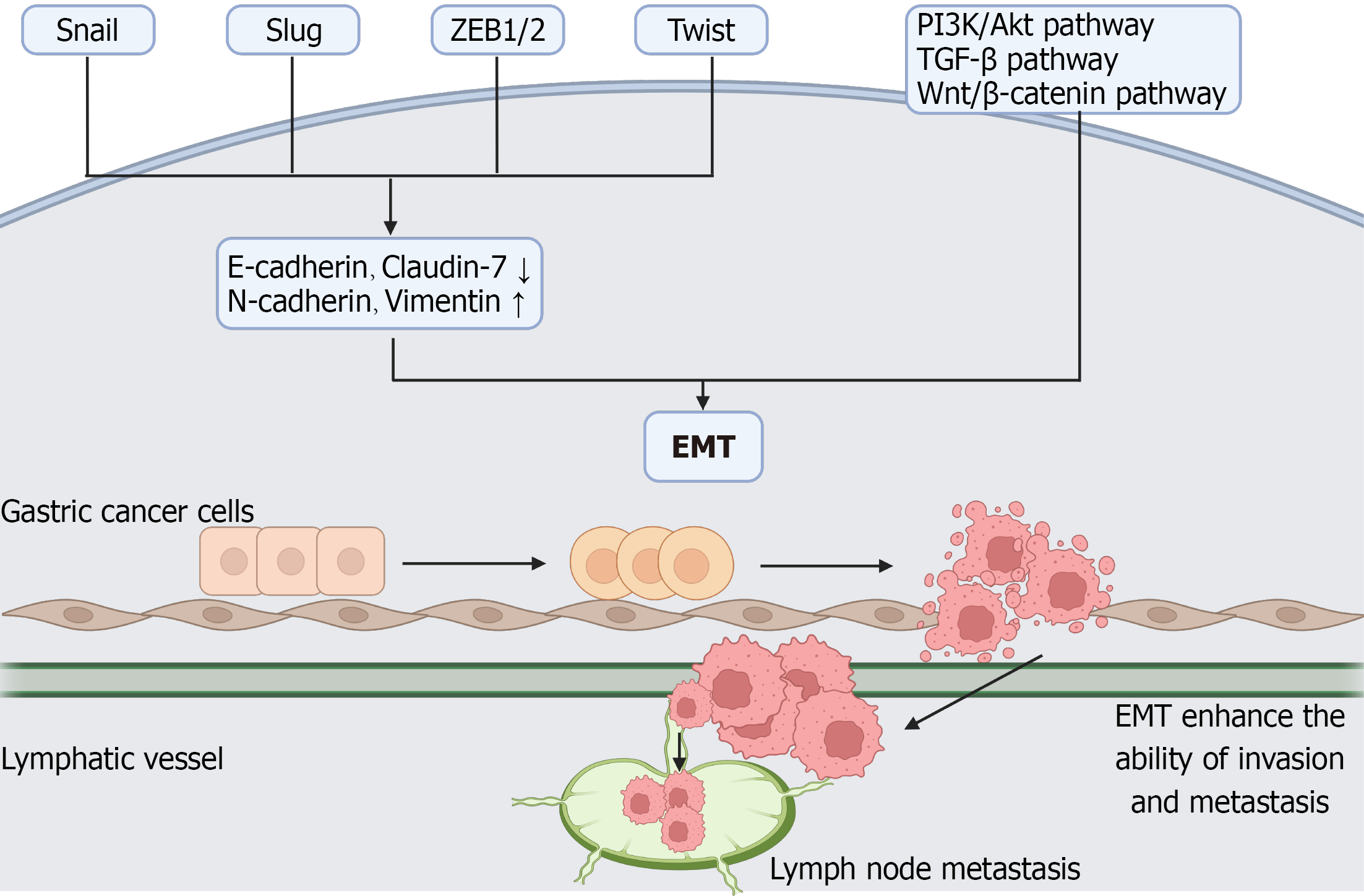
Figure 2 Schematic representation of epithelial-mesenchymal transition-driven lymph node metastasis in early gastric cancer.
Epithelial-mesenchymal transition is characterized by loss of epithelial markers and gain of mesenchymal markers, accompanied by activation of transcription factors such as Snail, Slug, zinc finger E-box binding homeobox 1/2, and Twist. These changes enhance tumor cell motility and invasiveness, facilitating tumor cell dissemination and lymphatic spread. ZEB1/2: Zinc finger E-box binding homeobox 1/2; PI3K/Akt: Phosphatidylinositol 3’-kinase/protein kinase B; TGF: Transforming growth factor; EMT: Epithelial-mesenchymal transition.
- Citation: Xia MT, Zhou Q, Han H, Zhang D, Fan X. Lymph node metastasis in early gastric cancer: A review of risk stratification and surgical decision-making. World J Gastrointest Oncol 2026; 18(10): 123261
- URL: https://www.wjgnet.com/1948-5204/full/v18/i10/123261.htm
- DOI: https://dx.doi.org/10.4251/wjgo.123261