
















©The Author(s) 2026.
World J Gastrointest Oncol. Jan 15, 2026; 18(1): 114040
Published online Jan 15, 2026. doi: 10.4251/wjgo.v18.i1.114040
Published online Jan 15, 2026. doi: 10.4251/wjgo.v18.i1.114040
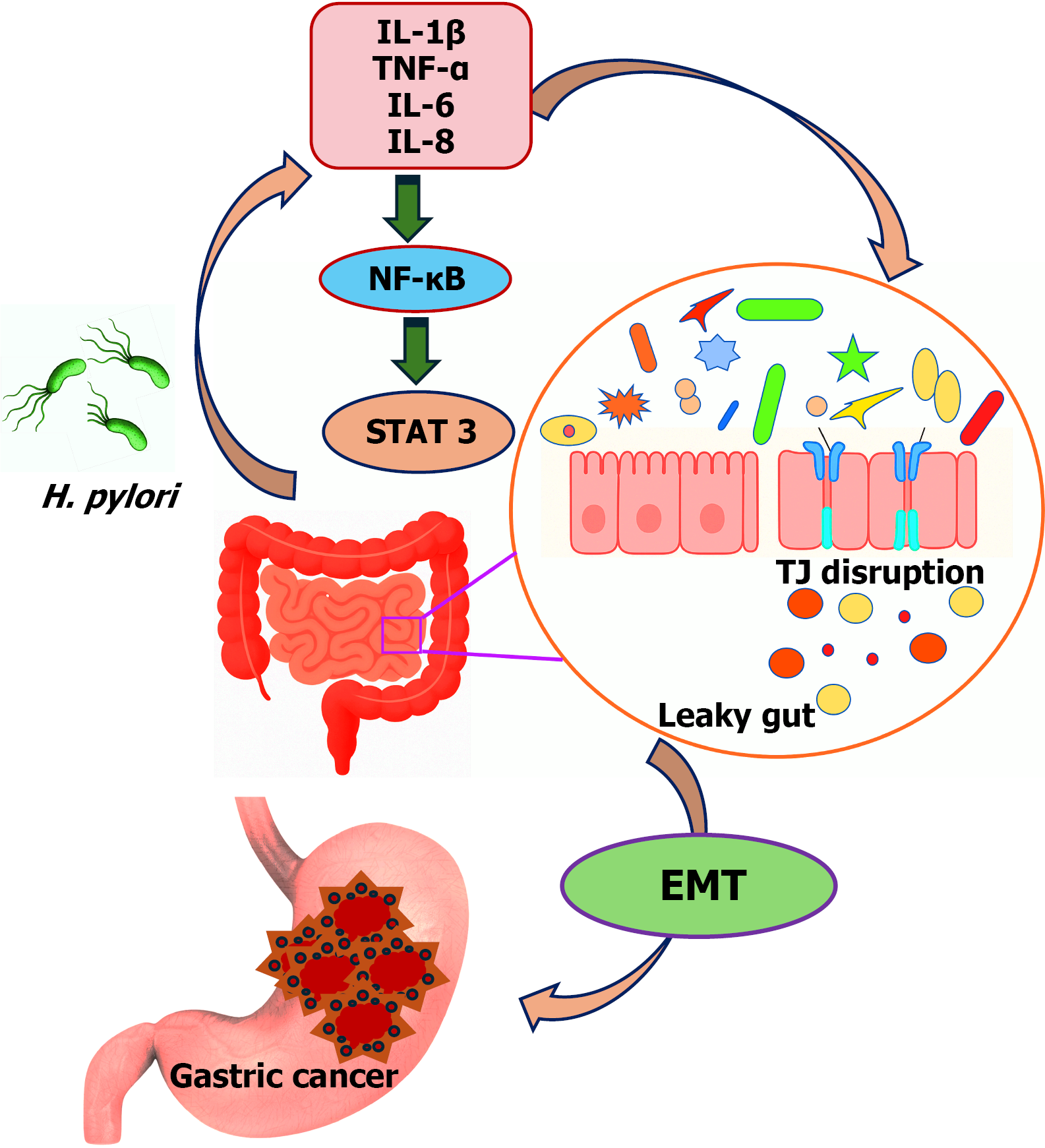
Figure 2 Schematic illustration of the interplay among tight junctions, inflammation, gut microbiota, and gastric cancer progression.
Helicobacter pylori infection triggers gastric inflammation by activating cytokine, nuclear factor kappa B, and signal transducer and activator of transcription 3 mediated inflammatory cascades, leading to tight junction disruption and increased intestinal permeability. The resulting leaky gut permits translocation of microbial toxins and inflammatory mediators, which promote epithelial mesenchymal transition and drive gastric carcinogenesis. IL: Interleukin; TNF: Tumor necrosis factor; NF-κB: Nuclear factor kappa B; STAT3: Signal transducer and activator of transcription 3; H. pylori: Helicobacter pylori; TJ: Tight junction; EMT: Epithelial me
- Citation: Selvam S, Vairappan B. Tight junction proteins: Gatekeepers turned facilitators in the pathogenesis of gastric adenocarcinoma. World J Gastrointest Oncol 2026; 18(1): 114040
- URL: https://www.wjgnet.com/1948-5204/full/v18/i1/114040.htm
- DOI: https://dx.doi.org/10.4251/wjgo.v18.i1.114040