
















©The Author(s) 2025.
World J Gastrointest Oncol. Sep 15, 2025; 17(9): 109378
Published online Sep 15, 2025. doi: 10.4251/wjgo.v17.i9.109378
Published online Sep 15, 2025. doi: 10.4251/wjgo.v17.i9.109378
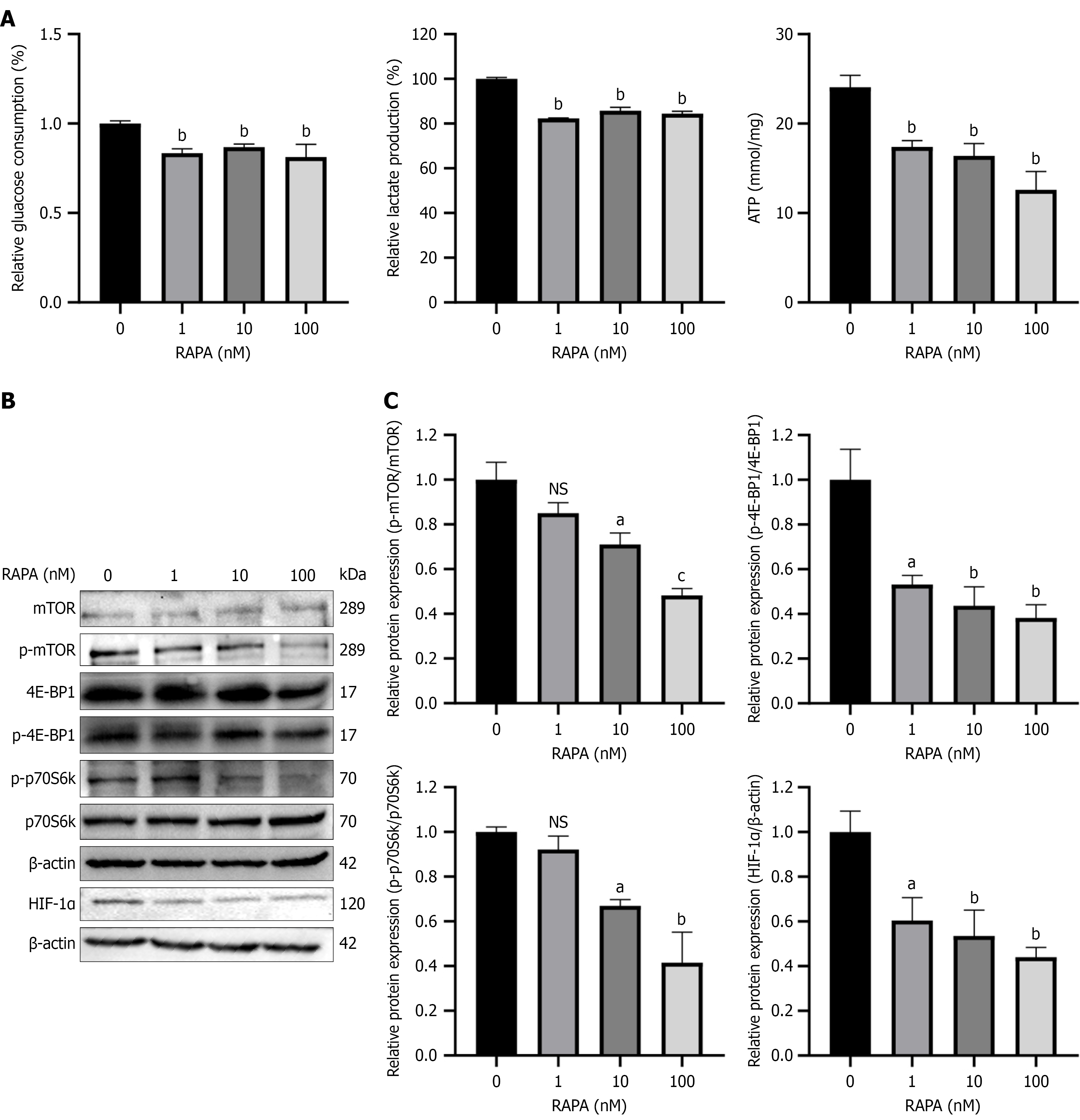
Figure 6 Rapamycin inhibited glycolysis in HUTU 80 cells via inhibition of the mammalian target of rapamycin/hypoxia-inducible facto-1α pathway.
A: Measurement of glucose consumption, lactate production and adenosine triphosphate generation to reflect the glycolytic metabolism of HUTU 80 cells; B: Protein levels were assayed after treatment of HUTU 80 cells with rapamycin, including mammalian target of rapamycin (mTOR), eukaryotic translation initiation factor 4E-binding protein 1 (4E-BP1) and 70 kDa ribosomal protein S6 kinase (p70S6k), phosphorylated (p)-mTOR, p-4E-BP1 and p-p70S6k and hypoxia-inducible facto-1α; C: Quantification of protein expression using ImageJ. Data are presented as the mean ± SD (n = 3). aP < 0.05. bP < 0.01. cP < 0.001. HIF-1α: Hypoxia-inducible factor-1α; ns: No significance; RAPA: Rapamycin; ATP: Adenosine triphosphate; mTOR: Mammalian target of rapamycin; p-mTOR: Phosphorylated-mammalian target of rapamycin; 4E-BP1: Eukaryotic translation initiation factor 4E-binding protein 1; p-4E-BP1: Phosphorylated-eukaryotic translation initiation factor 4E-binding protein 1; p70S6k: 70 kDa ribosomal protein S6 kinase; p-p70S6k: Phosphorylated-70 kDa ribosomal protein S6 kinase.
- Citation: Pu BP, Wang PH, Guo KK, Liu C, Chen SR, Li XM, Chen SM, Zeng XZ, Gao C. Rapamycin suppresses small bowel adenocarcinoma HUTU 80 cells proliferation by inhibiting hypoxia-inducible factor-1α mediated metabolic reprogramming. World J Gastrointest Oncol 2025; 17(9): 109378
- URL: https://www.wjgnet.com/1948-5204/full/v17/i9/109378.htm
- DOI: https://dx.doi.org/10.4251/wjgo.v17.i9.109378