
















©The Author(s) 2025.
World J Gastrointest Oncol. Sep 15, 2025; 17(9): 109127
Published online Sep 15, 2025. doi: 10.4251/wjgo.v17.i9.109127
Published online Sep 15, 2025. doi: 10.4251/wjgo.v17.i9.109127
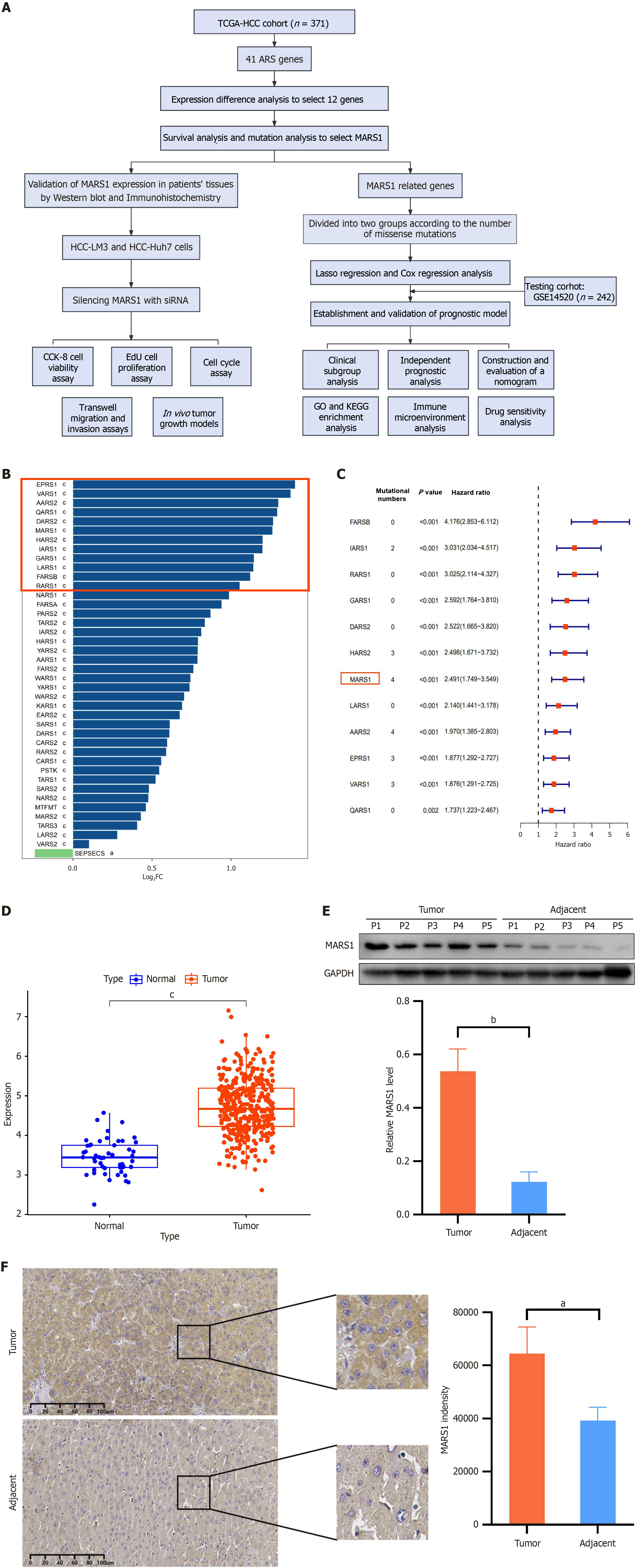
Figure 1 MARS1 is a key gene associated with hepatocellular carcinoma.
A: Flow chart illustrating the study design and workflow; B: Visualization of differentially expressed genes (DEGs) in hepatocellular carcinoma (HCC) compared to adjacent normal tissue; C: Mutation analysis and Kaplan-Meier survival curves based on DEGs identified in panel (B); D: Differential expression of MARS1 in HCC and normal tissue; E and F: Western blot (E) and Immunohistochemistry (F) showing MARS1 expression in HCC and normal liver tissues. Student’s t-test was used to compare differences between two groups. aP < 0.05; bP < 0.01; cP < 0.001. TCGA: The Cancer Genome Atlas; HCC: Hepatocellular carcinoma; GO: Gene Ontology; KEGG: Kyoto Encyclopedia of Genes and Genomes.
- Citation: Bu HY, Huang H, Li J, Huang ZB, Huang Y, Huang YK, Wang AM, Wu L, Yuan J, Wang RJ, Lu M, Yu SM, Yi PP, Chen YY, Jiang YP, Hu XW. Methionyl-tRNA synthetase 1 participates in hepatocellular carcinoma and its regulated gene profile possesses potent prognostic ability. World J Gastrointest Oncol 2025; 17(9): 109127
- URL: https://www.wjgnet.com/1948-5204/full/v17/i9/109127.htm
- DOI: https://dx.doi.org/10.4251/wjgo.v17.i9.109127