
















©The Author(s) 2025.
World J Gastrointest Oncol. Sep 15, 2025; 17(9): 108892
Published online Sep 15, 2025. doi: 10.4251/wjgo.v17.i9.108892
Published online Sep 15, 2025. doi: 10.4251/wjgo.v17.i9.108892
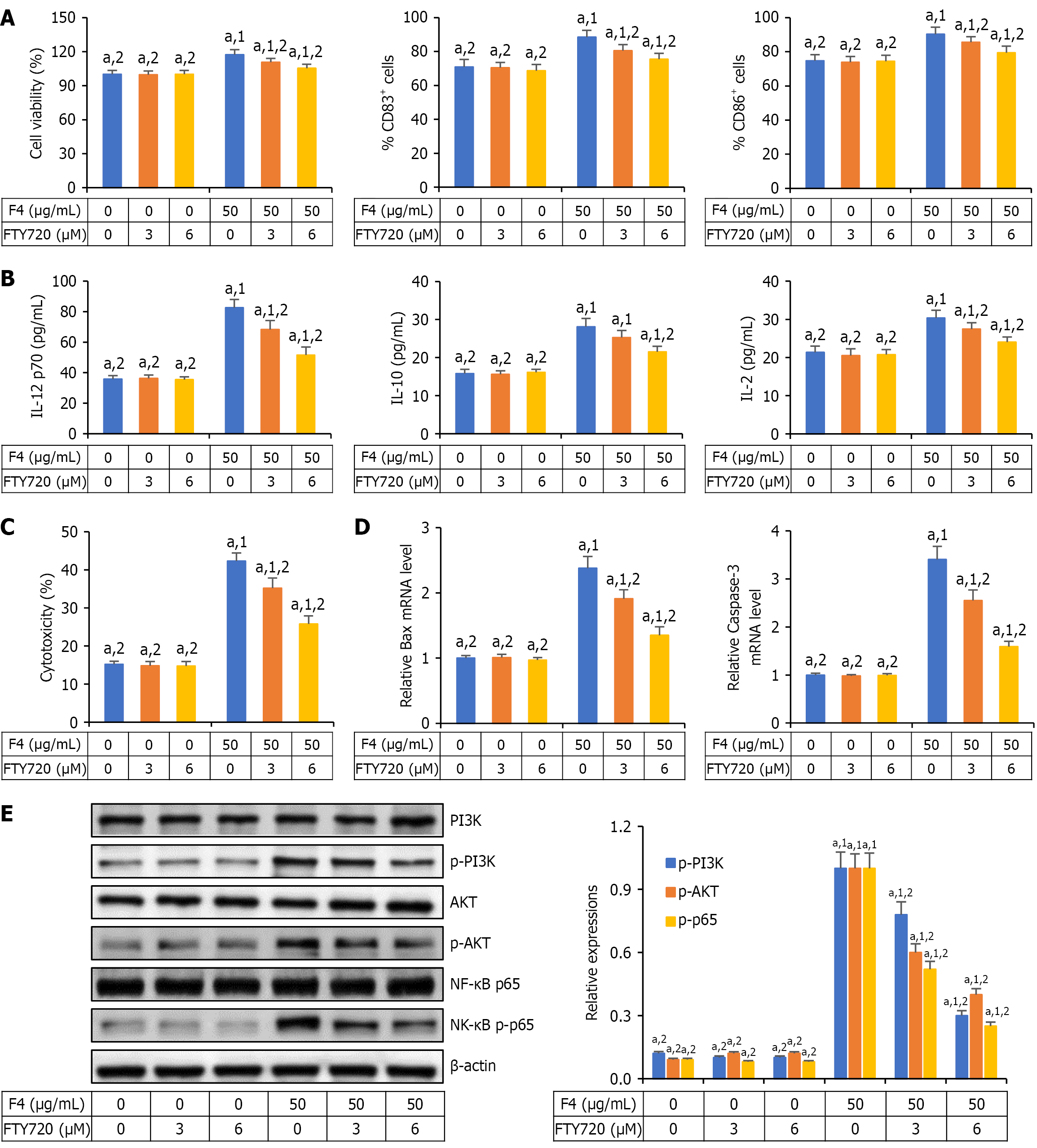
Figure 4 F4 promoted the maturation of dendritic cells via activation of phosphoinositide 3-kinase/protein kinase B and nuclear factor kappa-B pathways.
A and B: F4 promoted the maturation of dendritic cells (DCs) and the production of inflammatory cytokines, which could be reversed by sphingosine-1-phosphate 1 (S1PR1) inhibitor fingolimod hydrochloride (FTY720); C and D: F4-stimulated DCs enhanced cytotoxic T lymphocyte response against the proliferation of CT26 cells, which could be depleted by S1PR1 inhibitor FTY720; E: F4 upregulated the expressions of phosphorylated phosphatidylinositol 3-kinase, phosphorylated protein kinase B and nuclear factor kappa-B phosphorylated-p65 in DCs, which could be reversed by S1PR1 inhibitor FTY720. All data were shown as mean ± SD (n = 5). aP < 0.05. 1P vs control group (0 μg/mL F4 + 0 μM fingolimod hydrochloride). 2P vs 50 μg/mL F4-treated group. CD: Cluster of differentiation; IL: Interleukin; FTY720: Fingolimod hydrochloride; mRNA: Message RNA; PI3K: Phosphatidylinositol 3-kinase; p-PI3K: Phosphorylated phosphatidylinositol 3-kinase; AKT: Protein kinase B; p-AKT: Phosphorylated protein kinase B; NF-κB: Nuclear factor kappa-B.
- Citation: Xie W, Li XJ, Zhong YS, Fang J, Qi H, Yang M, Ying HZ, Yu CH. Ginsenoside F4 inhibits colorectal cancer progression by boosting dendritic cell maturation and remodeling the tumor microenvironment. World J Gastrointest Oncol 2025; 17(9): 108892
- URL: https://www.wjgnet.com/1948-5204/full/v17/i9/108892.htm
- DOI: https://dx.doi.org/10.4251/wjgo.v17.i9.108892