
















©The Author(s) 2025.
World J Gastrointest Oncol. Dec 15, 2025; 17(12): 113524
Published online Dec 15, 2025. doi: 10.4251/wjgo.v17.i12.113524
Published online Dec 15, 2025. doi: 10.4251/wjgo.v17.i12.113524
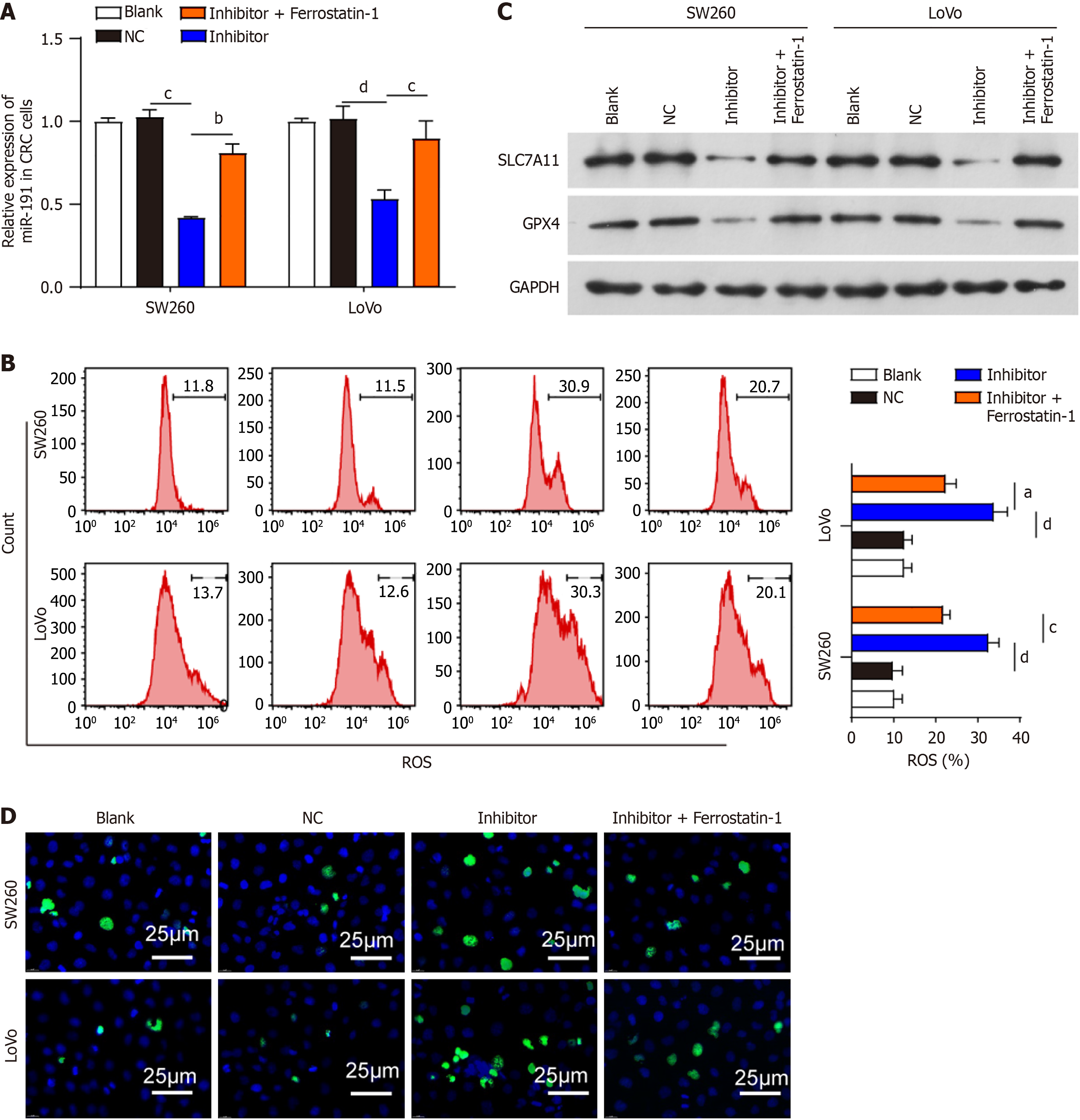
Figure 5 Inhibition of exosomal miR-191 colorectal cancer cells enhance reactive oxygen species production, ferroptosis, and apoptosis of colorectal cancer cells through accelerating ferroptosis in macrophages.
A: Colorectal cancer (CRC) cells were exposed to exosomes from CRC cells and cocultured with miR-191-inhibitor and/or ferrostatin-1-treated macrophages; Expression of miR-191 in CRC cells was evaluated by quantitative reverse transcription polymerase chain reaction; B: Level of reactive oxygen species was measured via flow cytometry in CRC cells; C: Western blotting showed the changes in SLC7A11 and GPX4 expressions in CRC cells; D: Apoptosis was measured by TUNEL assay. aP < 0.05. bP < 0.01. cP < 0.001. dP < 0.0001. CRC: Colorectal cancer; NC: Negative control; ROS: Reactive oxygen species; GAPDH: Glyceraldehyde-3-phosphate dehydrogenase.
- Citation: Zhao QY, Wei SJ. Exosomal miR-191 promotes colorectal cancer progression by inducing M2 macrophage polarization and inhibiting ferroptosis. World J Gastrointest Oncol 2025; 17(12): 113524
- URL: https://www.wjgnet.com/1948-5204/full/v17/i12/113524.htm
- DOI: https://dx.doi.org/10.4251/wjgo.v17.i12.113524