
















©The Author(s) 2025.
World J Gastrointest Oncol. Dec 15, 2025; 17(12): 112366
Published online Dec 15, 2025. doi: 10.4251/wjgo.v17.i12.112366
Published online Dec 15, 2025. doi: 10.4251/wjgo.v17.i12.112366
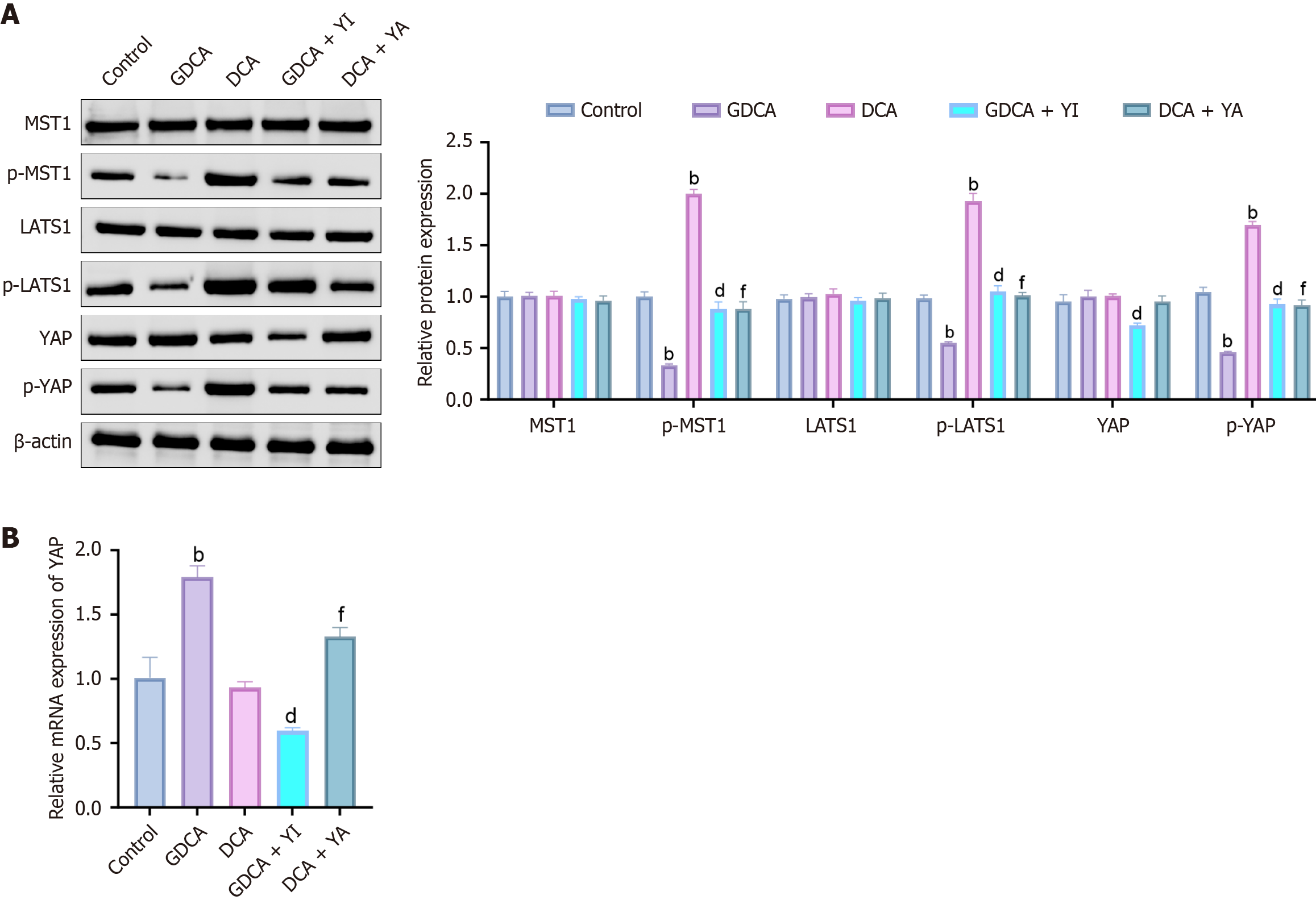
Figure 1 Hippo-yes-associated protein signaling pathway activation by glycochenodeoxycholic acid and deoxycholic acid.
A: Western blot was used to detect the protein expression levels of mammalian STE20-like protein kinase 1, phosphorylated-mammalian STE20-like protein kinase 1, large tumor suppressor kinase 1, phosphorylated-large tumor suppressor kinase 1, yes-associated protein (YAP), and phosphorylated-YAP in HuCCT1 cells in the control, glycochenodeoxycholic acid (GDCA), deoxycholic acid (DCA), GDCA + YI, and DCA + YA groups; B: Reverse transcription quantitative real-time polymerase chain reaction was used to detect the expression level of YAP in HuCCT1 cells in the control, GDCA, DCA, GDCA + YI, and DCA + YA groups. Statistical analysis was performed using one-way ANOVA followed by Tuke’s post hoc test. Statistical significance is indicated as: bP < 0.01 vs control; dP < 0.01 vs GDCA; fP < 0.01 vs DCA. Data are presented as mean ± SD (n = 3 independent experiments). MST: Mammalian STE20-like protein kinase; p: Phosphorylated; LAT: Large tumor suppressor kinase; YAP: Yes-associated protein; GDCA: Glycochenodeoxycholic acid; DCA: Deoxycholic acid.
- Citation: Hu J, Zhang G, Yang S, Shen XF, Zhou M, Huang LS, Lan HM. Involvement of bile acids in cholangiocarcinoma progression via the Hippo-yes-associated protein signaling pathway. World J Gastrointest Oncol 2025; 17(12): 112366
- URL: https://www.wjgnet.com/1948-5204/full/v17/i12/112366.htm
- DOI: https://dx.doi.org/10.4251/wjgo.v17.i12.112366