
















©The Author(s) 2025.
World J Gastrointest Oncol. Dec 15, 2025; 17(12): 110736
Published online Dec 15, 2025. doi: 10.4251/wjgo.v17.i12.110736
Published online Dec 15, 2025. doi: 10.4251/wjgo.v17.i12.110736
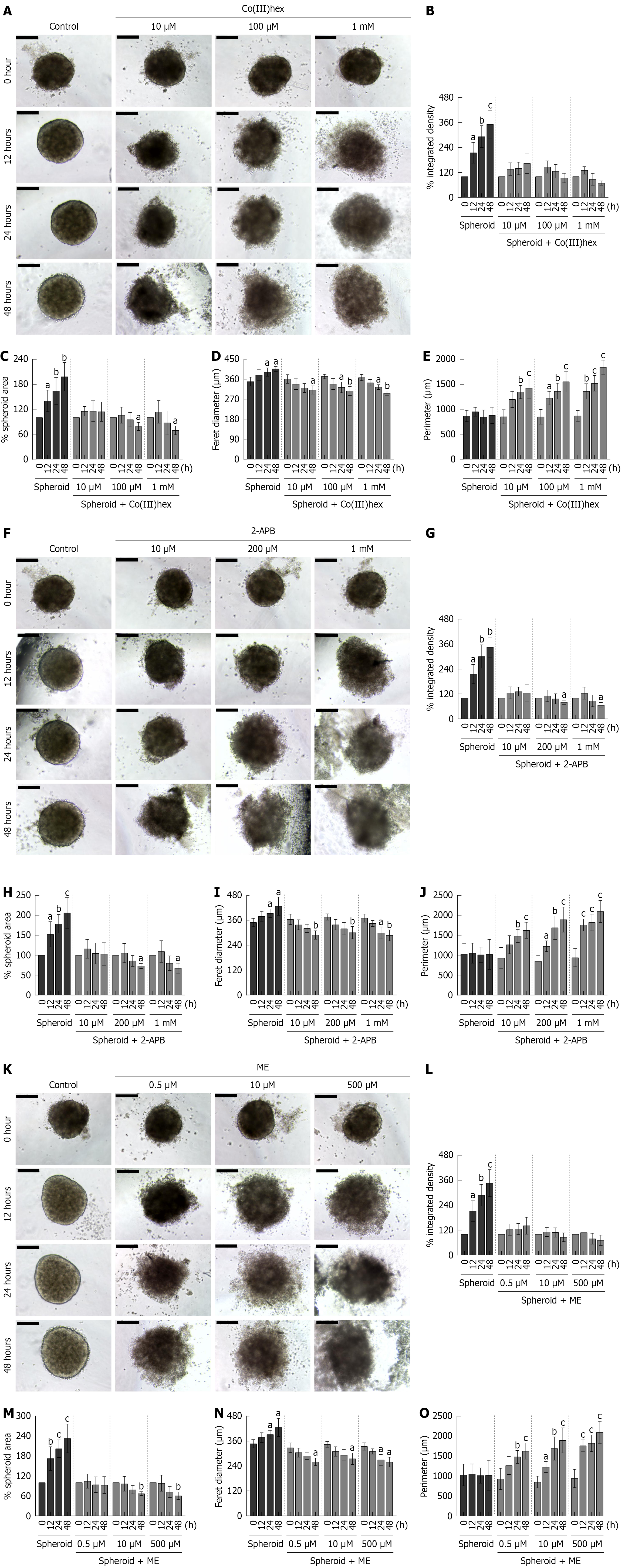
Figure 4 Transient receptor potential melastatin inhibitors affect spheroid stability.
A-E: Cancer spheroids treated with or without Co(III)hexamine, representative images, percent integrated density, percent spheroid area, Feret diameter, perimeter; F-J: Cancer spheroids treated with or without 2-aminoethyl diphenylborinate, representative images, percent integrated density, percent spheroid area, Feret diameter, perimeter; K-O: Cancer spheroids treated with or without Mesendogen, representative images, percent integrated density, percent spheroid area, Feret diameter, perimeter. Scale bar = 200 μm. SP: Spheroid; Co(III)hex: Co(III)hexamine; 2-APB: 2-aminoethyl diphenylborinate; ME: Mesendogen. aP < 0.05, bP < 0.01, cP < 0.001 vs the same grout at time 0 hour (n = 6).
- Citation: Kampuang N, Chamniansawat S, Pongkorpsakol P, Treveeravoot S, Thongon N. Transient receptor potential melastatin 6 and transient receptor potential melastatin 6/7 antagonists suppress colon adenocarcinoma HT-29 cells. World J Gastrointest Oncol 2025; 17(12): 110736
- URL: https://www.wjgnet.com/1948-5204/full/v17/i12/110736.htm
- DOI: https://dx.doi.org/10.4251/wjgo.v17.i12.110736