
















©The Author(s) 2025.
World J Gastrointest Oncol. Nov 15, 2025; 17(11): 112838
Published online Nov 15, 2025. doi: 10.4251/wjgo.v17.i11.112838
Published online Nov 15, 2025. doi: 10.4251/wjgo.v17.i11.112838
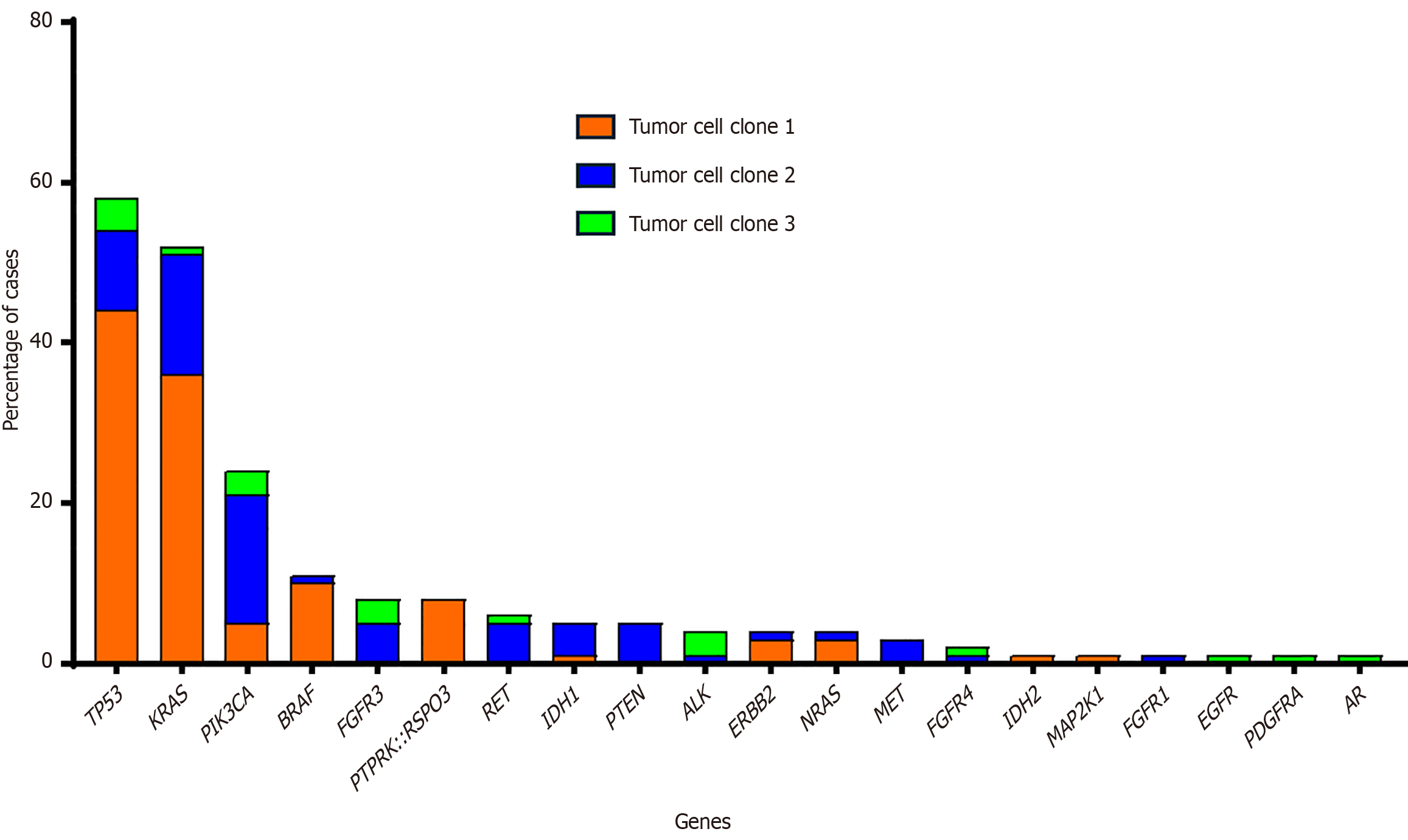
Figure 1 The percentage of cases with primary, secondary, and tertiary genetic alterations for each of the genes identified by next-generation sequencing in primary tumor samples from 73 patients with advanced colorectal cancer.
TP53: Tumor protein p53; KRAS: Kirsten rat sarcoma viral oncogene homolog; PIK3CA: Phosphatidylinositol-4,5-bisphosphate 3-kinase catalytic subunit alpha; BRAF: B-Raf kinase; FGFR3: Fibroblast growth factor receptor 3; PTPRK: Protein tyrosine phosphatase receptor type k; RSPO3: R-spondin 3; RET: Rearranged during transfection; IDH1: Isocitrate dehydrogenase 1; PTEN: Phosphatase and tensin homolog deleted on chromosome ten; ALK: Anaplastic lymphoma kinase; ERBB2: Erythroblastic leukemia viral oncogene homolog 2; NRAS: Neuroblastoma RAS viral oncogene homolog; MET: Mesenchymal-epithelial transition factor; FGFR4: Fibroblast growth factor receptor 4; IDH2: Isocitrate dehydrogenase 2; MAP2K1: Mitogen-activated protein kinase 1; FGFR1: Fibroblast growth factor receptor 1; EGFR: Epidermal growth factor receptor; PDGFRA: Platelet-derived growth factor receptor alpha; AR: Androgen receptor.
- Citation: Tur R, Abad M, Filipovich E, Rivas MB, Rodriguez M, Montero JC, Sayagués JM. RSPO3 rearrangements in advanced colorectal cancer patients and their relationship with disease characteristics. World J Gastrointest Oncol 2025; 17(11): 112838
- URL: https://www.wjgnet.com/1948-5204/full/v17/i11/112838.htm
- DOI: https://dx.doi.org/10.4251/wjgo.v17.i11.112838