
















©The Author(s) 2025.
World J Gastrointest Oncol. Nov 15, 2025; 17(11): 111142
Published online Nov 15, 2025. doi: 10.4251/wjgo.v17.i11.111142
Published online Nov 15, 2025. doi: 10.4251/wjgo.v17.i11.111142
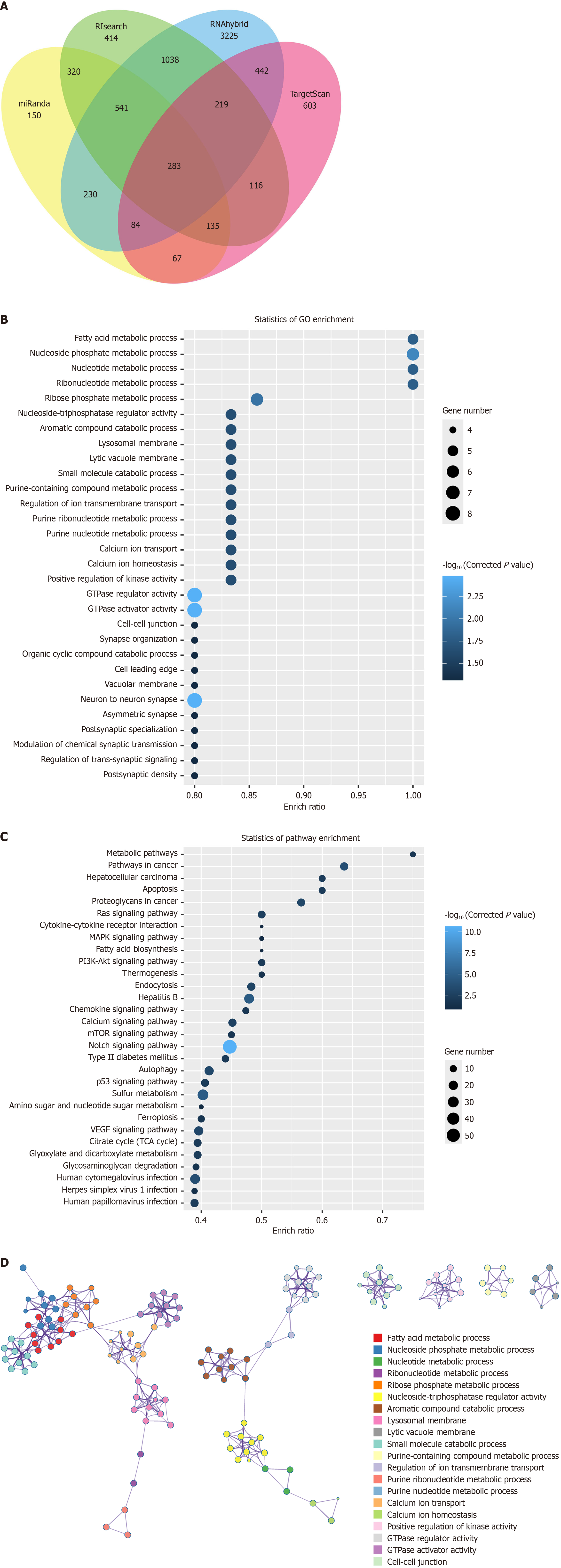
Figure 7 Target prediction and functional enrichment analysis of 5’-transfer RNA halve-lysine-CTT.
A: Schematic diagram illustrating the workflow for 5’-transfer RNA halve-lysine-CTT target prediction. Venn diagram depicting the overlap of predicted target genes identified by miRanda, TargetScan, RIsearch, and RNAhybrid; B: Gene Ontology enrichment analysis of the candidate target genes, highlighting the top enriched terms in biological processes, cellular components, and molecular functions; C: Kyoto Encyclopedia of Genes and Genomes pathway enrichment analysis of the candidate target genes, revealing the most relevant pathways; D: Network visualization of Gene Ontology terms enriched in the candidate target gene set. Only terms with P < 0.01, a minimum count of 3, and an enrichment factor > 1.5 are shown, and they are clustered based on semantic similarity. GO: Gene Ontology; KEGG: Kyoto Encyclopedia of Genes and Genomes.
- Citation: Yuan J, Gu WC, Xu TX, Shen XJ, Li X, Shen L, Zhang Y, Ju SQ. 5’-transfer RNA halve-lysine-CTT as a promising biomarker for early detection of hepatocellular carcinoma. World J Gastrointest Oncol 2025; 17(11): 111142
- URL: https://www.wjgnet.com/1948-5204/full/v17/i11/111142.htm
- DOI: https://dx.doi.org/10.4251/wjgo.v17.i11.111142