











©The Author(s) 2025.
World J Gastrointest Oncol. Nov 15, 2025; 17(11): 111142
Published online Nov 15, 2025. doi: 10.4251/wjgo.v17.i11.111142
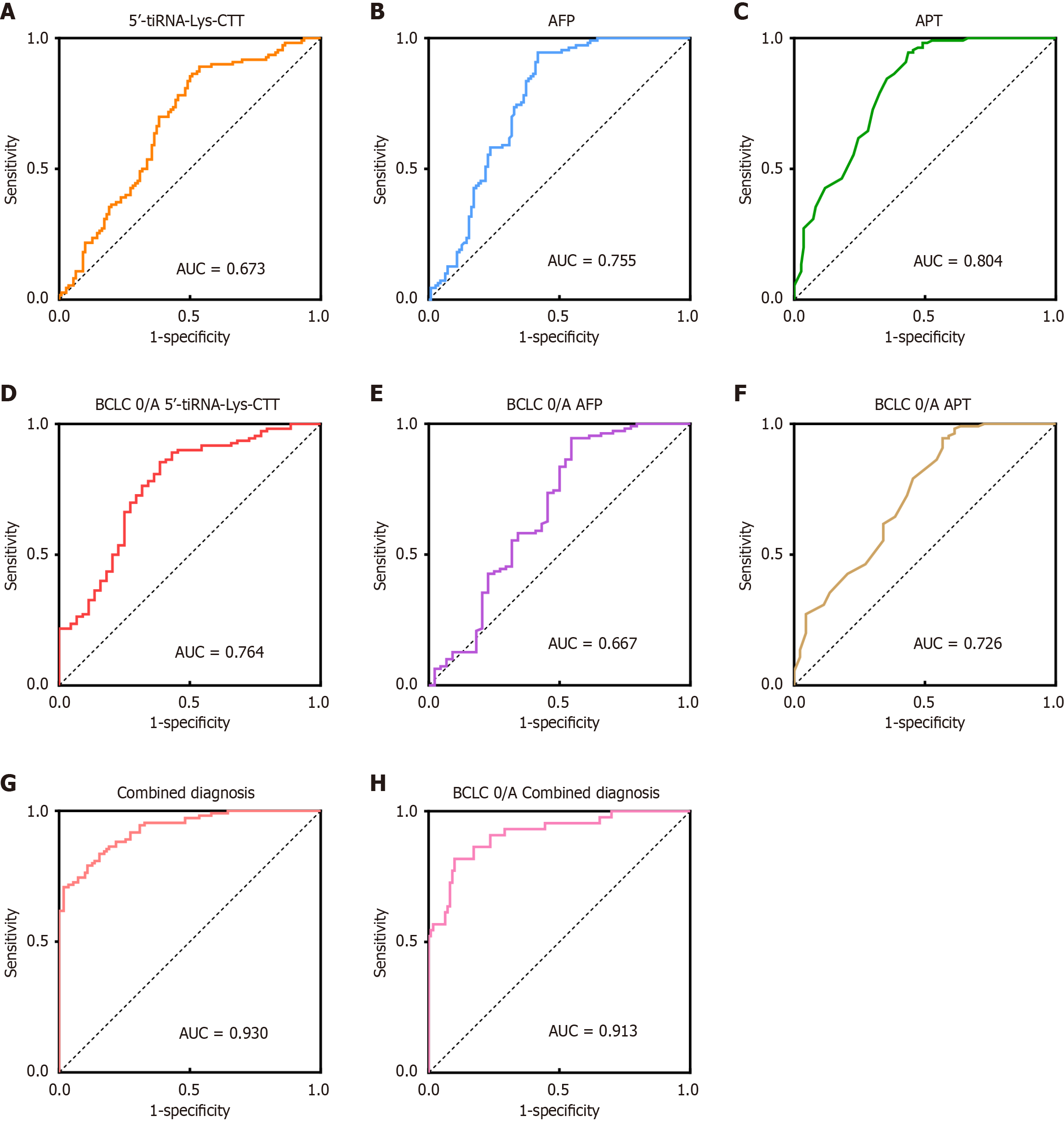
Figure 4 Diagnostic performance of serum 5’-transfer RNA halve-lysine-CTT and combined diagnostic model in hepatocellular car cinoma.
A-C: Receiver operating characteristic (ROC) curves comparing the diagnostic accuracy of serum 5’-transfer RNA halve (tiRNA)-lysine (Lys)-CTT, alpha-fetoprotein (AFP), and abnormal prothrombinogen (APT) in differentiating hepatocellular carcinoma (HCC) patients from healthy controls; D-F: ROC curves evaluating the diagnostic performance of serum 5’-tiRNA-Lys-CTT, AFP, and APT in distinguishing early-stage HCC patients from healthy controls; G: ROC curve demonstrating the combined diagnostic efficacy of serum 5’-tiRNA-Lys-CTT, AFP, and APT; H: ROC curve demonstrating the superior combined diagnostic efficacy of serum 5’-tiRNA-Lys-CTT, AFP, and APT in differentiating early-stage HCC patients from non-malignant disease. tiRNA: Transfer RNA halve; Lys: Lysine; AUC: Area under the curve; AFP: Alpha-fetoprotein; APT: Abnormal prothrombinogen; BCLC: Barcelona Clinic Liver Cancer.
- Citation: Yuan J, Gu WC, Xu TX, Shen XJ, Li X, Shen L, Zhang Y, Ju SQ. 5’-transfer RNA halve-lysine-CTT as a promising biomarker for early detection of hepatocellular carcinoma. World J Gastrointest Oncol 2025; 17(11): 111142
- URL: https://www.wjgnet.com/1948-5204/full/v17/i11/111142.htm
- DOI: https://dx.doi.org/10.4251/wjgo.v17.i11.111142