
















©The Author(s) 2025.
World J Gastrointest Oncol. Nov 15, 2025; 17(11): 111142
Published online Nov 15, 2025. doi: 10.4251/wjgo.v17.i11.111142
Published online Nov 15, 2025. doi: 10.4251/wjgo.v17.i11.111142
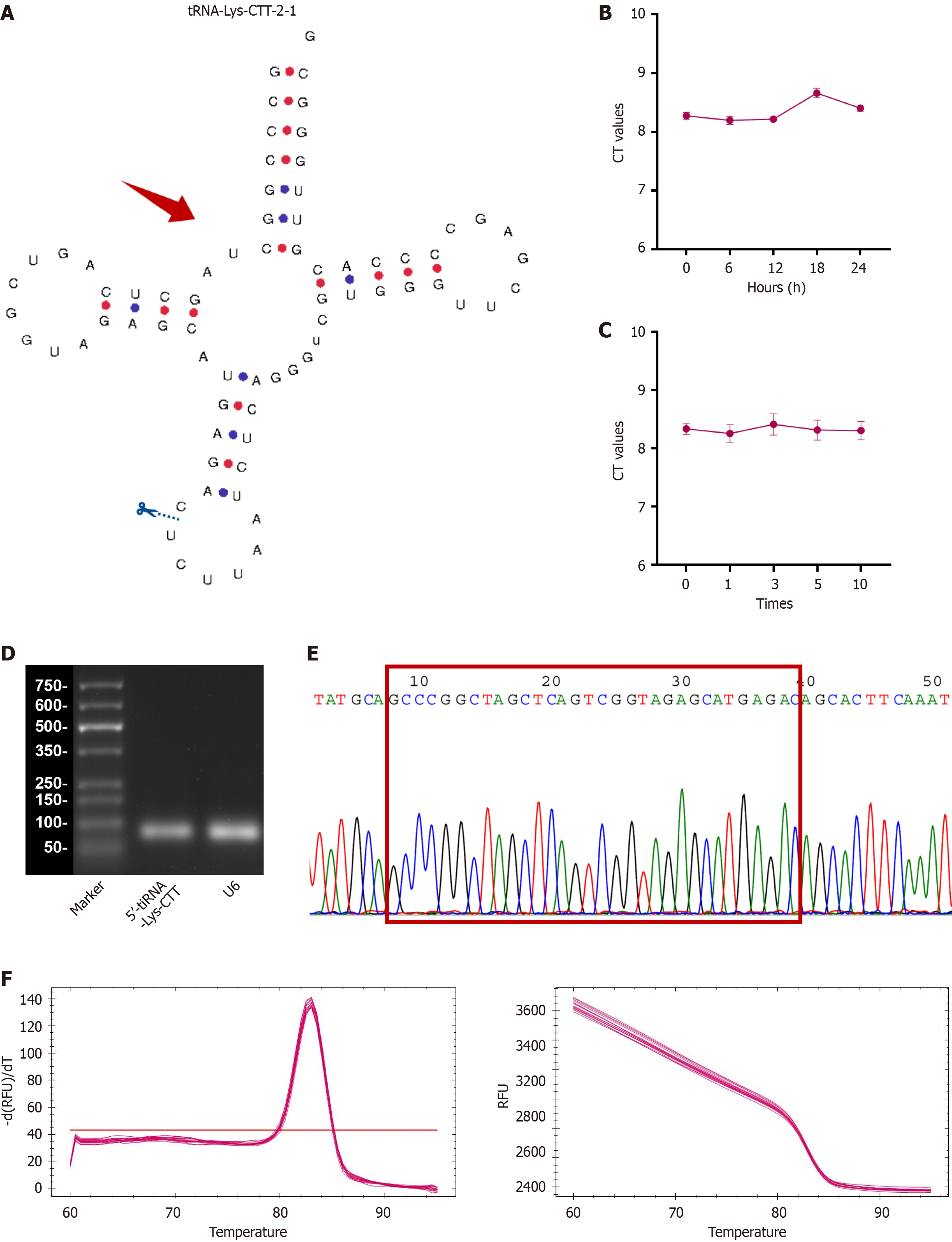
Figure 2 Validation of 5’-transfer RNA halve-lysine-CTT as a biomarker.
A: Schematic representation of the 5’-transfer RNA halve (tiRNA)-lysine (Lys)-CTT cleavage site, located above the anticodon loop; B and C: Stability of 5’-tiRNA-Lys-CTT assessed by quantitative polymerase chain reaction (qPCR) after exposure to varying durations of incubation at ambient temperature and multiple freeze-thaw cycles demonstrating consistent expression; D: Agarose gel electrophoresis of qPCR products showing a single band around 80 base pairs; E: Sanger sequencing confirmation of the qPCR product, demonstrating the full-length sequence of 5’-tiRNA-Lys-CTT; F: Representative melting curves of 5’-tiRNA-Lys-CTT, exhibiting a single peak, indicating high specificity. tiRNA: Transfer RNA halve; Lys: Lysine; CT: Cycle threshold.
- Citation: Yuan J, Gu WC, Xu TX, Shen XJ, Li X, Shen L, Zhang Y, Ju SQ. 5’-transfer RNA halve-lysine-CTT as a promising biomarker for early detection of hepatocellular carcinoma. World J Gastrointest Oncol 2025; 17(11): 111142
- URL: https://www.wjgnet.com/1948-5204/full/v17/i11/111142.htm
- DOI: https://dx.doi.org/10.4251/wjgo.v17.i11.111142