
















©The Author(s) 2025.
World J Gastrointest Oncol. Oct 15, 2025; 17(10): 111339
Published online Oct 15, 2025. doi: 10.4251/wjgo.v17.i10.111339
Published online Oct 15, 2025. doi: 10.4251/wjgo.v17.i10.111339
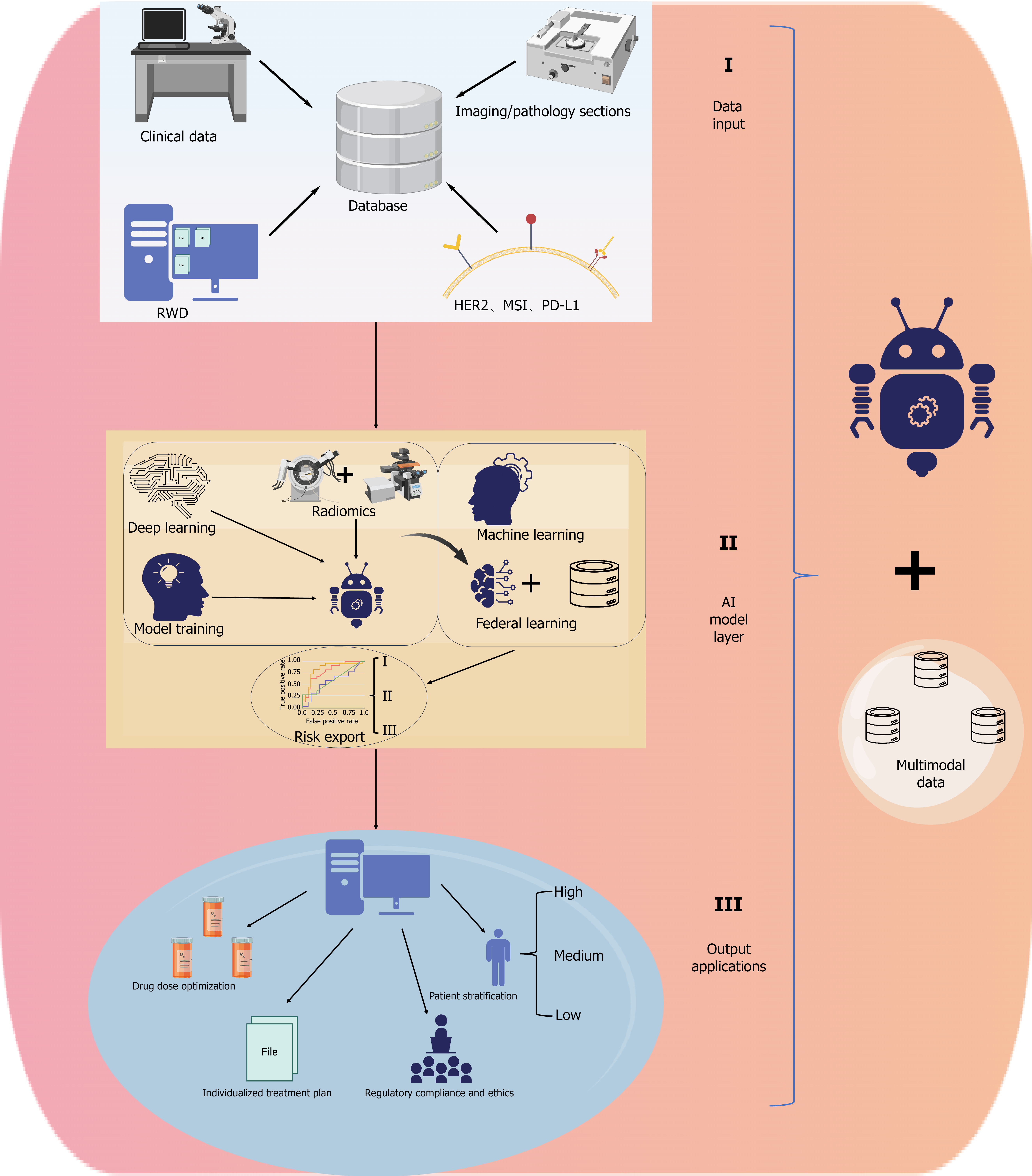
Figure 3 Multimodal data integration and artificial intelligence-powered clinical application framework in gastrointestinal oncology.
This diagram presents a structured framework for the integration of artificial intelligence (AI) in gastrointestinal cancer management. I: Multimodal data input includes clinical data, medical imaging, pathology slides, molecular biomarkers (e.g., HER2, MSI, PD-L1), and real-world data from electronic health records and wearable devices; II: The AI model layer incorporates deep learning, radiomics, machine learning, and federated learning to construct robust and privacy-preserving predictive models; III: Output applications span patient stratification, drug dose optimization, individualized treatment planning, and regulatory compliance—illustrating the translational path from data acquisition to clinical deployment.
- Citation: Wang Z, Zhang RY, Ji C, Zhang JY, Yue BT, Wang F. Revolutionizing gastrointestinal cancer research with artificial intelligence: From precision patient stratification to real-world evidence. World J Gastrointest Oncol 2025; 17(10): 111339
- URL: https://www.wjgnet.com/1948-5204/full/v17/i10/111339.htm
- DOI: https://dx.doi.org/10.4251/wjgo.v17.i10.111339