
















©The Author(s) 2025.
World J Gastrointest Oncol. Oct 15, 2025; 17(10): 111339
Published online Oct 15, 2025. doi: 10.4251/wjgo.v17.i10.111339
Published online Oct 15, 2025. doi: 10.4251/wjgo.v17.i10.111339
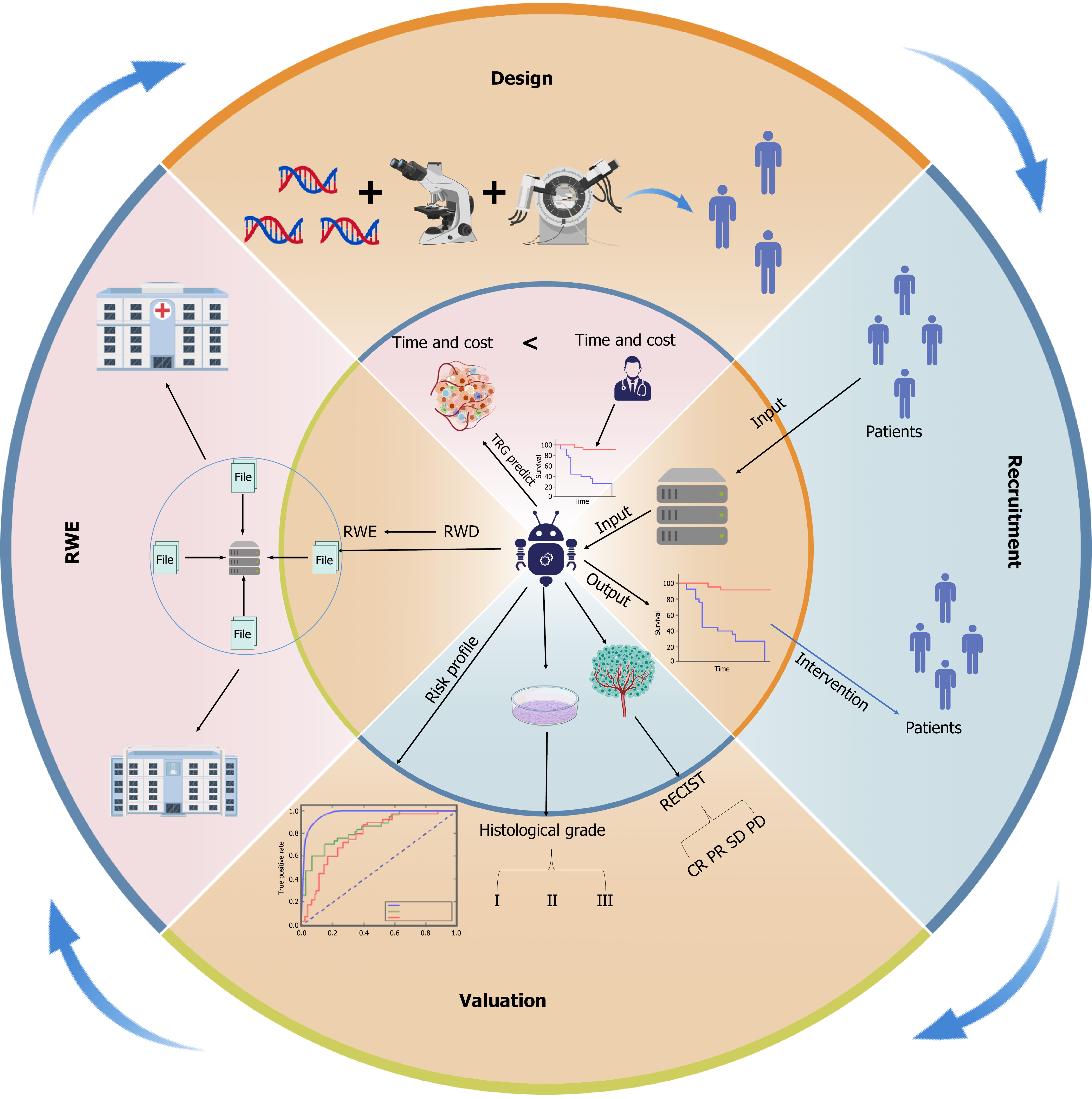
Figure 2 Artificial intelligence-powered transformation across the clinical trial continuum in gastrointestinal oncology.
Artificial intelligence (AI) is being integrated throughout the entire lifecycle of clinical trials in gastrointestinal cancer, from study design and patient recruitment to efficacy valuation and real-world evidence (RWE) generation. In the design phase, AI accelerates biomarker discovery and trial simulation using multimodal data, reducing both time and cost. During recruitment, AI-driven tools enhance eligibility matching, predict dropout risk, and optimize inclusion criteria. In the valuation phase, AI enables dynamic endpoint modeling, response assessment (e.g., Response Evaluation Criteria in Solid Tumours), and histopathological grading. Finally, real-world data can be converted into actionable RWE through AI-based natural language processing and federated learning, supporting post-trial validation and continuous learning cycles. This circular framework underscores the bidirectional flow between prospective trials and RWE in precision oncology. RWE: Real-world evidence; RWD: Real-world data; RECIST: Response Evaluation Criteria in Solid Tumours; CR: Complete response; PR: Partial response; SD: Stable disease; PD: Progressive disease.
- Citation: Wang Z, Zhang RY, Ji C, Zhang JY, Yue BT, Wang F. Revolutionizing gastrointestinal cancer research with artificial intelligence: From precision patient stratification to real-world evidence. World J Gastrointest Oncol 2025; 17(10): 111339
- URL: https://www.wjgnet.com/1948-5204/full/v17/i10/111339.htm
- DOI: https://dx.doi.org/10.4251/wjgo.v17.i10.111339