
















©The Author(s) 2025.
World J Gastrointest Oncol. Oct 15, 2025; 17(10): 110661
Published online Oct 15, 2025. doi: 10.4251/wjgo.v17.i10.110661
Published online Oct 15, 2025. doi: 10.4251/wjgo.v17.i10.110661
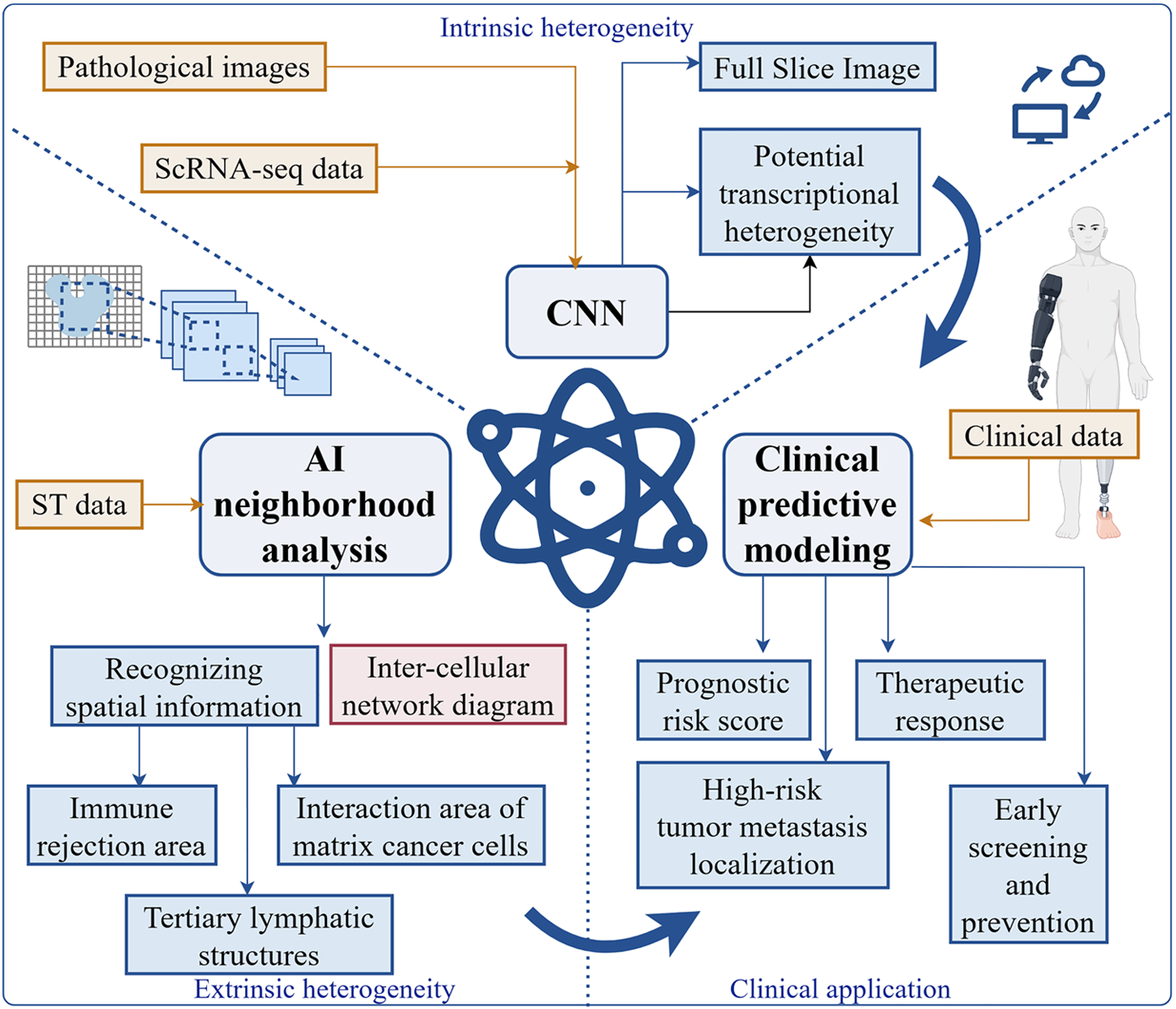
Figure 4 Artificial intelligence-enabled single-cell RNA sequencing and spatial transcriptomics-involved colorectal cancer heterogeneity analysis and its guided clinical decision-making.
This figure includes an artificial intelligence-based graphic neural convolutional network to drive clinical translation of colorectal cancer (CRC) intrinsic heterogeneity research through enhanced pathology image characterization and integrated data analysis. Clinical translation of CRC extrinsic heterogeneity research is driven by artificial intelligence-mediated neighborhood analysis revealing spatial information reorganization of intercellular networks, identification of immune-rejection regions highlighting stroma-cancer cell interactions, and characterization of tertiary lymphoid structures with extrinsic heterogeneity. These analyses support clinical predictive algorithms for prognostic risk scoring and treatment response prediction, enabling high-risk tumor metastasis localization and clinical precision therapy, as well as supporting early screening and prevention based on comprehensive clinical data. scRNA-seq: Single-cell RNA sequencing; CNN: Convolutional neural network; AI: Artificial intelligence; ST: Spatial transcriptomics.
- Citation: Luan WY, Zhao Q, Zhang Z, Xu ZX, Lin SX, Miao YD. Multidimensional decoding of colorectal cancer heterogeneity: Artificial intelligence-enabled precision exploration of single-cell and spatial transcriptomics. World J Gastrointest Oncol 2025; 17(10): 110661
- URL: https://www.wjgnet.com/1948-5204/full/v17/i10/110661.htm
- DOI: https://dx.doi.org/10.4251/wjgo.v17.i10.110661