
















©The Author(s) 2025.
World J Gastrointest Oncol. Oct 15, 2025; 17(10): 110661
Published online Oct 15, 2025. doi: 10.4251/wjgo.v17.i10.110661
Published online Oct 15, 2025. doi: 10.4251/wjgo.v17.i10.110661
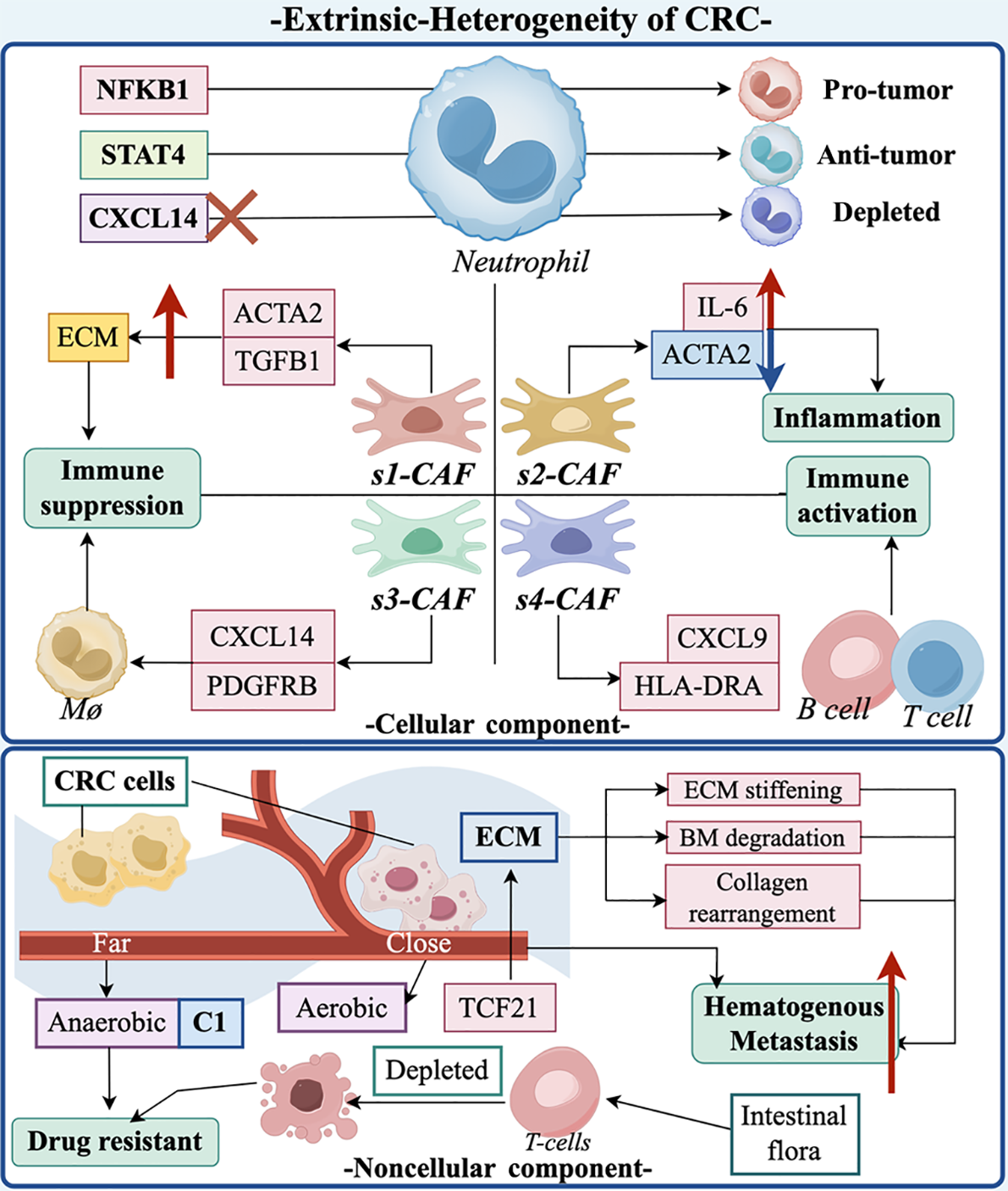
Figure 2 Overview of the extrinsic of colorectal cancer heterogeneity with single-cell RNA sequencing and spatial transcriptomics.
This figure shows representative regulatory mechanisms in the cellular vs non-cellular components of colorectal cancer (CRC) extrinsic heterogeneity. First, different genes induce different types of neutrophil formation such as tumor-promoting, tumor-suppressing, and depleted types. Second, different subtypes of CRC-associated fibroblasts have different roles. S1-cancer-associated fibroblast (CAF) causes immunosuppression by affecting the extracellular matrix (ECM) under the regulation of actin alpha 2 (ACTA2) and transforming growth factor-β-1, and also causes immunosuppression by the subtype S3-CAF, which is achieved through the modulation of macrophages by CXCL14 and PDGFRB. S2-CAF reduces the number of macrophages through the up-regulation of interleukin-6, the ACTA2 expression to elicit an inflammatory response. S4-CAF, on the other hand, is associated with a favorable prognosis for inflammatory bowel disease in precancerous lesions of CRC. In the noncellular component, pro-vascular CRC cells and CRC cells distant from the vasculature produce different metabolites due to different metabolic patterns resulting in different CRC subtypes. CRC cells far from the vasculature tend to produce drug-resistant subtypes, and some metabolites of intestinal flora are also involved in the formation of this resistance. In addition, regulation of the ECM, such as transcription factor 21, shapes CRC subtypes that are susceptible to hematogenous metastasis by increasing the stiffness of the ECM, degrading the basement membrane, and collagen rearrangement. CRC: Colorectal cancer; ECM: Extracellular matrix; ACTA2: Actin alpha 2; TGFB1: Transforming growth factor-β-1; CAF: Cancer-associated fibroblasts; IL-6: Interleukin-6; TCF21: Transcription factor 21; BM: Basement membrane.
- Citation: Luan WY, Zhao Q, Zhang Z, Xu ZX, Lin SX, Miao YD. Multidimensional decoding of colorectal cancer heterogeneity: Artificial intelligence-enabled precision exploration of single-cell and spatial transcriptomics. World J Gastrointest Oncol 2025; 17(10): 110661
- URL: https://www.wjgnet.com/1948-5204/full/v17/i10/110661.htm
- DOI: https://dx.doi.org/10.4251/wjgo.v17.i10.110661