
















©The Author(s) 2025.
World J Gastrointest Oncol. Oct 15, 2025; 17(10): 109398
Published online Oct 15, 2025. doi: 10.4251/wjgo.v17.i10.109398
Published online Oct 15, 2025. doi: 10.4251/wjgo.v17.i10.109398
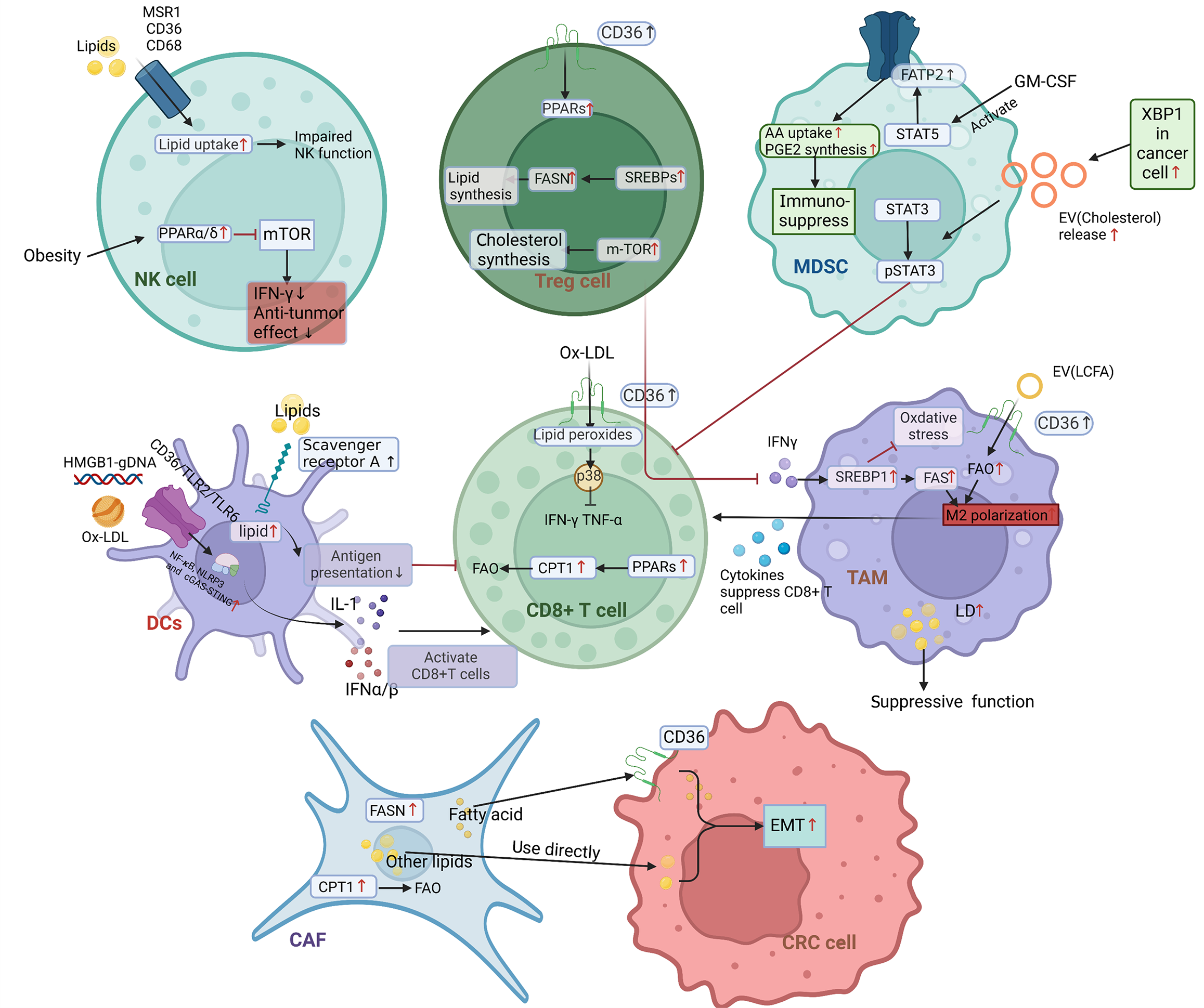
Figure 4 Mechanism of lipid metabolic reprogramming in immune cells.
Overexpression of cluster of differentiation (CD) 36 on CD8 + tumor-infiltrating lymphocytes (TILs) promotes metabolic transition by activating peroxisome proliferator-activated receptor (PPAR), which results in enhanced fatty acid oxidation (FAO). Lipid metabolism in regulatory T cells is enhanced by CD36-PPAR-β signaling, mammalian target of rapamycin-cholesterol signaling, and sterol regulatory element-binding protein (SREBP)-mediated overexpression of fatty acid synthase (FASN). Tumor-associated macrophages can uptake exosomes containing long-chain fatty acids, SREBPs-mediated overexpression of FASN. These effects together promote M2 polarization. Natural killer (NK) cells uptake lipids and activate PPAR signaling, which impairs NK cells’ function. In dendritic cells, CD36/toll-like receptor (TLR) 2/TLR6 complex internalizes oxidized low-density lipoprotein, activates nuclear factor kappa-B/NLRP3/cyclic guanosine monophosphate-adenosine monophosphate synthase-stimulator of interferon genes signaling and CD8 + TILs. Overexpression of fatty acid transport protein 2 in myeloid-derived suppressor cells mediates arachidonic acid uptake and upregulate prostaglandin E2 synthesis. Cancer-associated fibroblasts upregulate FASN and enhance FAO through increasing carnitine palmitoyl transferase 1, which finally promotes epithelial-mesenchymal transition of colorectal cancer cells. CD: Cluster of differentiation; NK: Natural killer; mTOR: Mammalian target of rapamycin; IFN: Interferon; PPAR: Peroxisome proliferator-activated receptor; FASN: Fatty acid synthase; SREBP: Sterol regulatory element-binding protein; Treg: Regulatory T cell; AA: Arachidonic acid; PGE2: Prostaglandin E2; MDSCs: Myeloid-derived suppressor cells; FATP2: Fatty acid transport protein 2; STAT: Signal transducer and activator of transcription; p-STAT: Phospho-signal transducer and activator of transcription; GM-CSF: Granulocyte-macrophage colony-stimulating factor; XBP1: X-box binding protein 1; EV: Extracellular vesicle; HMGB1: High mobility group box-1 protein; OxLDL: Oxidized low-density lipoproteins; TLR: Toll-like receptor; DCs: Dendritic cells; NF-κB: Nuclear factor kappa-B; cGAS/STING: Cyclic guanosine monophosphate-adenosine monophosphate synthase-stimulator of interferon genes signaling; IL: Interleukin; IFN: Interferon; TNF: Tumor necrosis factor; FAO: Fatty acid oxidation; CPT: Carnitine palmitoyl transferase; LCFA: Long-chain fatty acids; LD: Lipid droplet; TAM: Tumor-associated macrophages; CAF: Cancer-associated fibroblast; EMT: Epithelial-mesenchymal transition; CRC: Colorectal cancer.
- Citation: Wang CD, Zhang BX, Song J. Lipid metabolic reprogramming in colorectal cancer: Insights to mechanisms and therapeutics. World J Gastrointest Oncol 2025; 17(10): 109398
- URL: https://www.wjgnet.com/1948-5204/full/v17/i10/109398.htm
- DOI: https://dx.doi.org/10.4251/wjgo.v17.i10.109398