
















©The Author(s) 2025.
World J Gastrointest Oncol. Oct 15, 2025; 17(10): 109398
Published online Oct 15, 2025. doi: 10.4251/wjgo.v17.i10.109398
Published online Oct 15, 2025. doi: 10.4251/wjgo.v17.i10.109398
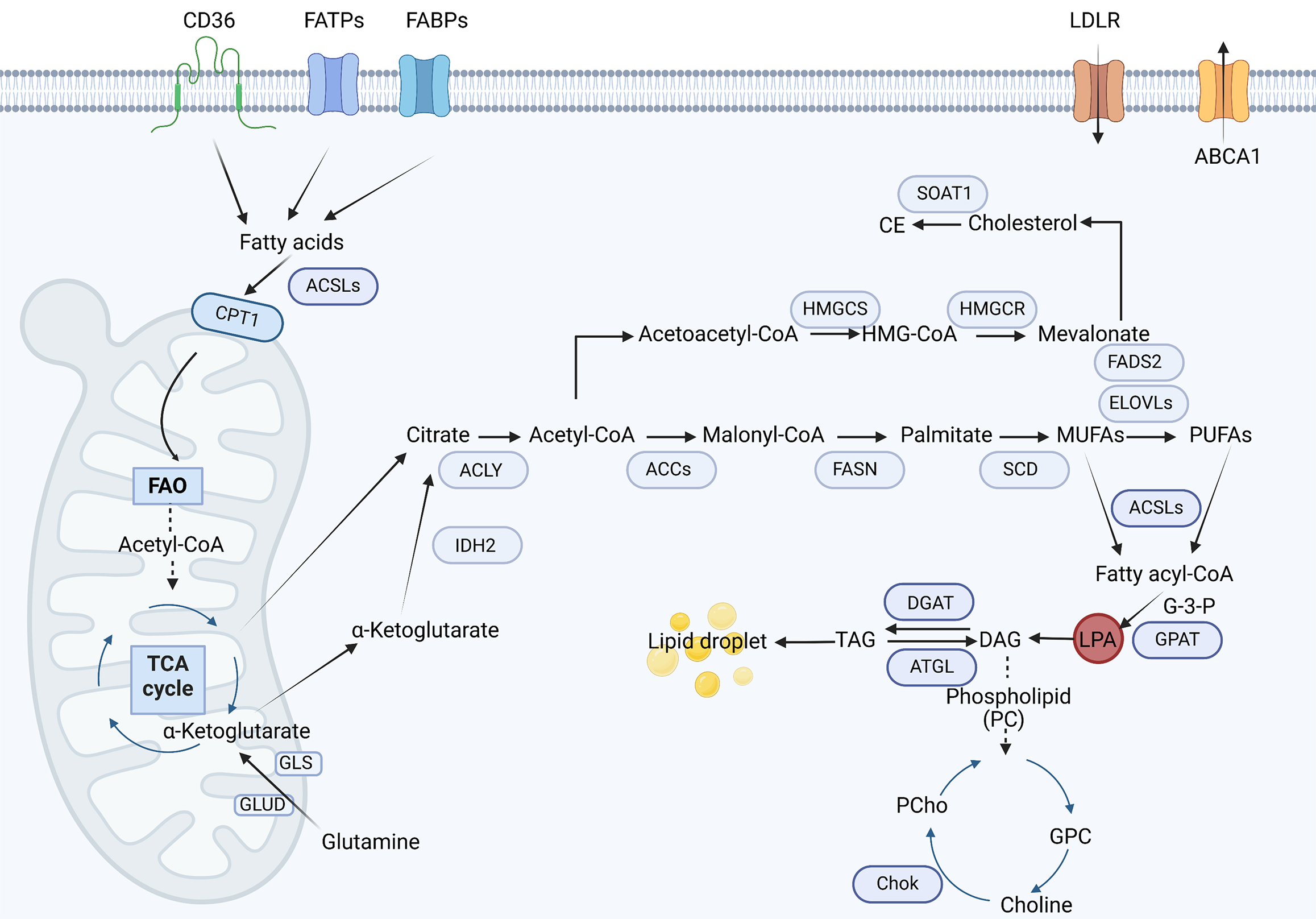
Figure 2 The process of lipid metabolism: Lipid metabolic processes include de novo lipogenesis, fatty acid uptake, fatty acid oxidation, cholesterol synthesis and lipid storage.
Tumor cells enhance lipid metabolism by augmenting exogenous lipid uptake and de novo lipogenesis, thereby elevating intracellular lipid content. Upregulation of lipid transport proteins-including cluster of differentiation 36, fatty acid transport proteins, fatty acid-binding proteins, and low-density lipoprotein receptor promotes the cellular internalization of saturated fatty acids (SFAs), polyunsaturated fatty acids, and cholesterol. Meanwhile, endogenous lipid synthesis originates from mitochondrial citrate exported to the cytosol via the tricarboxylic acid cycle citrate carrier (SLC25A1). This citrate is converted to acetyl-CoA by adenosine triphosphate (ATP)-citrate lyase, serving as a substrate for sterol regulatory element-binding protein-driven synthesis of SFAs and cholesterol. The process is catalyzed by key enzymes such as fatty acid synthase and stearoyl-CoA desaturase, which introduce double bonds into SFAs to generate monounsaturated fatty acids. Subsequently, fatty acids are activated by acyl-CoA synthetases to form acyl-CoA, which fuels either phospholipid synthesis (e.g., phosphatidylcholine via glycerol-3-phosphate acyltransferase/acylglycerol-3-phosphate acyltransferase enzymes) or fatty acid oxidation in mitochondria to generate ATP and support tumor growth. CD: Cluster of differentiation; FATPs: Fatty acid transport proteins; FABPs: Fatty acid-binding protein; LDLR: Low-density lipoprotein receptor; ACSLs: Acyl-CoA synthetase long chain; CPT: Carnitine palmitoyl transferase; FAO: Fatty acid oxidation; TCA: Tricarboxylic acid cycle; GLS: Glutaminase; GLUD: Glutamate dehydrogenase; IDH: Isocitrate dehydrogenase; ACLY: Adenosine triphosphate-citrate lyase; CE: Cholesterol ester; HMGCS: Hydroxy methyl glutaryl-CoA synthase; HMGCR: 3-hydroxy-3-methylglutaryl-CoA reductase; HMG: Hydroxymethylglutarate; FADS2: Fatty acid desaturase 2; ELOVLs: Elongation of very long-chain fatty acid protein; ACC: Acetyl-CoA carboxylase; FASN: Fatty acid synthase; SCD: Stearoyl-CoA desaturase; MUFAs: Monounsaturated fatty acids; PUFAs: Polyunsaturated fatty acids; GPAT: Glycerol-3-phosphate acyltransferase; LPA: Lysophosphatidic acid; DAG: Diacylglycerol; DGAT: Diacylglycerol acyltransferase; ATGL: Adipose triglyceride lipase; TAG: Triacylglycerol; PC: Phosphatidylcholine; PCho: Phosphorylcholine; ChoK: Choline kinase; GPC: Choline glycerophosphate.
- Citation: Wang CD, Zhang BX, Song J. Lipid metabolic reprogramming in colorectal cancer: Insights to mechanisms and therapeutics. World J Gastrointest Oncol 2025; 17(10): 109398
- URL: https://www.wjgnet.com/1948-5204/full/v17/i10/109398.htm
- DOI: https://dx.doi.org/10.4251/wjgo.v17.i10.109398