
















Copyright: ©Author(s) 2026.
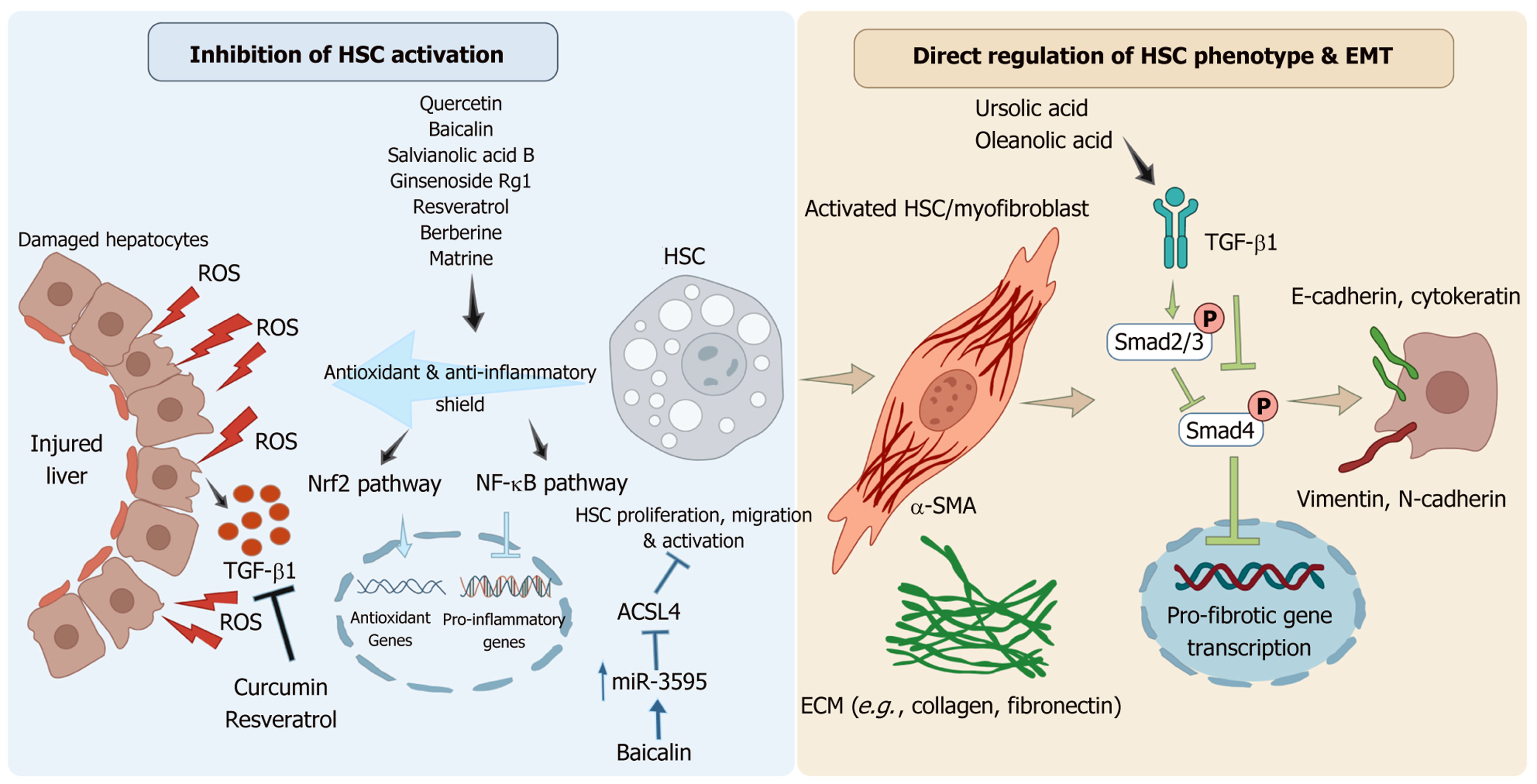
Figure 8 Multifaceted mechanisms of traditional Chinese medicine bioactive components in inhibiting hepatic stellate cell activation and extracellular matrix remodeling.
This schematic illustrates the dual-targeted anti-fibrotic strategies employed by traditional Chinese medicine-derived compounds, focusing on the attenuation of hepatic stellate cell (HSC) activation and the reversal of epithelial-mesenchymal transition, critical processes in liver fibrosis. In injured livers, damaged hepatocytes release reactive oxygen species and transforming growth factor-β1, triggering HSC proliferation, migration, and activation. Quercetin, baicalin, salvianolic acid B, ginsenoside Rg1, resveratrol, berberine, matrine, and curcumin counteract this by activating the nuclear factor erythroid 2-related factor 2 pathway (enhancing antioxidant defenses) and suppressing the nuclear factor-κB pathway (reducing pro-inflammatory gene expression). Baicalin and ACSL4/miR-3595 axis modulate HSC activation and fibrogenic signaling. Ursolic acid and oleanolic acid directly target activated HSCs/myofibroblasts, inhibiting the transforming growth factor-β1/Smad2/3/4 signaling cascade. This prevents the phosphorylation of Smad2/3, thereby preserving the epithelial phenotype (E-cadherin, cytokeratin) and suppressing the mesenchymal markers (vimentin, N-cadherin) and pro-fibrotic gene transcription. Consequently, the secretion of extracellular matrix (e.g., collagen, fibronectin) is attenuated. HSC: Hepatic stellate cell; ROS: Reactive oxygen species; TGF-β1: Transforming growth factor β1; EMT: Epithelial-mesenchymal transition; ECM: Extracellular matrix.
- Citation: Tang MJ, Feng KY, Zhuang ZJ, Wang HY, Wu MY, Li PH, Shi JP, Mi XX. Therapeutic efficacy and multitarget mechanisms of traditional Chinese medicine in hereditary liver diseases: Insights into bioactive components. World J Hepatol 2026; 18(9): 123969
- URL: https://www.wjgnet.com/1948-5182/full/v18/i9/123969.htm
- DOI: https://dx.doi.org/10.4254/wjh.123969