
















Copyright: ©Author(s) 2026.
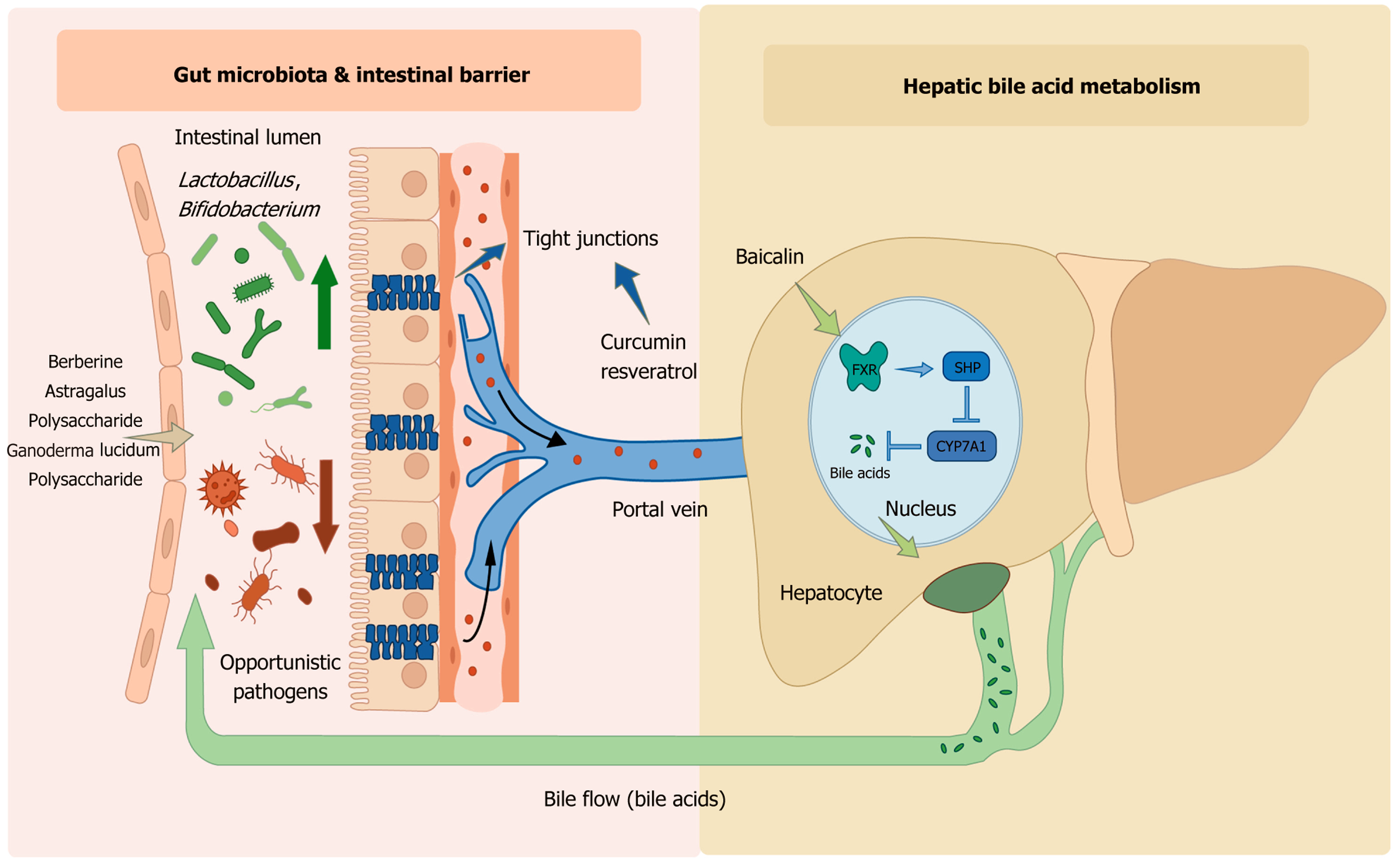
Figure 7 Modulation of gut microbiota & intestinal barrier and hepatic bile acid metabolism by traditional Chinese medicine bioactive components.
This schematic depicts the crosstalk between gut microbiota modulation, intestinal barrier integrity, and hepatic bile acid homeostasis regulated by traditional Chinese medicine-derived compounds, emphasizing their therapeutic potential in metabolic and cholestatic liver diseases. Berberine, Astragalus polysaccharide, and Ganoderma lucidum polysaccharide promote the proliferation of beneficial bacteria (Lactobacillus, Bifidobacterium) while suppressing opportunistic pathogens. Curcumin and resveratrol enhance intestinal epithelial tight junction integrity, reducing intestinal permeability and subsequent endotoxin influx. Baicalin modulates hepatic bile acid synthesis and transport via the nuclear receptor farnesoid X receptor, which upregulates small heterodimer partner and inhibits CYP7A1 (the rate-limiting enzyme in bile acid synthesis). This mechanism reduces bile acid overload in hepatocytes, mitigating cholestatic injury and improving liver function. FXR: Farnesoid X receptor; SHP: Small heterodimer partner.
- Citation: Tang MJ, Feng KY, Zhuang ZJ, Wang HY, Wu MY, Li PH, Shi JP, Mi XX. Therapeutic efficacy and multitarget mechanisms of traditional Chinese medicine in hereditary liver diseases: Insights into bioactive components. World J Hepatol 2026; 18(9): 123969
- URL: https://www.wjgnet.com/1948-5182/full/v18/i9/123969.htm
- DOI: https://dx.doi.org/10.4254/wjh.123969