
















Copyright: ©Author(s) 2026.
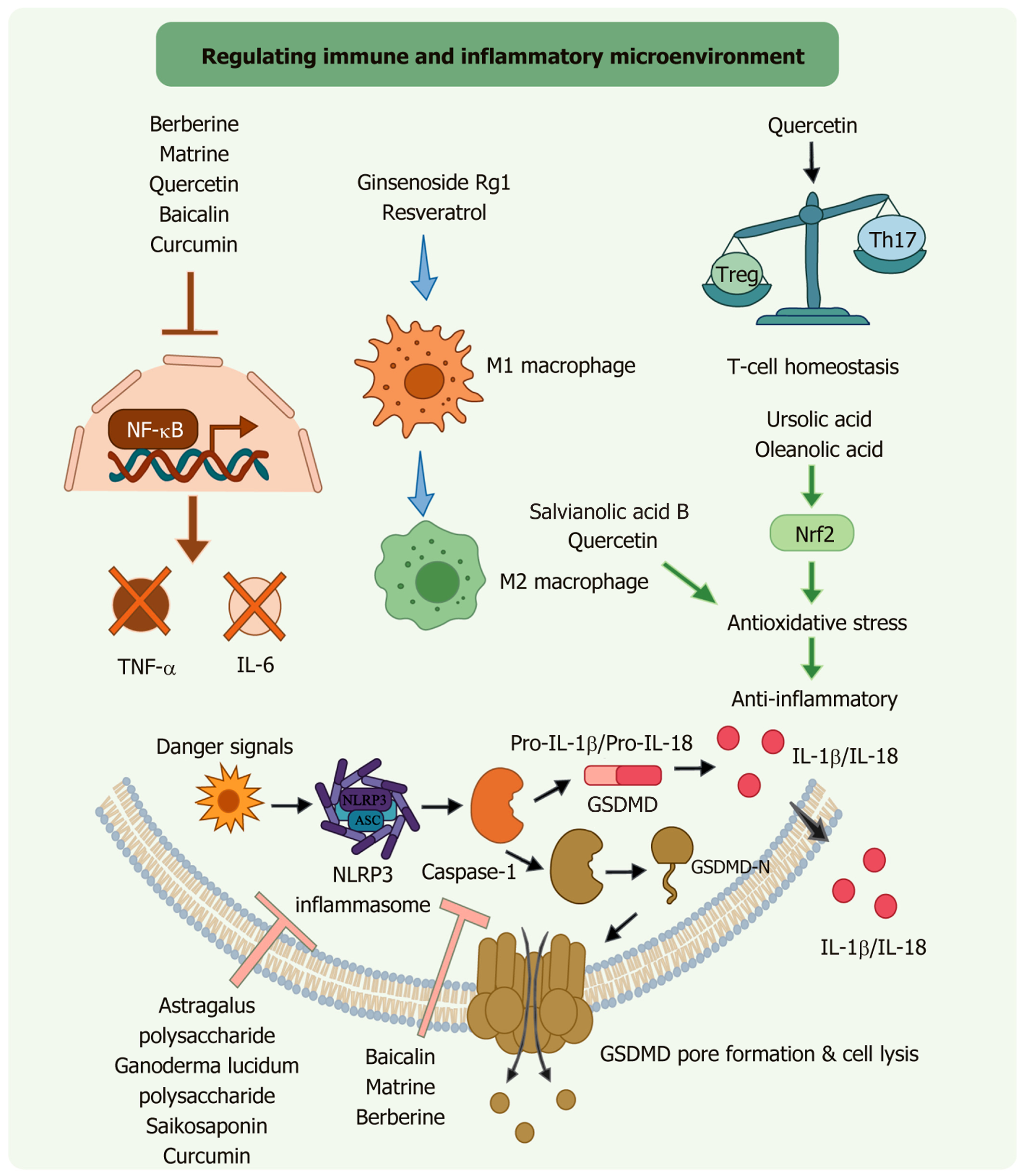
Figure 5 Regulation of immune and inflammatory microenvironment by traditional Chinese medicine bioactive components.
This schematic delineates the multi-targeted immunomodulatory and anti-inflammatory mechanisms of traditional Chinese medicine-derived compounds, focusing on their actions against nuclear factor-κB-driven inflammation, macrophage polarization, T-cell homeostasis, NOD-, LRR- and pyrin domain-containing protein 3 (NLRP3) inflammasome-mediated pyroptosis, and oxidative stress. Compounds such as berberine, matrine, quercetin, baicalin, and curcumin suppress nuclear factor-κB nuclear translocation and subsequent production of pro-inflammatory cytokines tumor necrosis factor-α and interleukin (IL)-6. Ginsenoside Rg1 and resveratrol promote the transition from pro-inflammatory M1 macrophages to anti-inflammatory M2 macrophages, while salvianolic acid B and quercetin further support this repolarization. Quercetin restores the balance between regulatory Treg cells and pro-inflammatory Th17 cells. Ursolic acid and oleanolic acid activate nuclear factor erythroid 2-related factor 2, conferring antioxidative and anti-inflammatory effects. Danger signals activate the NLRP3 inflammasome, triggering caspase-1-mediated cleavage of gasdermin D into its pore-forming gasdermin D-N fragment, leading to IL-1β/IL-18 maturation and pyroptotic cell lysis. Compounds such as Astragalus polysaccharide, ganoderma lucidum polysaccharide, saikosaponin, curcumin, baicalin, matrine, and berberine block NLRP3 assembly or downstream steps, thereby attenuating pyroptosis. TNF-α: Tumor necrosis factor-α; IL: Interleukin; Nrf2: Nuclear factor erythroid 2-related factor 2; NLRP3: NOD-, LRR- and pyrin domain-containing protein 3; GSDMD: Gasdermin D.
- Citation: Tang MJ, Feng KY, Zhuang ZJ, Wang HY, Wu MY, Li PH, Shi JP, Mi XX. Therapeutic efficacy and multitarget mechanisms of traditional Chinese medicine in hereditary liver diseases: Insights into bioactive components. World J Hepatol 2026; 18(9): 123969
- URL: https://www.wjgnet.com/1948-5182/full/v18/i9/123969.htm
- DOI: https://dx.doi.org/10.4254/wjh.123969