
















Copyright: ©Author(s) 2026.
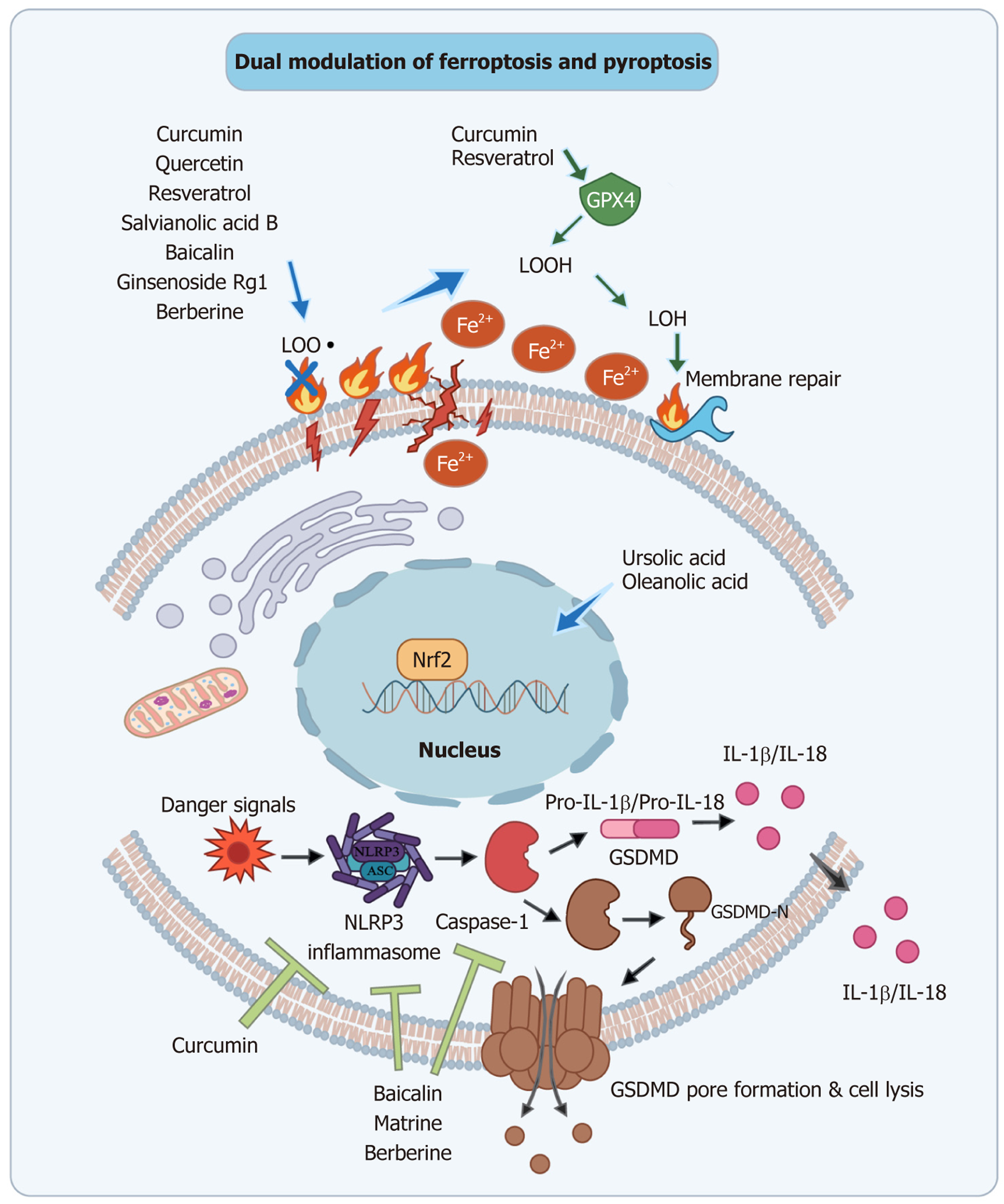
Figure 4 Dual modulation of ferroptosis and pyroptosis by natural bioactive compounds.
This schematic illustrates how traditional Chinese medicine-derived compounds concurrently suppress ferroptotic and pyroptotic cell death, two major pathological drivers in inflammatory and degenerative diseases. The diagram is organized into two interconnected pathways: (1) Ferroptosis suppression (upper panel): Reactive oxygen species-induced lipid peroxidation (LOO•) and iron (Fe2+) accumulation are central to ferroptosis. Traditional Chinese medicine compounds such as curcumin, quercetin, resveratrol, salvianolic acid B, baicalin, ginsenoside Rg1, and berberine inhibit lipid peroxidation chain reactions and chelate iron, thereby reducing cytotoxic aldehydes (LOOH) and promoting membrane repair. Ursolic acid and oleanolic acid activate the nuclear factor erythroid 2-related factor 2 transcription factor in the nucleus, enhancing expression of antioxidant genes including glutathione peroxidase 4, which reduces LOOH to non-toxic LOH, further protecting membrane integrity; and (2) Pyroptosis suppression (lower panel): Danger signals activate the NOD-, LRR- and pyrin domain-containing protein 3 inflammasome, triggering caspase-1 activation, which cleaves gasdermin D (GSDMD) into its pore-forming N-terminal fragment (GSDMD-N) and pro-inflammatory cytokines [pro-interleukin (IL)-1β/pro-IL-18] into mature IL-1β/IL-18. Curcumin, baicalin, matrine, and berberine disrupt this cascade by inhibiting NOD-, LRR- and pyrin domain-containing protein 3 assembly and/or caspase-1 activity, thereby preventing GSDMD pore formation, cell lysis, and release of pro-inflammatory cytokines. IL: Interleukin; GPX4: Glutathione peroxidase 4; Nrf2: Nuclear factor erythroid 2-related factor 2; NLRP3: NOD-, LRR- and pyrin domain-containing protein 3; GSDMD: Gasdermin D.
- Citation: Tang MJ, Feng KY, Zhuang ZJ, Wang HY, Wu MY, Li PH, Shi JP, Mi XX. Therapeutic efficacy and multitarget mechanisms of traditional Chinese medicine in hereditary liver diseases: Insights into bioactive components. World J Hepatol 2026; 18(9): 123969
- URL: https://www.wjgnet.com/1948-5182/full/v18/i9/123969.htm
- DOI: https://dx.doi.org/10.4254/wjh.123969