
















Copyright: ©Author(s) 2026.
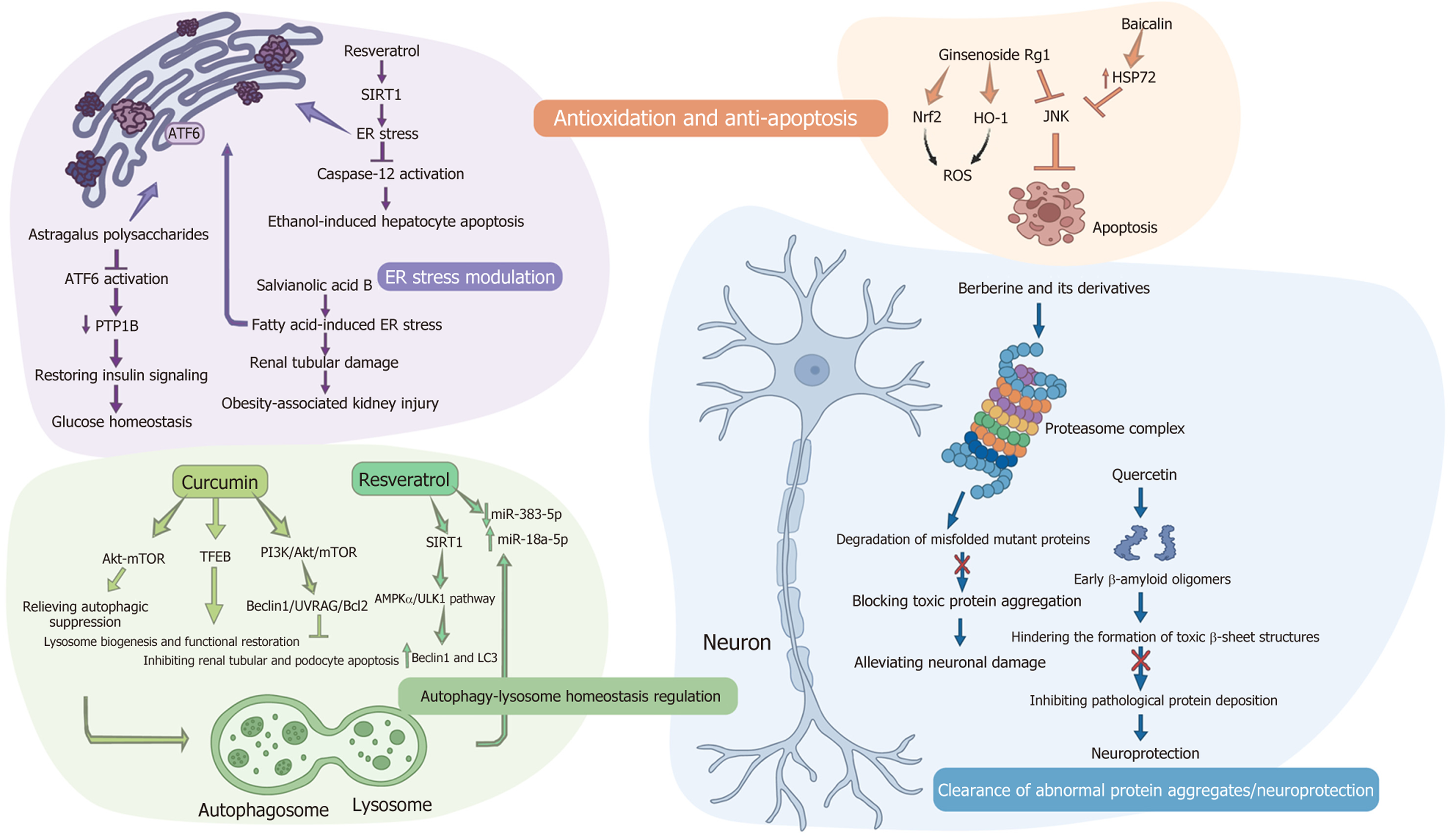
Figure 3 Modulation of endoplasmic reticulum stress and protein homeostasis by bioactive components of traditional Chinese medicine in hereditary liver disease.
This schematic illustrates how traditional Chinese medicine-derived compounds (resveratrol, baicalin, curcumin, berberine, quercetin) target core proteostatic pathways disrupted in genetic hepatopathies (e.g., α1-antitrypsin deficiency, ABC transporter misfolding in progressive familial intrahepatic cholestasis). These compounds converge on endoplasmic reticulum stress mitigation, autophagic enhancement, and hepatoprotection, highlighting actionable therapeutic targets for restoring hepatic proteostasis in hereditary liver disease. Four color-coded modules define the mechanisms: Orange, antioxidant defense and inhibition of endoplasmic reticulum/reactive oxygen species-mediated apoptosis via sirtuin 1 activation and glutathione restoration. Purple, rebalancing of the unfolded protein response through attenuation of the PERK-CHOP axis and preservation of BiP/GRP78 chaperone capacity. Green, restoration of autophagy-lysosome flux via mTORC1 inhibition and TFEB-mediated lysosomal biogenesis. Blue, promotion of misfolded protein clearance through proteasomal degradation and suppression of toxic aggregate formation. Solid arrows denote activation; T-bars indicate inhibition. SIRT1: Sirtuin 1; ER: Endoplasmic reticulum; Nrf2: Nuclear factor erythroid 2-related factor 2; ROS: Reactive oxygen species; HO-1: Heme oxygenase-1; JNK: C-Jun n-terminal kinase; PI3K: Phosphatidylinositol 3-kinase; Akt: Protein kinase B; mTOR: Mammalian target of rapamycin.
- Citation: Tang MJ, Feng KY, Zhuang ZJ, Wang HY, Wu MY, Li PH, Shi JP, Mi XX. Therapeutic efficacy and multitarget mechanisms of traditional Chinese medicine in hereditary liver diseases: Insights into bioactive components. World J Hepatol 2026; 18(9): 123969
- URL: https://www.wjgnet.com/1948-5182/full/v18/i9/123969.htm
- DOI: https://dx.doi.org/10.4254/wjh.123969