
















Copyright: ©Author(s) 2026.
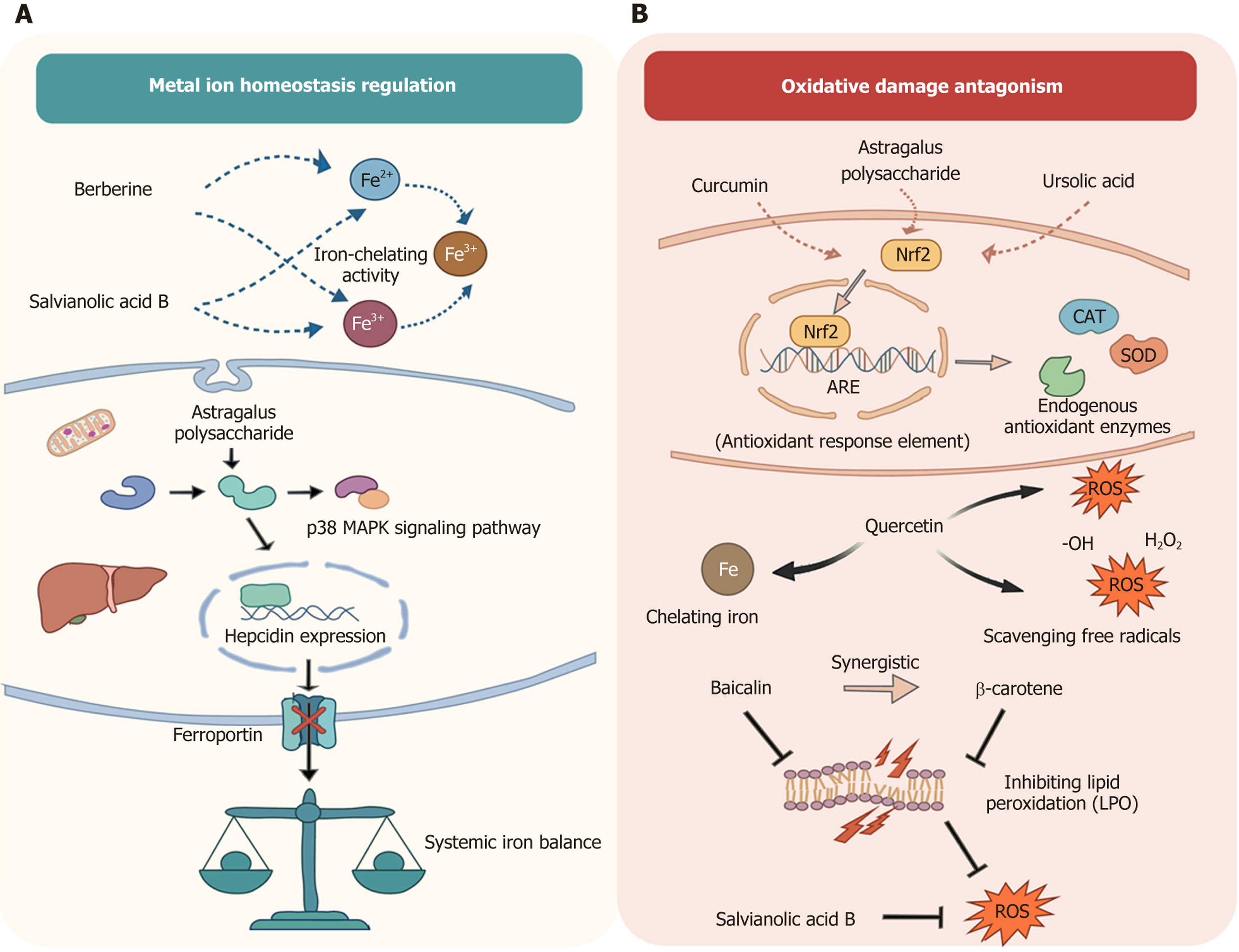
Figure 2 Mechanisms of metal ion homeostasis regulation and oxidative damage antagonism by traditional Chinese medicine bioactive components in hepatolithiasis-inducing liver diseases.
A: Iron homeostasis: Excessive iron accumulation exacerbates hepatobiliary injury in hepatolithiasis-inducing liver diseases (e.g., hereditary hemochromatosis). Berberine and salvianolic acid B directly chelate Fe3+/Fe2+, reducing the labile iron pool and suppressing Fenton reactions. Astragalus polysaccharide activates the p38 mitogen-activated protein kinase pathway, upregulating hepcidin, which degrades the iron exporter ferroportin to limit systemic iron overload; B: Oxidative damage antagonism: Traditional Chinese medicine components mitigate reactive oxygen species-driven biliary epithelial injury through complementary mechanisms: Curcumin, Astragalus polysaccharide, and ursolic acid activate nuclear factor erythroid 2-related factor 2, inducing antioxidant enzymes (superoxide dismutase, catalase) via the antioxidant response element pathway; quercetin and β-carotene directly scavenge free radicals and inhibit lipid peroxidation; baicalin and salvianolic acid B combine direct reactive oxygen species scavenging with iron chelation to block Fenton-mediated hydroxyl radical generation. MAPK: Mitogen-activated protein kinase; Nrf2: Nuclear factor erythroid 2-related factor 2; ARE: Antioxidant response element; SOD: Superoxide dismutase; CAT: Catalase; ROS: Reactive oxygen species.
- Citation: Tang MJ, Feng KY, Zhuang ZJ, Wang HY, Wu MY, Li PH, Shi JP, Mi XX. Therapeutic efficacy and multitarget mechanisms of traditional Chinese medicine in hereditary liver diseases: Insights into bioactive components. World J Hepatol 2026; 18(9): 123969
- URL: https://www.wjgnet.com/1948-5182/full/v18/i9/123969.htm
- DOI: https://dx.doi.org/10.4254/wjh.123969