
















Copyright: ©Author(s) 2026.
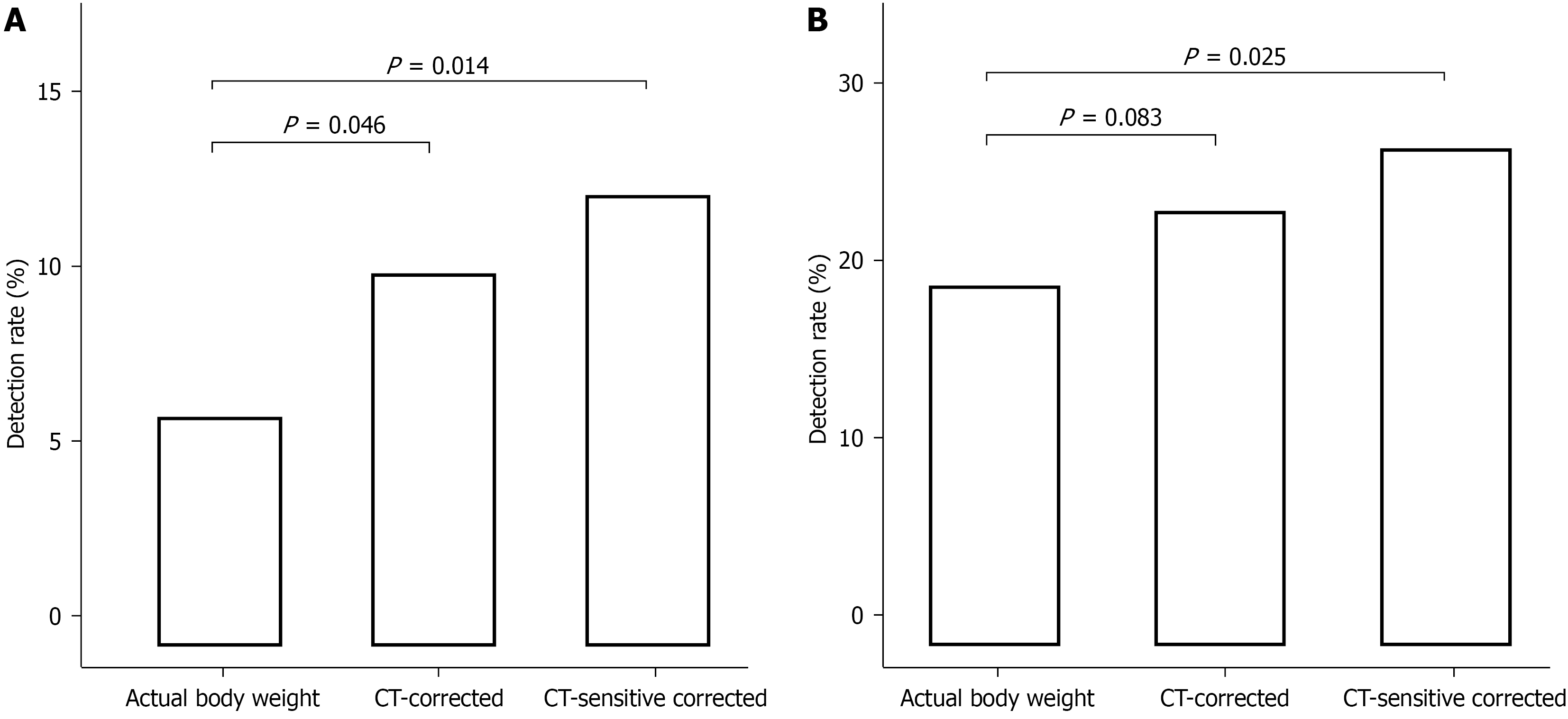
Figure 2 Comparison of low body mass index and Global Leadership Initiative on Malnutrition-defined malnutrition detection rates using the actual body weight method, computed tomography-corrected method, and computed tomography-sensitive corrected method in patients with cirrhosis and ascites.
A: Comparison of the low-body mass index (BMI) detection rates using the actual body weight method, computed tomography (CT)-corrected method, and CT-sensitive corrected method in patients with cirrhosis and ascites. A low BMI was defined according to the Global Leadership Initiative on Malnutrition (GLIM) BMI criteria for Asian populations with age stratification. Detection rates were compared using the McNemar test without continuity correction. The CT-corrected method and the CT-sensitive corrected method identified more patients with a low BMI than the actual body weight method (P = 0.046 and P = 0.014, respectively); B: Comparison of the GLIM-defined malnutrition detection rates using the actual body weight method, CT-corrected method, and CT-sensitive corrected method in patients with cirrhosis and ascites. GLIM-defined malnutrition was determined based on the presence of at least one phenotypic criterion used in this study: Unintentional weight loss > 5% within the previous 6 months, low BMI, or reduced arm muscle circumference. Detection rates were compared using the McNemar test without continuity correction. The CT-sensitive corrected method identified significantly more patients with GLIM-defined malnutrition than the actual body weight method (P = 0.025). CT: Computed tomography.
- Citation: Zhao HJ, Su LH, Lu FH, Gao F, Sai JH, Li P, Shi JL, Wang L, Li SJ, Zhou F, Zhou LM, Wang N, He PY. Computed tomography-based correction of the body mass index improves malnutrition detection in patients with cirrhosis and ascites. World J Hepatol 2026; 18(7): 122692
- URL: https://www.wjgnet.com/1948-5182/full/v18/i7/122692.htm
- DOI: https://dx.doi.org/10.4254/wjh.122692