
















Copyright: ©Author(s) 2026.
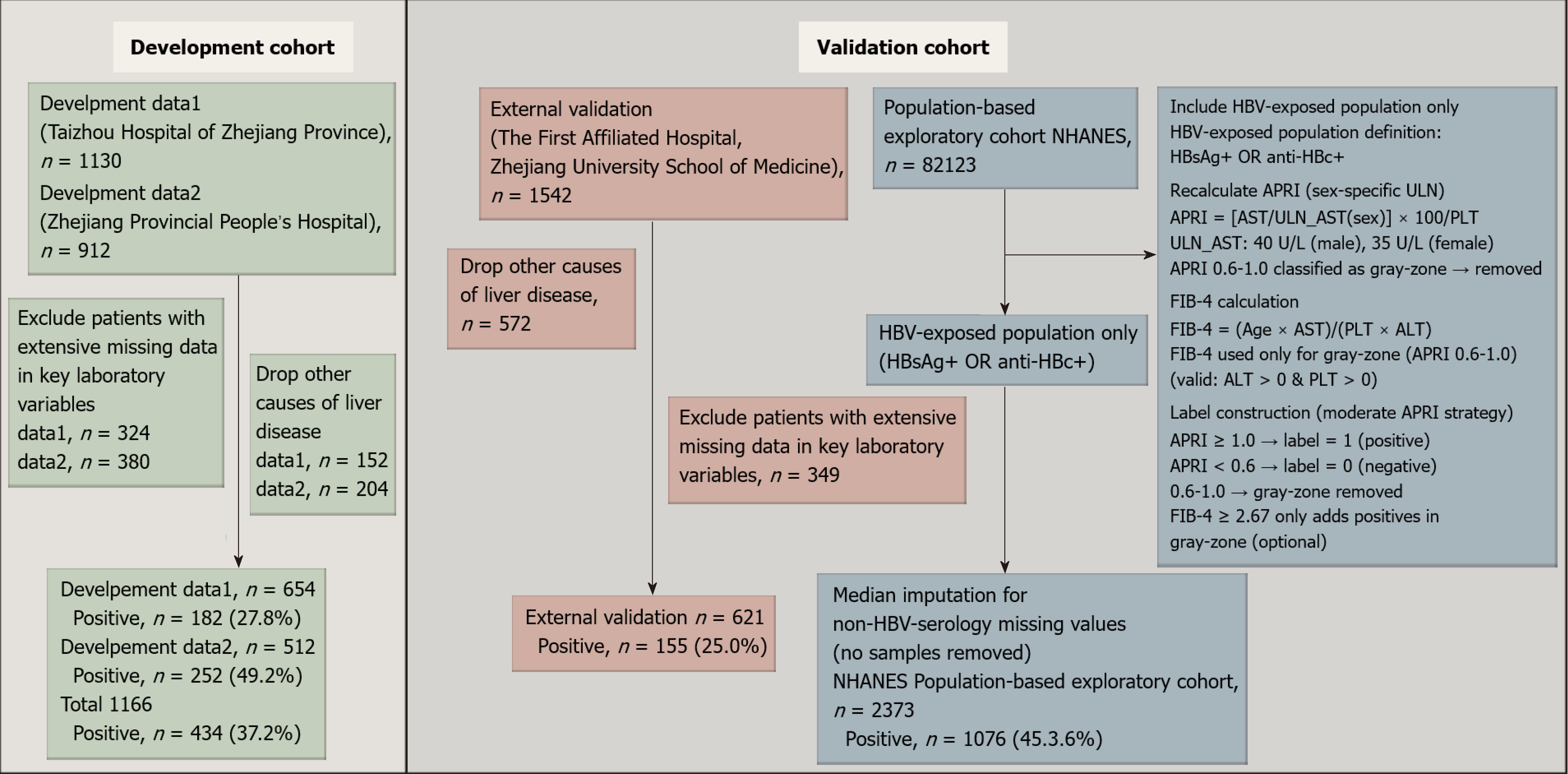
Figure 1 Construction of the development, external validation, and exploratory cohorts.
The development cohort was derived from two tertiary hospitals in Zhejiang Province, and an independent biopsy-confirmed cohort from the First Affiliated Hospital of Zhejiang University served as external validation. A population-based exploratory cohort was obtained from National Health and Nutrition Examination Survey 2011-2020 and included individuals with evidence of hepatitis B virus exposure. Because liver biopsy is unavailable in National Health and Nutrition Examination Survey, fibrosis status was approximated using a conservative aspartate aminotransferase to platelet ratio index/fibrosis-4-based algorithm. After data harmonization and exclusion of participants with missing key variables or other causes of liver disease, the final cohorts were used for model development and evaluation. HBV: Hepatitis B virus; NHANES: National Health and Nutrition Examination Survey; APRI: Aspartate aminotransferase to platelet ratio index; AST: Aspartate aminotransferase; FIB-4: Fibrosis-4; ALT: Alanine aminotransferase; PLT: Platelet.
- Citation: Wang TT, Chu YL, Lou YQ, Yang RY, Pu MM, Shan LJ, Huang L, Chen SS, Huang HJ. Routine laboratory model for identifying significant fibrosis in chronic hepatitis B. World J Hepatol 2026; 18(6): 119005
- URL: https://www.wjgnet.com/1948-5182/full/v18/i6/119005.htm
- DOI: https://dx.doi.org/10.4254/wjh.119005