
















Copyright: ©Author(s) 2026.
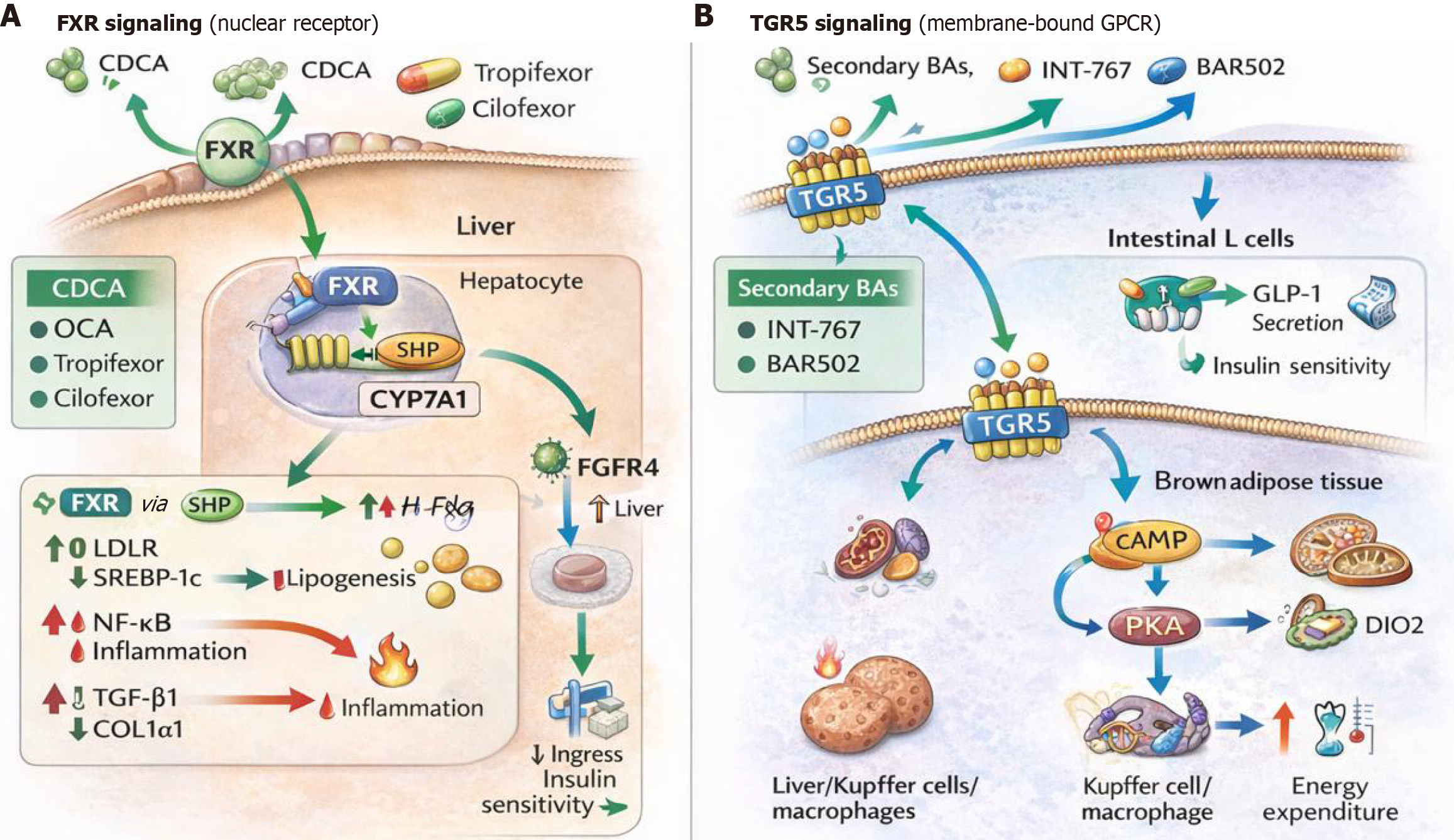
Figure 2 Bile acid-induced activation of farnesoid X receptor and Takeda G-protein-coupled receptor 5 with downstream signaling relevant to metabolic dysfunction-associated steatotic liver disease.
This figure illustrates two complementary bile acid-activated signaling pathways - farnesoid X receptor (FXR), a nuclear receptor, and Takeda G-protein-coupled receptor 5 (TGR5), a membrane-bound G-protein-coupled receptor - and their roles in metabolic dysfunction-associated steatotic liver disease. FXR is activated by bile acids, particularly chenodeoxycholic acid, and by pharmacologic agonists including obeticholic acid, tropifexor, and cilofexor. In hepatocytes, FXR activation induces small heterodimer partner, which suppresses cholesterol 7α-hydroxylase, thereby reducing bile acid synthesis. FXR signaling increases low-density lipoprotein receptor expression and suppresses sterol regulatory element-binding protein-1c, leading to reduced hepatic lipogenesis. Concurrently, FXR inhibits nuclear factor kappa B, attenuating inflammatory signaling, and downregulates profibrotic mediators such as transforming growth factor-β1 and collagen type I alpha-1 chain, thereby limiting hepatic fibrosis. In the ileum, FXR activation stimulates secretion of fibroblast growth factor 19, which acts on hepatic fibroblast growth factor receptor 4 to suppress gluconeogenesis and improve insulin sensitivity. In parallel, TGR5 is activated predominantly by secondary bile acids and by dual or selective agonists such as INT-767 and BAR502. In intestinal L cells, TGR5 activation enhances secretion of glucagon-like peptide-1, promoting insulin sensitivity and glycemic control. In hepatic Kupffer cells and macrophages, TGR5 signaling suppresses pro-inflammatory cytokine production through inhibition of nuclear factor kappa B. In brown adipose tissue, TGR5 activation increases intracellular cyclic adenosine monophosphate, triggering protein kinase A-mediated induction of type 2 iodothyronine deiodinase, thereby enhancing mitochondrial activity and energy expenditure. Collectively, FXR and TGR5 signaling converge to reduce lipogenesis, inflammation, and fibrosis while improving insulin sensitivity and energy balance, highlighting these bile acid-responsive pathways as key therapeutic targets in metabolic dysfunction-associated steatotic liver disease. A: Farnesoid X receptor signaling; B: Takeda G-protein-coupled receptor 5 signaling. FXR: Farnesoid X receptor; CDCA: Chenodeoxycholic acid; OCA: Obeticholic acid; SHP: Small heterodimer partner; LDLR: Low-density lipoprotein receptor; SREBP-1c: Sterol regulatory element-binding protein 1c; NF-κB: Nuclear factor kappa B; TGF: Transforming growth factor; COL1α1: Collagen type I alpha 1 chain; CYP7A1: Cholesterol 7α-hydroxylase; FGFR4: Fibroblast growth factor receptor 4; TGR5: Takeda G-protein-coupled receptor 5; GPCR: G protein-coupled receptor; BA: Bile acid; GLP-1: Glucagon-like peptide-1; cAMP: Cyclic adenosine monophosphate; PKA: Protein kinase A; DIO2: Type 2 iodothyronine deiodinase.
- Citation: Bandyopadhyay S, Samajdar SS, Mukherjee S, Joshi SR. Bile acid receptor signaling in metabolic dysfunction-associated steatotic liver disease: Mechanistic insights and emerging therapeutic strategies. World J Hepatol 2026; 18(6): 118548
- URL: https://www.wjgnet.com/1948-5182/full/v18/i6/118548.htm
- DOI: https://dx.doi.org/10.4254/wjh.118548