
















Copyright: ©Author(s) 2026.
World J Hepatol. May 27, 2026; 18(5): 119798
Published online May 27, 2026. doi: 10.4254/wjh.v18.i5.119798
Published online May 27, 2026. doi: 10.4254/wjh.v18.i5.119798
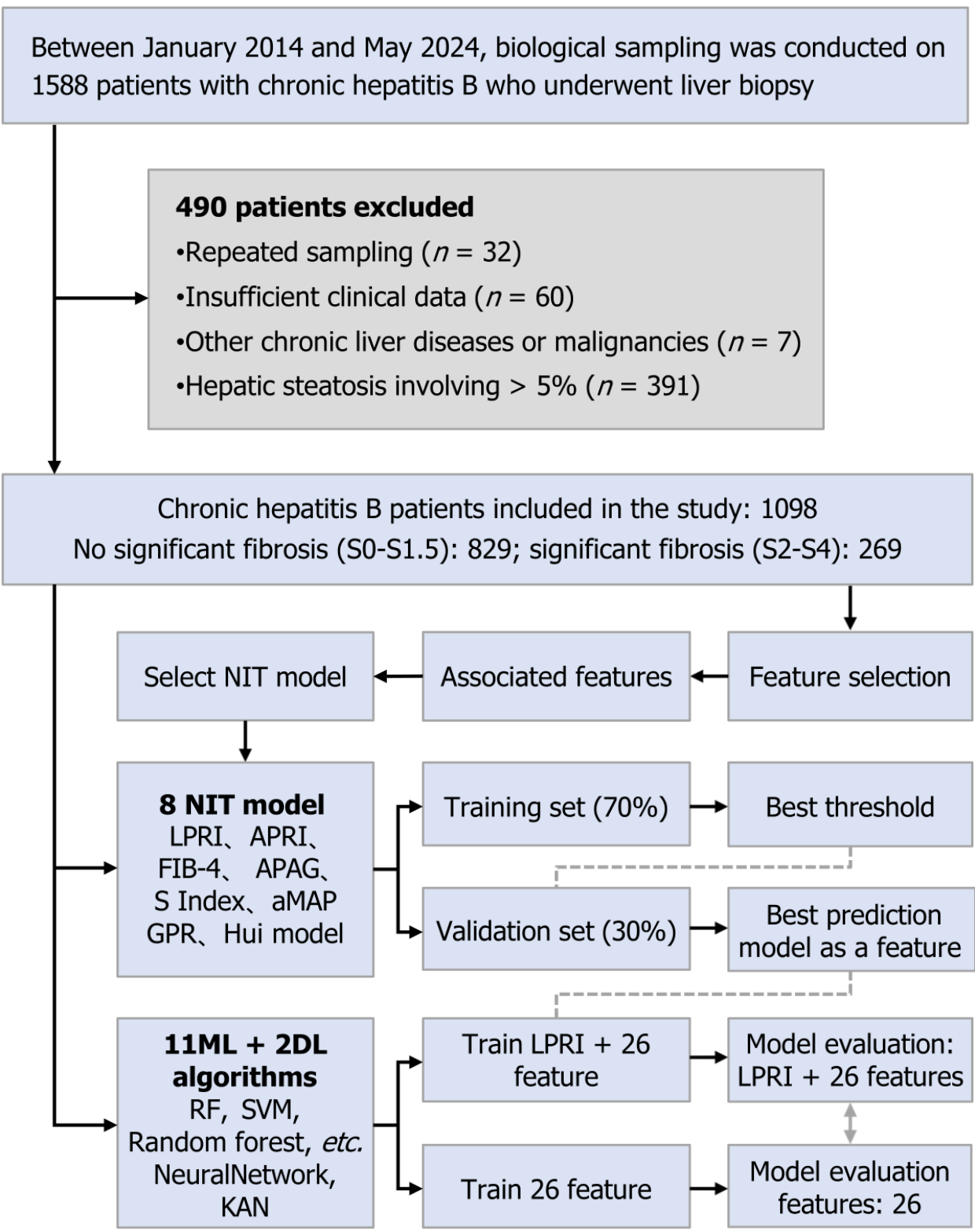
Figure 6 Proposed clinical workflow for liver stiffness-platelet ratio index-based triage of significant fibrosis in treatment-naïve chronic hepatitis B.
Patients are stratified into rule-out, indeterminate, and rule-in zones using lower and upper liver stiffness-platelet ratio index thresholds; complex machine learning/deep learning models may provide incremental accuracy in selected settings. aMAP: Age-male-alkaline phosphatase-platelets risk score; APAG: Aspartate aminotransferase to platelet and age-gender model; APRI: Aspartate aminotransferase to platelet ratio index; FIB-4: Fibrosis-4; GPR: Gamma-glutamyl transpeptidase to platelet ratio; KAN: Kolmogorov-Arnold Network; LPRI: Liver stiffness-platelet ratio index; NIT: Noninvasive test; PF: Random forest; S Index: S-Index; SVM: Support vector machine.
- Citation: Lin JY, Ai ZX, Luo MJ, Su LZ, Gao XG, Jiang HL, Lin JQ, Zhang HY, Sun YY, Yu HT, Zhang L, Gong XQ. Liver stiffness-platelet ratio index and machine learning models for the noninvasive diagnosis of significant fibrosis in chronic hepatitis B. World J Hepatol 2026; 18(5): 119798
- URL: https://www.wjgnet.com/1948-5182/full/v18/i5/119798.htm
- DOI: https://dx.doi.org/10.4254/wjh.v18.i5.119798