











Copyright: ©Author(s) 2026.
World J Hepatol. May 27, 2026; 18(5): 117157
Published online May 27, 2026. doi: 10.4254/wjh.v18.i5.117157
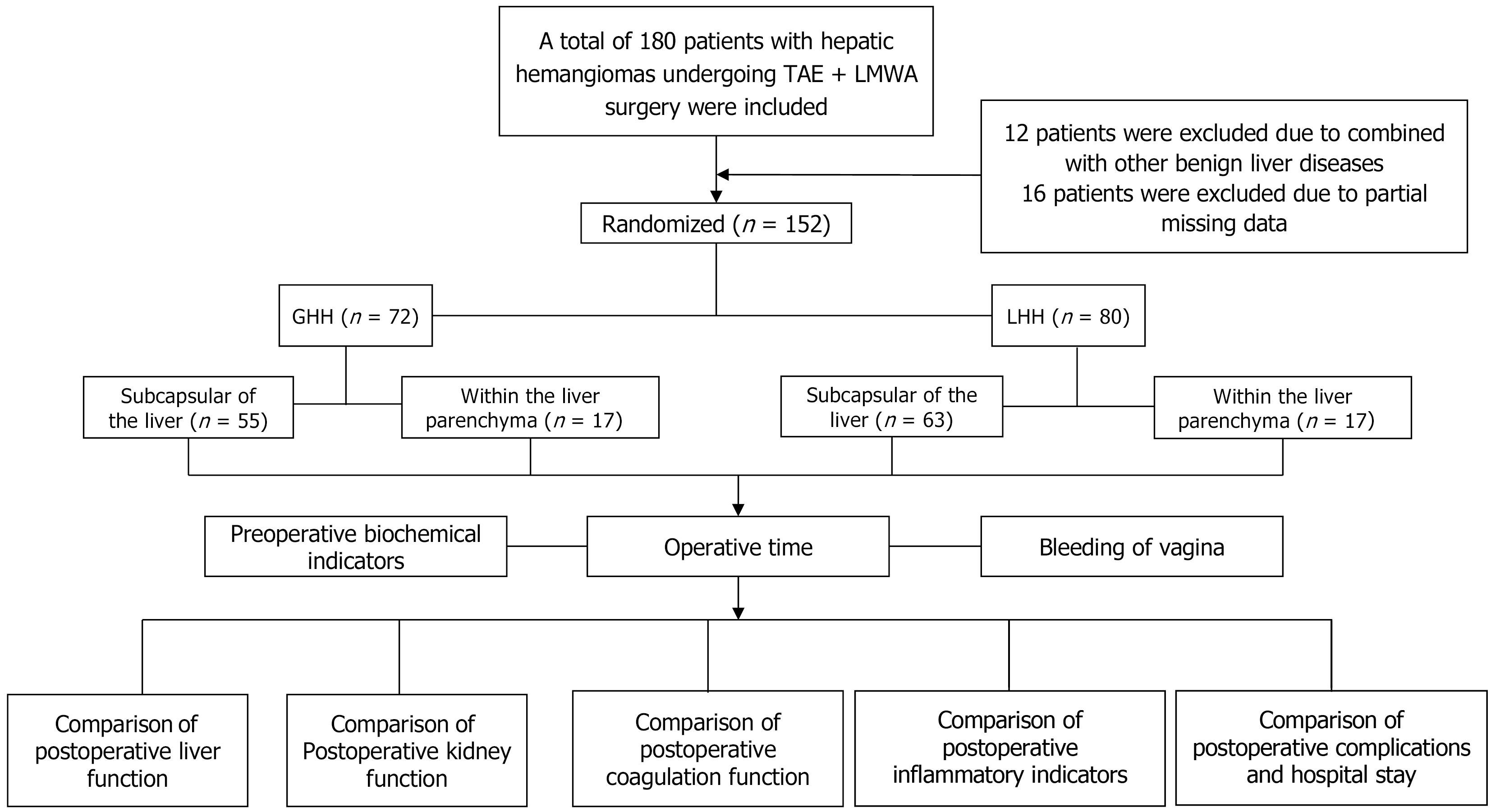
Figure 2 A total of 180 patients who underwent trans-arterial embolization + laparoscopic microwave ablation surgery for hepatic heman gioma were included in this study.
After screening, 28 patients who did not meet the criteria were excluded. Among them, 12 had other benign liver diseases, and the other 16 had partial data missing. Ultimately, 152 patients were randomly assigned to the giant hepatic hemangioma (HH) group (72 cases) and the large HH group (80 cases). Specifically, the giant HH group included 55 cases of liver subcapsular of the liver and 17 instances of lesions within the liver parenchymal. In the large HH group, there were 63 cases of liver subcapsular of the liver and 17 instances of lesions within the liver parenchymal. This study aims to conduct a comparative analysis of the liver and kidney functions, coagulation functions, inflammatory indicators, perioperative indicators, and complications of these two groups of patients after surgery. TAE: Trans-arterial embolization; LMWA: Laparoscopic microwave ablation; GHH: Giant hepatic hemangioma; LHH: Large hepatic hemangioma.
- Citation: Wu CL, Chen XC, Zhao W, Hu B, Huan HB, Tu YL, Zhu ZM, Jiang K. Laparoscopic microwave ablation for hepatic hemangiomas with different locations: A comparative study. World J Hepatol 2026; 18(5): 117157
- URL: https://www.wjgnet.com/1948-5182/full/v18/i5/117157.htm
- DOI: https://dx.doi.org/10.4254/wjh.v18.i5.117157