
















Copyright: ©Author(s) 2026.
World J Hepatol. Mar 27, 2026; 18(3): 117465
Published online Mar 27, 2026. doi: 10.4254/wjh.v18.i3.117465
Published online Mar 27, 2026. doi: 10.4254/wjh.v18.i3.117465
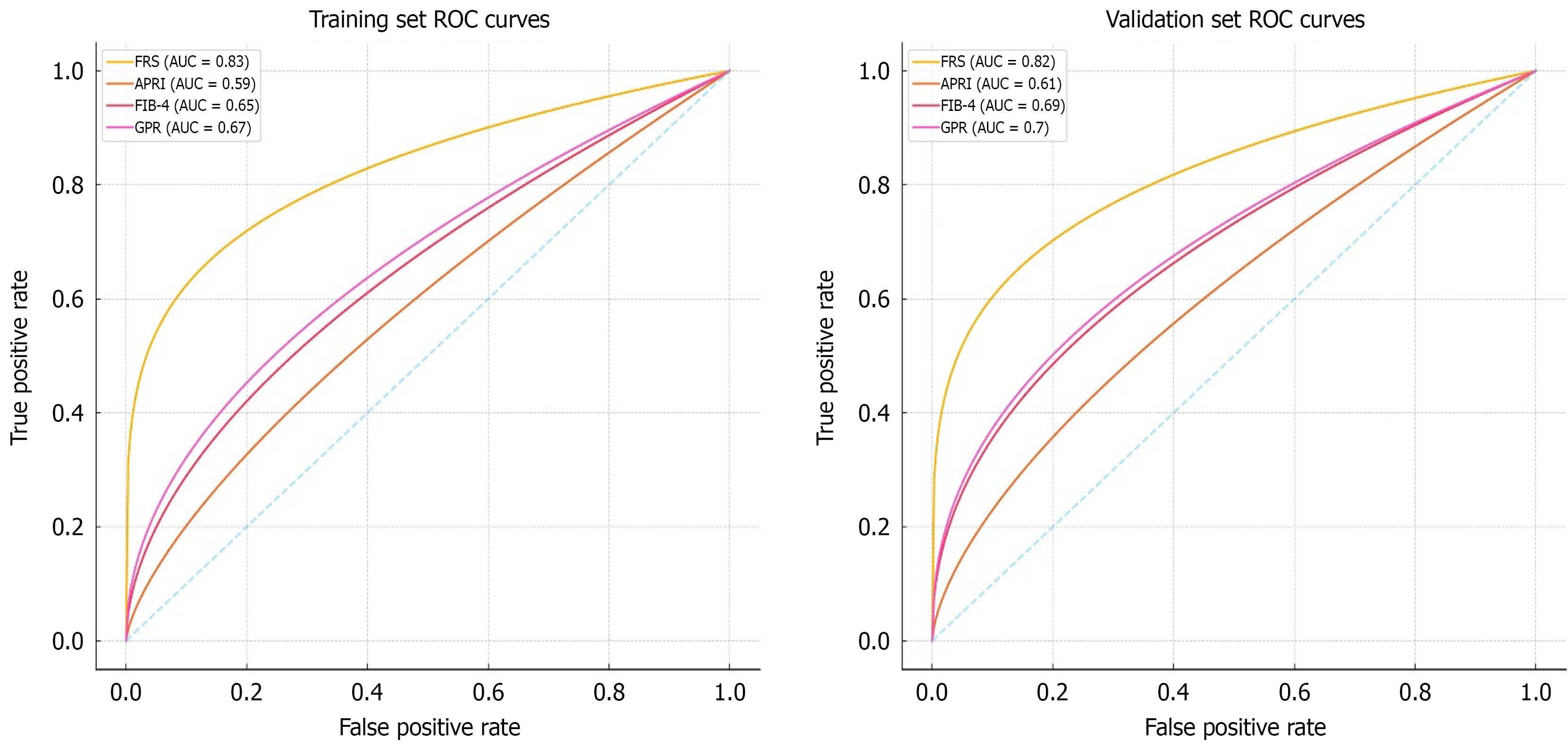
Figure 2 Receiver operating characteristic curves for the training and validation datasets.
Figure illustrating the comparative performance of the fibrosis risk score against other established clinical scoring systems (aspartate aminotransferase to platelet ratio index, fibrosis-4 index, gamma-glutamyl transferase to platelet ratio) for predicting significant hepatic fibrosis. AUC: Area under the receiver operating characteristic curve; ROC: Receiver operating characteristic; FRS: Fibrosis risk score; APRI: Aspartate aminotransferase to platelet ratio index; FIB-4: Fibrosis-4 index; GPR: Gamma-glutamyl transferase to platelet ratio.
- Citation: Bashir A, Arora R, Mehrotra D, Bala M, Parry AH, Iqball A, Bhat SA, Wani ZA. Non-invasive prediction of significant hepatic fibrosis in individuals with chronic hepatitis C infection using fibrosis risk score and machine learning models. World J Hepatol 2026; 18(3): 117465
- URL: https://www.wjgnet.com/1948-5182/full/v18/i3/117465.htm
- DOI: https://dx.doi.org/10.4254/wjh.v18.i3.117465