
















©The Author(s) 2026.
World J Hepatol. Feb 27, 2026; 18(2): 115763
Published online Feb 27, 2026. doi: 10.4254/wjh.v18.i2.115763
Published online Feb 27, 2026. doi: 10.4254/wjh.v18.i2.115763
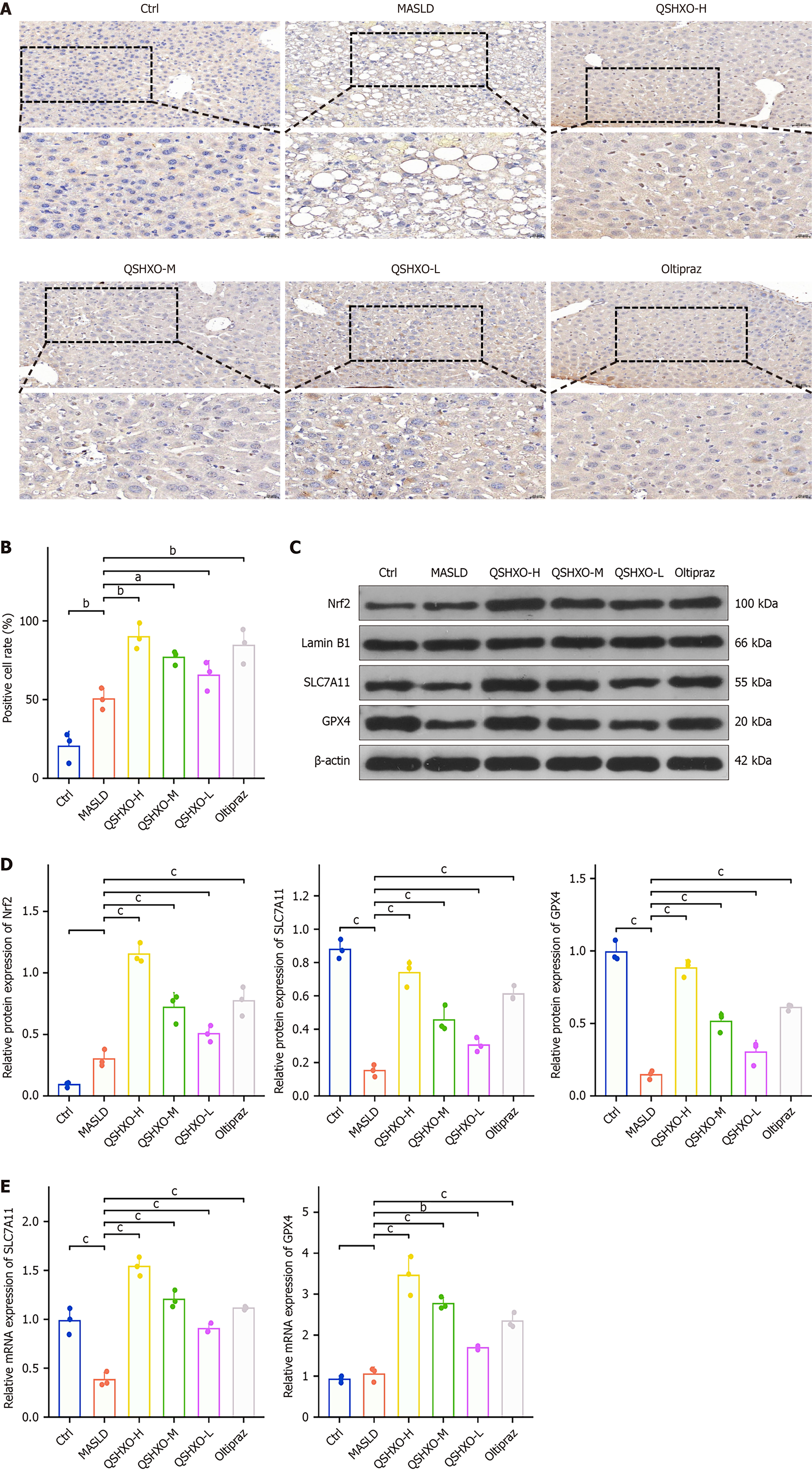
Figure 6 Qushi Huoxue ointment inhibits ferroptosis in metabolic associated steatotic liver disease mice.
A: Representative immunohistochemical images of nuclear factor erythroid 2-related factor 2 (Nrf2) nuclear translocation in liver tissues. Scale bar: 100 μm and 20 μm; B: Quantitative analysis of Nrf2 expression by mean optical density; C: Western blot analysis of Nrf2 (using lamin B1 as internal reference), SLC7A11, and glutathione peroxidase 4 (GPX4) (using β-actin as internal reference) protein levels in liver tissues; D: Quantitative analysis of Nrf2, SLC7A11 and GPX4 protein levels; E: Quantitative reverse-transcription polymerase chain reaction analysis of mRNA expressions of SLC7A11 and GPX4 in liver tissues. Data are presented as means ± SD; aP < 0.05, bP < 0.01, cP < 0.001. MASLD: Metabolic associated steatotic liver disease; QSHXO: Qushi Huoxue ointment; Nrf2: Nuclear factor erythroid 2-related factor 2; GPX4: Glutathione peroxidase 4.
- Citation: Liu YY, Qin H, Wu HX, Wang RT, Yang QY, Jiang F, Liu XD, Wu DK, Tang YM. Qushi Huoxue ointment ameliorates metabolic associated steatotic liver disease through autophagy activation and ferroptosis inhibition. World J Hepatol 2026; 18(2): 115763
- URL: https://www.wjgnet.com/1948-5182/full/v18/i2/115763.htm
- DOI: https://dx.doi.org/10.4254/wjh.v18.i2.115763