
















Copyright: ©Author(s) 2026.
World J Hepatol. Nov 27, 2026; 18(11): 125669
Published online Nov 27, 2026. doi: 10.4254/wjh.125669
Published online Nov 27, 2026. doi: 10.4254/wjh.125669
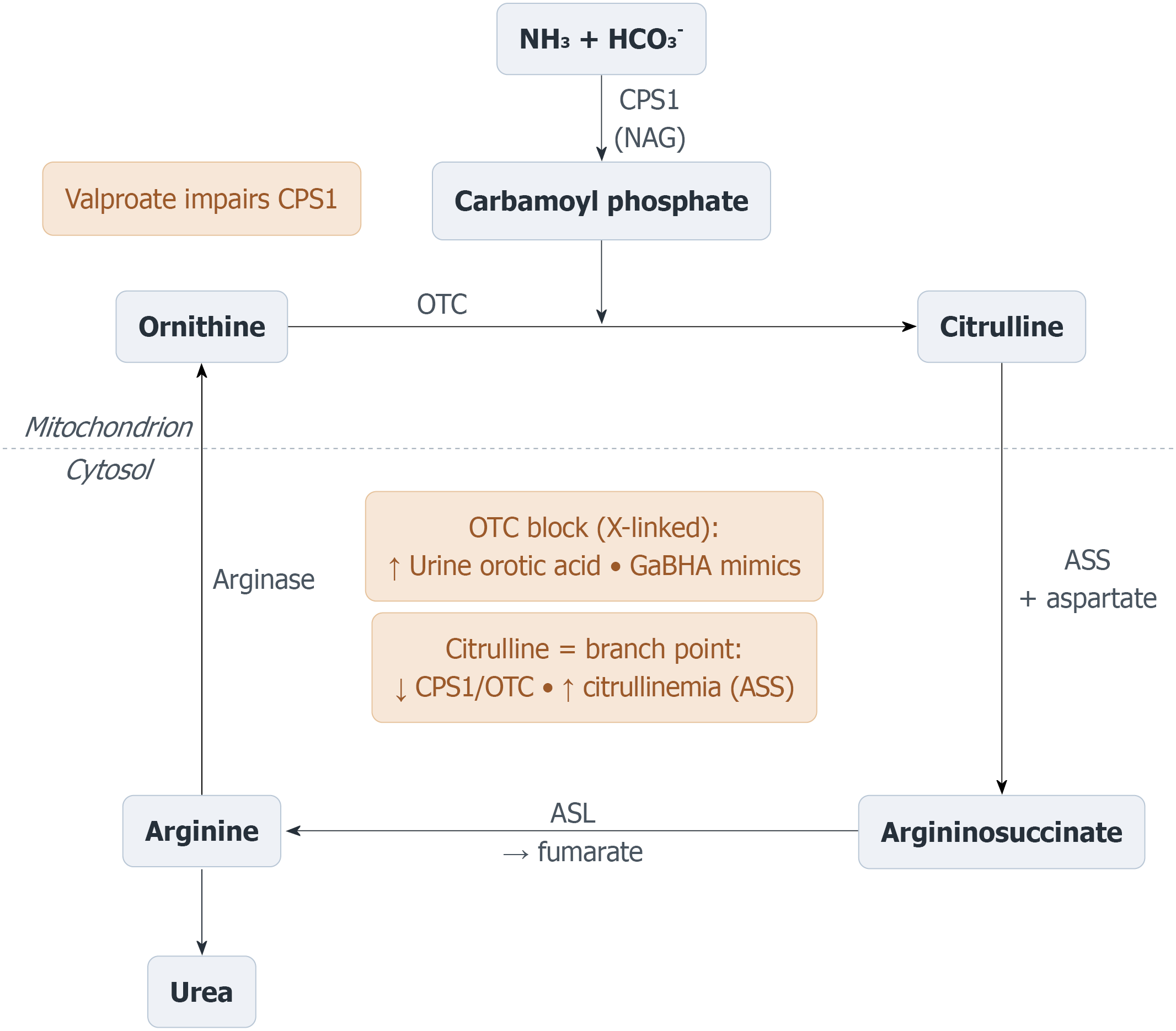
Figure 4 The urea cycle and its diagnostic landmarks.
Ammonia and bicarbonate enter the cycle in the mitochondrion, where carbamoyl phosphate synthetase 1 (CPS1), activated by N-acetylglutamate, forms carbamoyl phosphate; ornithine transcarbamylase (OTC) then yields citrulline, which is exported to the cytosol and converted through argininosuccinate synthetase (ASS) and argininosuccinate synthetase to urea and ornithine (arginase), regenerating the cycle. Three features anchor the workup: Valproate impairs CPS1 activity (largely by depleting its activator N-acetylglutamate); a block at OTC, the X-linked, most common defect, diverts carbamoyl phosphate to pyrimidine synthesis and raises urinary orotic acid, a pattern that gastric bypass-associated hyperammonemia can mimic; and plasma citrulline marks the branch point, low when a proximal enzyme (CPS1 or OTC) fails and high in citrullinemia (ASS deficiency). ASL: Argininosuccinate lyase; ASS: Argininosuccinate synthetase; CPS1: Carbamoyl phosphate synthetase 1; GaBHA: Gastric bypass-associated hyperammonemia; NAG: N-acetylglutamate.
- Citation: Obeidat Y, Cholankeril G. Non-cirrhotic hyperammonemia in adults: Recognition and management. World J Hepatol 2026; 18(11): 125669
- URL: https://www.wjgnet.com/1948-5182/full/v18/i11/125669.htm
- DOI: https://dx.doi.org/10.4254/wjh.125669