
















Copyright: ©Author(s) 2026.
World J Hepatol. Nov 27, 2026; 18(11): 125669
Published online Nov 27, 2026. doi: 10.4254/wjh.125669
Published online Nov 27, 2026. doi: 10.4254/wjh.125669
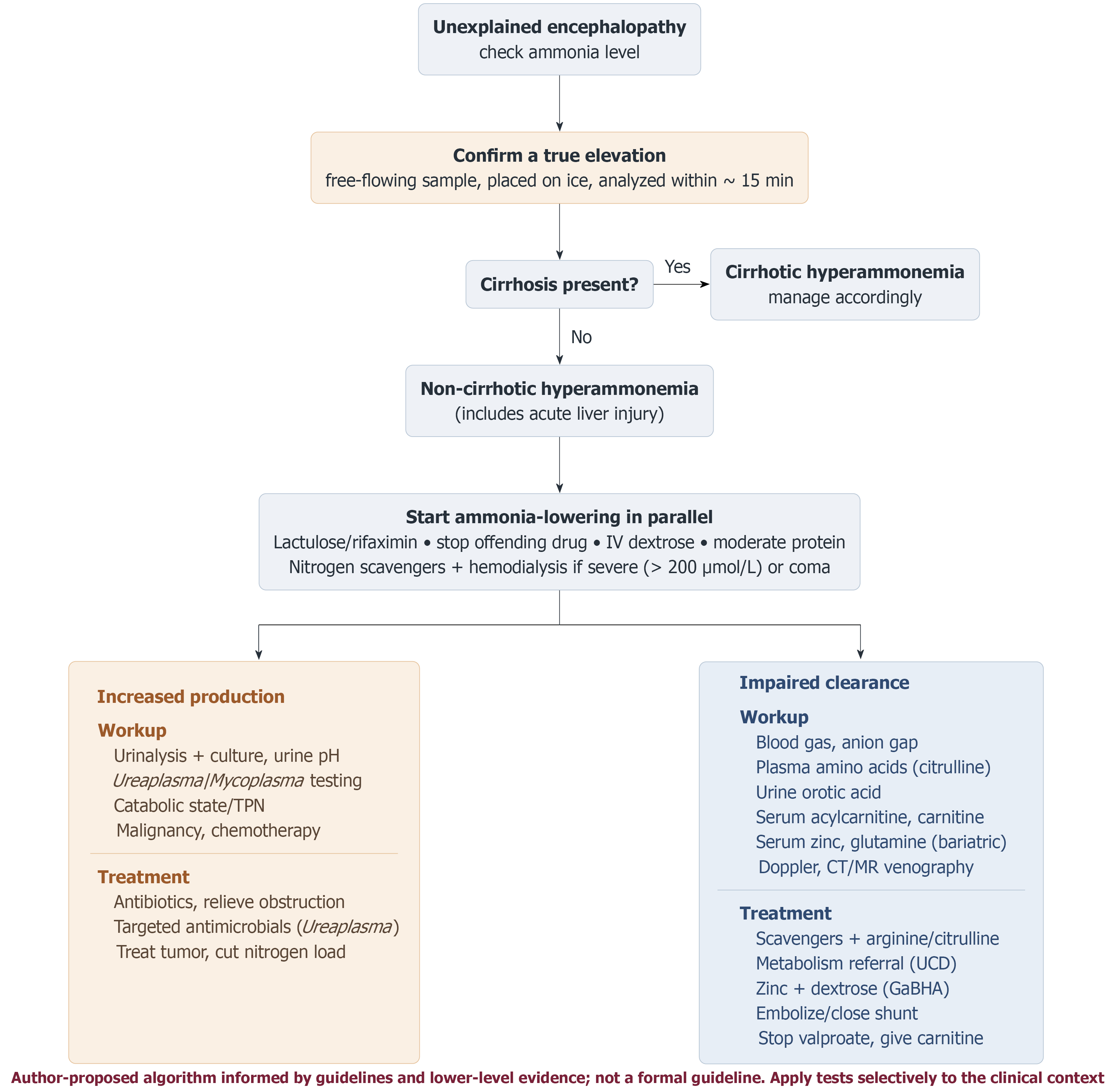
Figure 3 Diagnostic and management algorithm for non-cirrhotic hyperammonemia in adults.
This author-proposed algorithm-informed by current guidelines and lower-level evidence rather than a formal guideline-begins by confirming a true ammonia elevation on a properly collected, promptly processed specimen and by excluding cirrhosis; acute liver injury is retained within the non-cirrhotic pathway. The differential is then organized by mechanism, increased production vs impaired clearance, and ammonia-lowering treatment begun in parallel with the workup. A confirmed value requires a free-flowing specimen kept on ice and analyzed promptly. In the clearance arm, the blood gas orients the metabolic workup: Respiratory alkalosis or a normal anion gap favors a urea cycle disorder, a high-anion-gap acidosis an organic acidemia. Nitrogen scavengers are sodium benzoate and sodium phenylacetate/phenylbutyrate. A portosystemic shunt is closed only after imaging confirms intrahepatic portal flow, as a complete (Abernethy type I) shunt cannot be occluded. CT: Computed tomography; GaBHA: Gastric bypass-associated hyperammonemia; MR: Magnetic resonance; TPN: Total parenteral nutrition.
- Citation: Obeidat Y, Cholankeril G. Non-cirrhotic hyperammonemia in adults: Recognition and management. World J Hepatol 2026; 18(11): 125669
- URL: https://www.wjgnet.com/1948-5182/full/v18/i11/125669.htm
- DOI: https://dx.doi.org/10.4254/wjh.125669