
















Copyright: ©Author(s) 2026.
World J Hepatol. Nov 27, 2026; 18(11): 122559
Published online Nov 27, 2026. doi: 10.4254/wjh.122559
Published online Nov 27, 2026. doi: 10.4254/wjh.122559
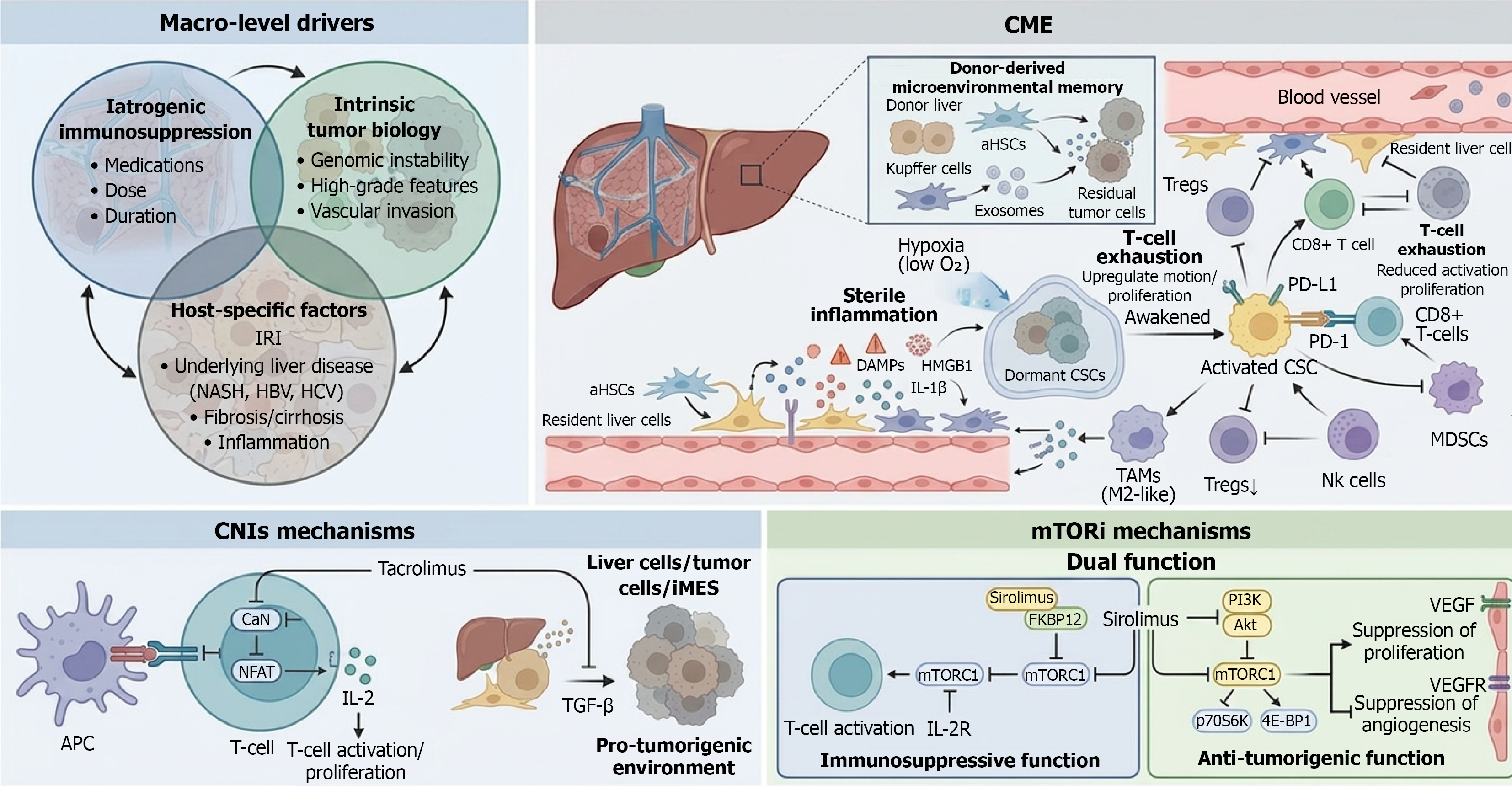
Figure 1 Pathophysiological framework and molecular mechanisms of post-transplant hepatocellular carcinoma recurrence.
CME: Cellular microenvironment; IRI: Ischemia-reperfusion injury; NASH: Non-alcoholic steatohepatitis; HBV: Hepatitis B virus; HCV: Hepatitis C virus; TME: Tumor microenvironment; aHSCs: Activated hepatic stellate cells; Tregs: Regulatory T cells; PD-1: Programmed death-1; PD-L1: Programmed death-ligand 1; CSCs: Cancer stem cells; TAMs: Tumor-associated macrophages; NK: Natural killer; MDSCs: Myeloid-derived suppressor cells; DAMPs: Damage-associated molecular patterns; HMGB1: High mobility group box 1; IL1: Interleukin-1; mTORi: Mammalian target of rapamycin inhibitors; CNIs: Calcineurin inhibitors; CaN: Calcineurin; NFAT: Nuclear factor of activated T-cells; APC: Antigen-presenting cell; TGF-β: Transforming growth factor beta; mTORC1: Mammalian target of rapamycin complex 1; FKBP12: FK506-binding protein 12; PI3K: Phosphoinositide 3-kinase; Akt: Serine/threonine kinase; VEGF: Vascular endothelial growth factor.
- Citation: Xiang XL, Wu YC, Zhang ZJ, Zhan XK, Tong Y, Yong JK, Zhou Y, Feng H, Xia Q. Liver transplantation for hepatocellular carcinoma: Mechanisms, risk stratification, and evolving treatment landscape. World J Hepatol 2026; 18(11): 122559
- URL: https://www.wjgnet.com/1948-5182/full/v18/i11/122559.htm
- DOI: https://dx.doi.org/10.4254/wjh.122559